

Project data
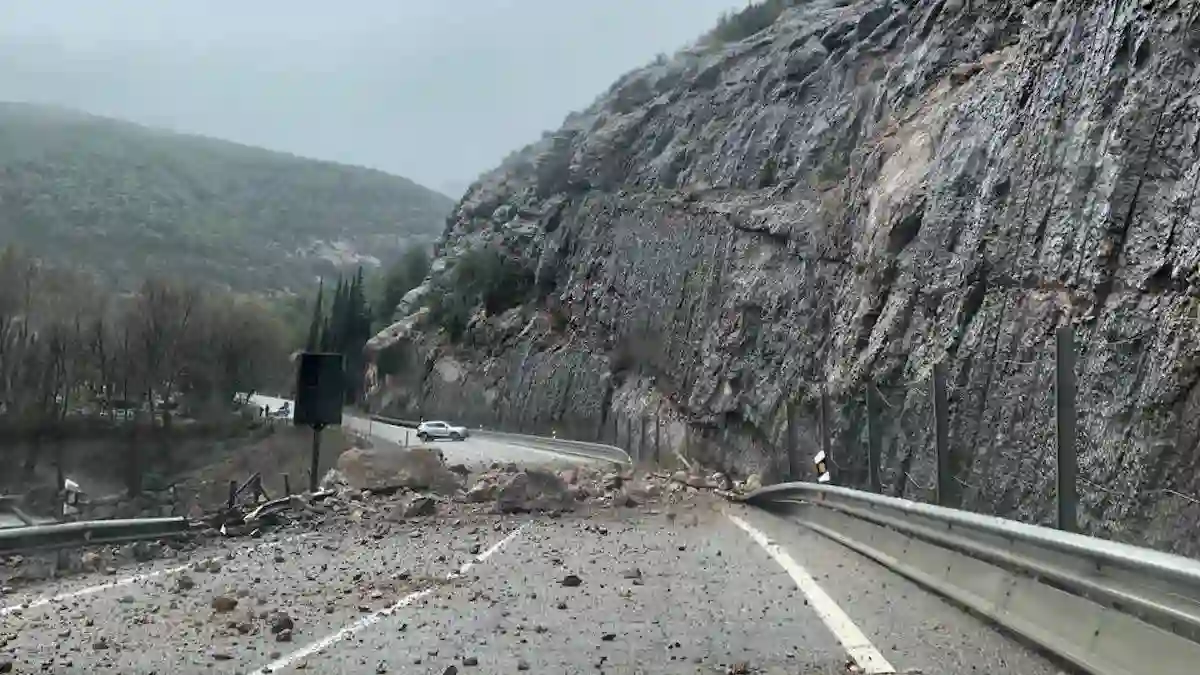
THE PROBLEM: a 130 m³ block cut off the road
In March 2024, a large-scale landslide in the Congost de Collegats served as a reminder of the fragility of one of the most critical points in the Catalan Pyrenees road network. A conglomerate block of 130 m³ in volume impacted directly on the N-260 roadway, causing structural damage to the road and cutting off communication between La Pobla de Segur and Gerri de la Sal for hours, forcing vehicles to take a detour of more than 30 kilometers.
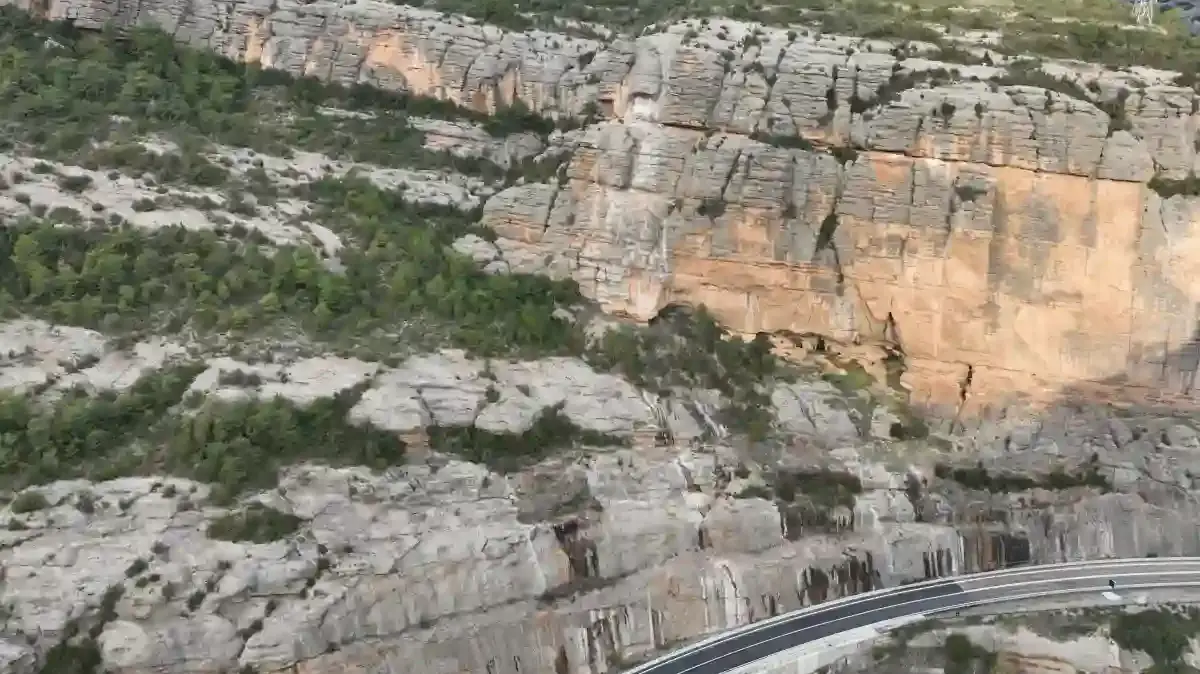
This was not an isolated incident. Landslides at this point, just a few meters from the Fuente de la Figuereta, occur frequently, especially associated with episodes of intense rain or snowfall. The source area is located 130 meters high above the roadway, in the upper part of the slope, where large conglomerate blocks are found.
The administration declared the project an emergency and Solutioma was the company commissioned to provide a definitive technical response.
THE TECHNICAL CHALLENGE: height, instability, and difficult access
Intervening on the Congost de Collegats slope is not a conventional project. The working conditions presented exceptional difficulty:
- 130 meters of height from the roadway to the intervention area
- Extremely unstable terrain, with the presence of large blocks in precarious equilibrium
- Practically impossible access by conventional land means
- Need for aerial means for the transport of materials and equipment
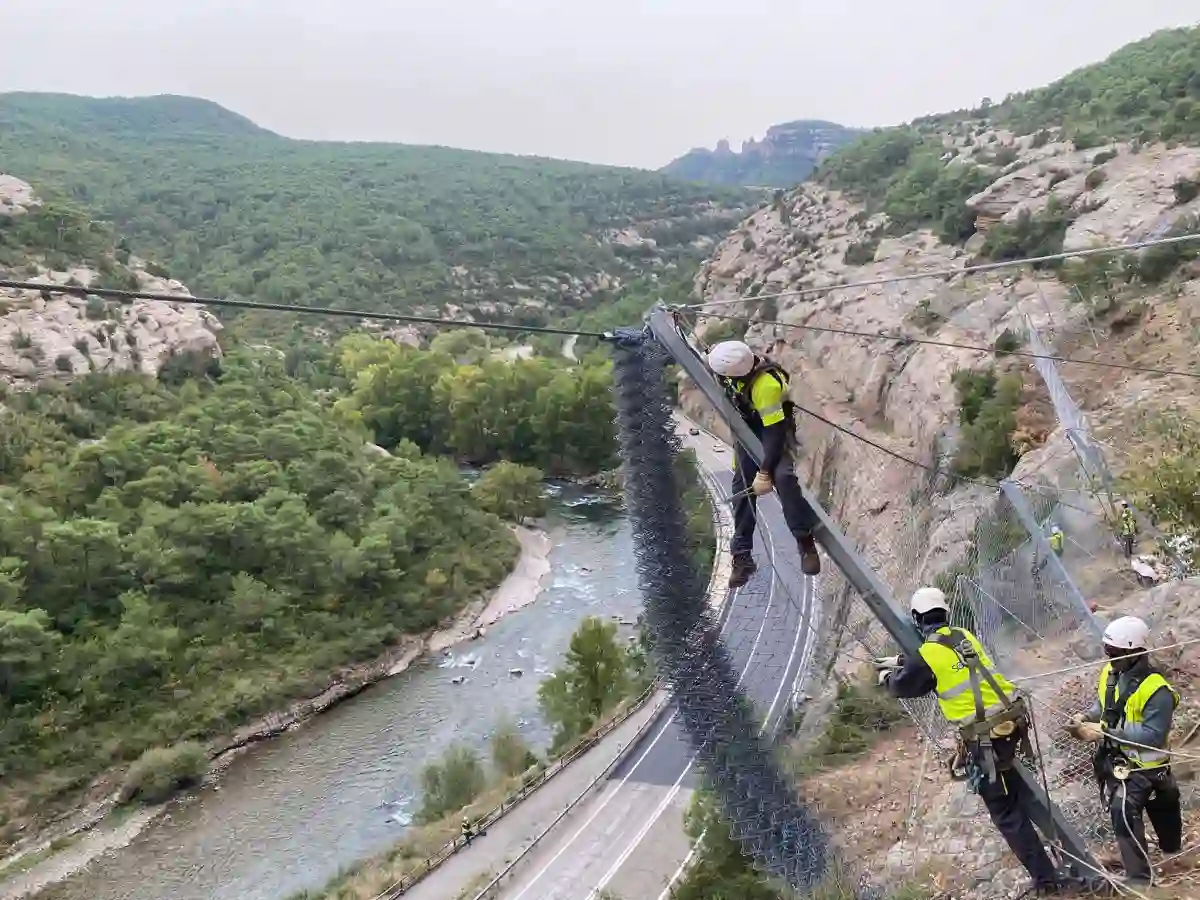
These conditions required rigorous planning and the coordinated work of specialized rope access teams, capable of operating at height with safety guarantees for both workers and road users.
THE SOLUTION: stabilization and protection
Solutioma executed a comprehensive solution that combined the elimination of active risk with the permanent protection of the infrastructure and its users:
1. Scaling and removal of unstable material
Manual and mechanical removal of all stones and blocks detected in the vicinity of the landslide area with potential instability. This phase is critical to ensure the safety of subsequent work and eliminate short-term risk.
2. Rock mass bolting
Execution of 2,000 linear meters of rock bolts to anchor rock fragments to the base mass, reducing the probability of new landslides in the intervened area.
3. High-strength membrane
Installation of 1,000 m² of high-strength membrane over the slope surface to confine and retain fragments that could break loose, preventing them from falling freely onto the roadway.
4. 1,000 kJ dynamic barrier
Installation of 60 linear meters of 1,000 kJ dynamic barrier energy absorption capacity. This barrier acts as the last line of defense, stopping blocks that bypass the bolting and mesh areas, including the metric-sized blocks typical of this slope.
5. Aerial means and work at height
Given the restricted access, aerial means were used for loading, unloading, and positioning materials and equipment. All work was carried out at an elevation of up to 130 meters above the roadway, in working conditions in difficult-to-access areas that require specific certification and experience.
RESULT: a safe infrastructure
The intervention eliminated the immediate risk and provided the slope with durable protection proportional to the energy of the blocks generated at this point. The N-260, an essential artery for the Pallars Jussà and Pallars Sobirà valleys, regained its functionality with technical guarantees.
In the press
The landslide that triggered this emergency work was covered by local media. You can read the report of the incident in Pallars Digital.
Would you like to consult us regarding any questions about our slope stabilization or landslide protection services?
If your project requires the safety and reliability that triple twisted wire mesh can provide, please contact our team of experts for advice and a customized installation.
You can fill out the attached form or call us at 900 101 895. We are at your disposal to offer the necessary assistance.