
Erosion control
Hydroseeding
Hydroseeding for slopes, cuttings and spoil heaps: what the mix contains, when to apply it and what affects the cost.
- Over 30 years of experience
- Survey, design and execution with our own team and machinery
- Offices in Spain and Romania
Hydroseeding on slopes: a solution for erosion control and revegetation
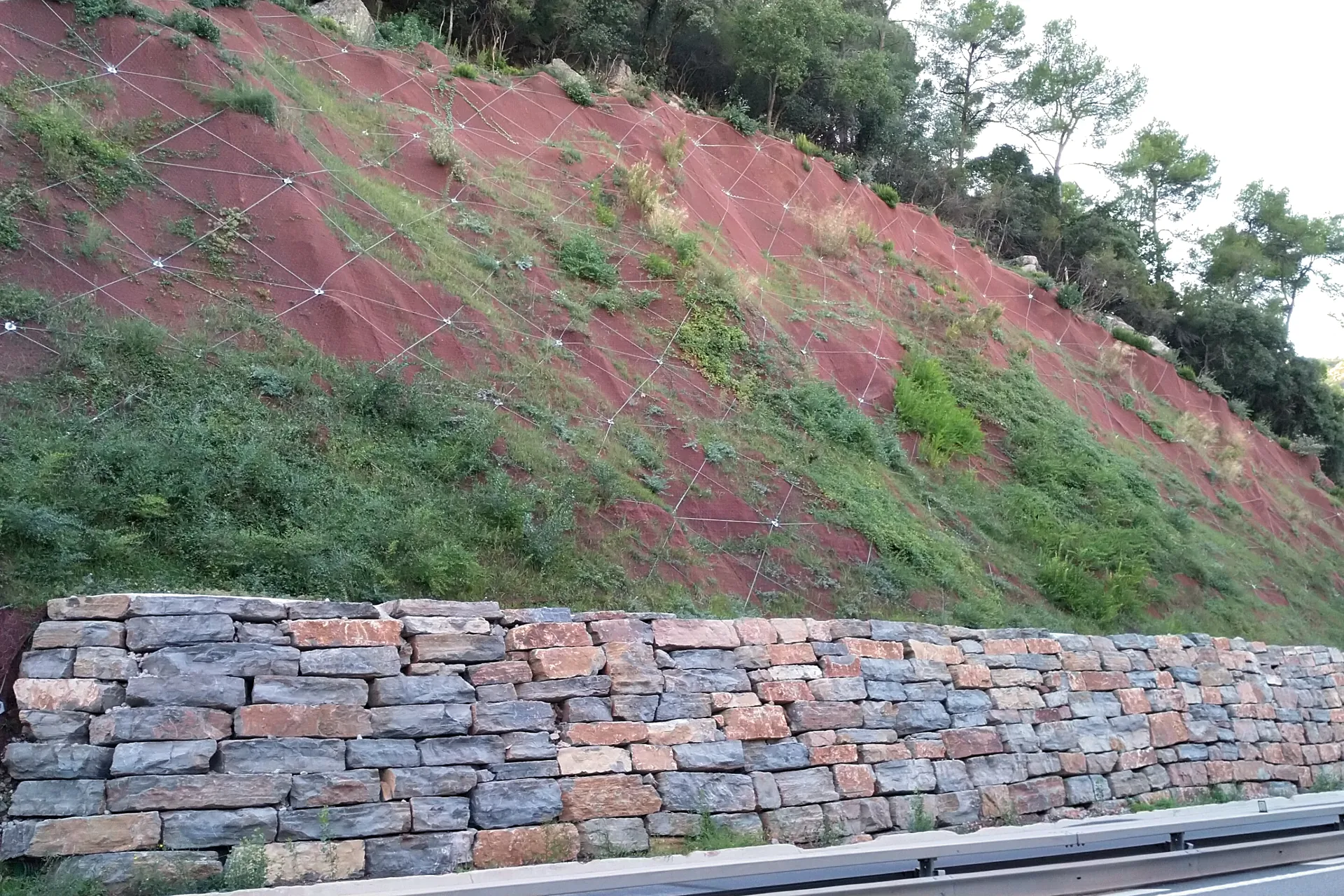
Hydroseeding on slopes is a technique that sprays a water-based mix of seeds, plant fibres and tackifiers onto the ground. It is one of the usual methods of preventing erosion, as it promotes effective, ecological and quick revegetation. At Solutioma we carry it out with our own machinery for erosion control on slopes and cuttings.
The hydroseeding mix combines seeds, organic and inorganic fertilisers, plant fibres and a natural adhesive stabiliser.
Hydroseeding is particularly effective in preventing erosion and promoting plant growth on steep slopes, in hard-to-reach areas and on poor or eroded soils.
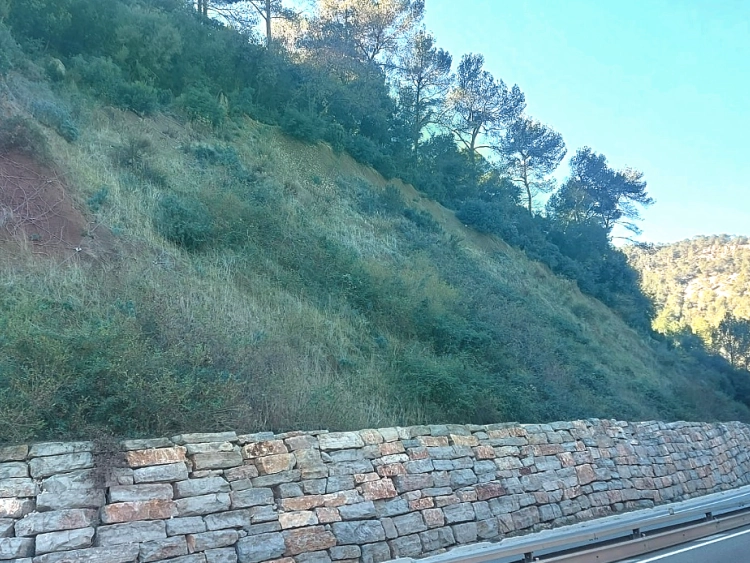
Do you need to hydroseed a slope?
We will recommend the right mix and sowing season for your project. You can also call us on +34 900 101 895.
What is hydroseeding used for on slopes?
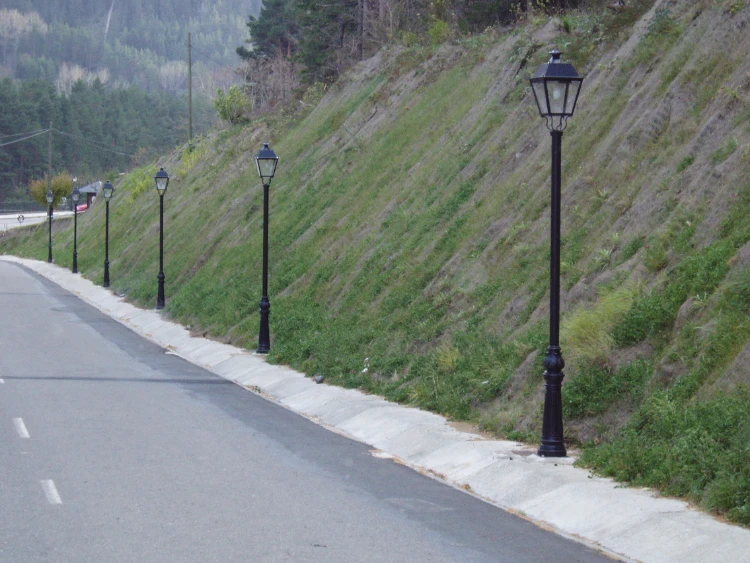
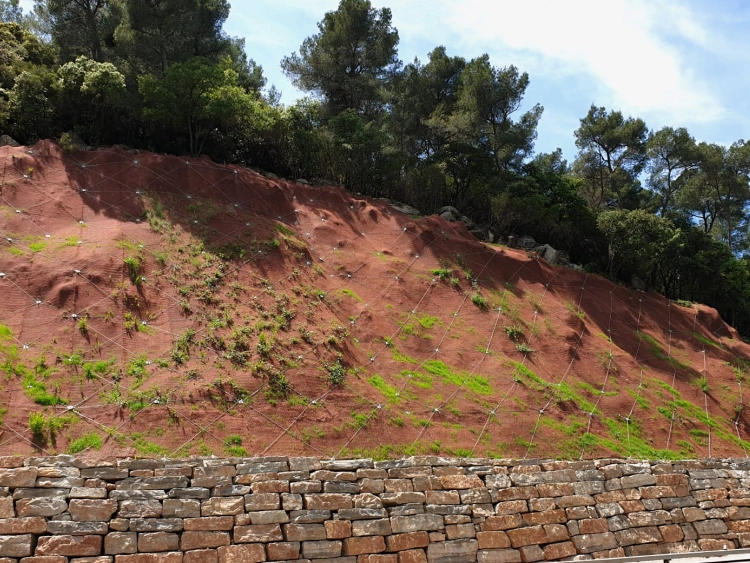
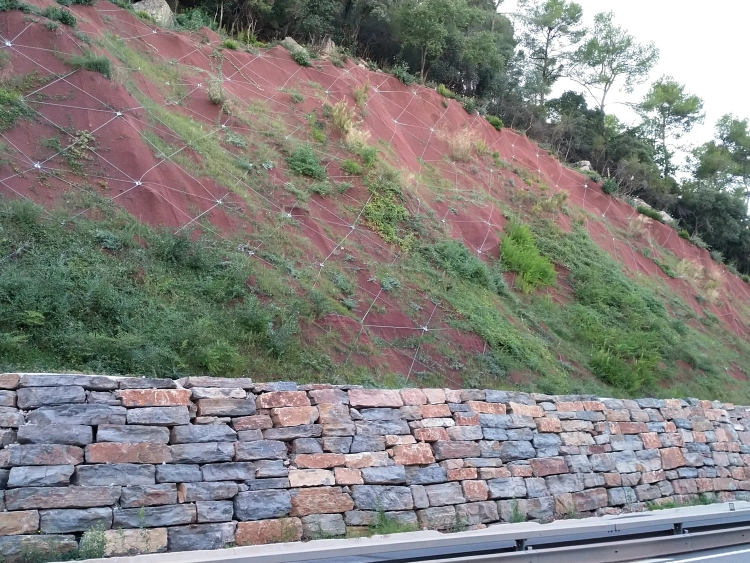
Hydroseeding is key to erosion control and slope revegetation, because it offers both a functional and an aesthetic solution.
Hydroseeding helps to prevent soil erosion, improves environmental quality and contributes to the landscape integration of slopes along roads, railways and urban areas.
Hydroseeding experience and plant establishment
The purpose of hydroseeding is to achieve an initial herbaceous cover that serves as a vegetal base for the subsequent establishment of native plants.
Solutioma is among the pioneers in Spain in developing and implementing erosion control systems like Hydroseeding, having perfected the most suitable techniques over its trajectory to achieve maximum effectiveness and permanence.
Our own hydroseeding equipment
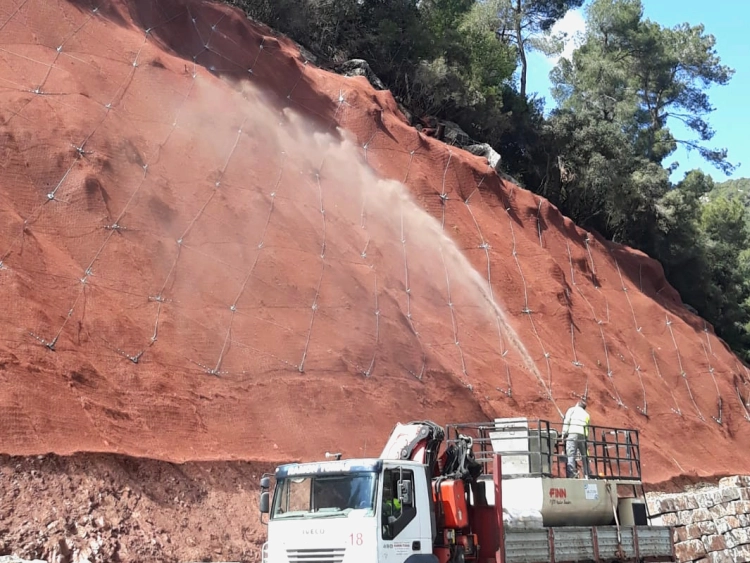
Applying hydroseeding requires precision and experience. At Solutioma we use pumping equipment that allows large-scale application with uniform, efficient coverage, even on hard-to-access slopes. Our technical team makes sure that the mix is sprayed evenly to encourage healthy and sustainable plant growth.
Applications and benefits of hydroseeding on slopes
This solution is particularly suitable for sowing steep surfaces, poorly consolidated ground and areas that conventional machinery cannot reach, such as spoil heaps, quarry faces, and cuttings and embankments along transport routes.
Hydroseeding, apart from offering erosion control solutions, allows landscape integration of the area affected by the works, significantly reducing the visual impact on the surroundings.
Hydroseeding on slopes is suitable for a wide variety of projects, including land restoration or improvement as well as erosion control and surface revegetation.
The right time of year for hydroseeding
It is essential that hydroseeding is applied at the right time of year: autumn–winter in semi-arid climates, from autumn to spring in temperate climates and summer in high-mountain areas.
For the seeds to develop properly, success depends not only on the products: favourable edaphoclimatic conditions in the soil, which acts as the support, are also needed; otherwise, the seeds will not germinate.
Environmental and aesthetic benefits
The benefits of hydroseeding go beyond slope stabilisation: the technique improves air and water quality, increases biodiversity and offers a natural visual appeal. The revegetation of slopes with hydroseeding creates habitats for local wildlife and fosters a healthier and more attractive environment for communities.
Experience in hydroseeding projects on slopes
At Solutioma, we have successfully implemented hydroseeding projects on slopes under various conditions and environments. Our success stories range from projects in urban areas to the recovery of areas affected by mining or construction. Each project is a testament to our ability to tailor hydroseeding to the specific needs of the terrain and environment.
Solutioma’s experts have been experienced in hydroseeding since the early nineties, knowledgeable about the behaviour of the ideal seed mixes for the various environmental and soil conditions existing in different geographical locations.
Specialist hydroseeding company for slopes
At Solutioma we understand that every hydroseeding project on slopes is unique. That is why we propose tailored solutions, adapted to the characteristics of each slope and project, with a seed mix suited to the area and a deep respect for the environment.
Completed hydroseeding projects
Completed hydroseeding projects
Frequently asked questions about hydroseeding
Frequently asked questions about hydroseeding
What is hydroseeding?
Hydroseeding, also written hydro seeding, is a sowing technique in which a water-based mix of seeds, tackifiers, plant fibres and other additives is sprayed onto the ground surface. It is one of the most common methods of hydroseeding erosion control on slopes.
The difference from conventional seeding lies in the way it is applied: the mix is prepared with water and sprayed under pressure with pumping equipment, so it reaches steep surfaces, poorly consolidated ground and areas that conventional machinery cannot access. In a single application, the slope receives the seed, the fertiliser and the plant fibres that protect it until it germinates.
The aim of hydroseeding is to achieve an initial herbaceous cover that serves as a plant base for the later establishment of native species. The goal is not an ornamental lawn, but to start the revegetation of the slope, stop erosion and blend the works into the landscape.
Solutioma's staff have worked in hydroseeding since the early 1990s and know how seed mixes behave under different climate and soil conditions. If you have a bare slope, we can assess whether to hydroseed it or whether another technique would be more appropriate.
What is hydroseeding used for on slopes?
Hydroseeding slopes prevents erosion and revegetates surfaces where conventional seeding is not viable: steep slopes, poorly consolidated ground and areas that conventional machinery cannot reach.
The most common applications are spoil heaps, quarry faces, and cuttings and embankments along transport routes. On roads, railways and urban areas, slope hydroseeding also helps to integrate the works into the landscape and significantly reduces their visual impact on the surroundings.
Hydroseeding is also used in land restoration or improvement projects and alongside other erosion control techniques, for example over an organic blanket, which acts as a support for the seed. It provides surface slope protection, but it does not stabilise a slope that is moving: in that case, the first step is a slope stabilisation system, and revegetation comes afterwards.
At Solutioma we study the slope, its soil and its access before proposing hydroseeding or a combined solution. Send us a few photographs and we will tell you which technique best suits your case.
How is hydroseeding carried out and what materials does it use?
Hydroseeding is carried out by mixing water with the seeding materials and spraying the mix under pressure onto the slope with a hydroseeding machine, until the whole surface is evenly covered.
Together with water, the hydroseeding materials that make up the mix are: long-fibre wood mulch and chopped cereal straw; mineral fertiliser with nitrogen, phosphorus, potassium and magnesium in proportions suited to each site; natural organic fertiliser, which also acts as a microbial activator; an organic tackifier; and a mix of grass and legume seeds adapted to the area.
Each component has a function: the mulch protects the seed and retains moisture, the fertilisers supply nutrients to the soil, the tackifier keeps the mix bonded to the slope and the seeds form the plant cover. The pumping equipment makes it possible to spray the mix from a distance, so hydroseeding can also reach hard-to-access slopes.
At Solutioma we hydroseed with our own equipment and machinery and, where there is no track to the slope, with the rope access teams of our difficult access works, using a truck-mounted crane or a helicopter. Before starting, we explain the mix and procedure planned for your project.
When is hydroseeding not enough and a hydro-blanket is needed?
Hydroseeding is not enough when heavy rain or wind can wash away the mix before the seeds germinate. On those slopes, a technique that adds a protective layer, such as a hydro-blanket, or an organic blanket that covers the soil from the first day is the better option.
A hydro-blanket is a hydroseeding technique that achieves greater persistence and better establishment: it is sprayed onto the ground, but it forms a continuous fibril membrane that adapts to the micro-relief and minimises the destructive effects of heavy rain. Once the vegetation is established, it biodegrades and enriches the soil.
An organic blanket is a blanket of plant fibres that is laid and anchored over the slope, and it is suitable as a support for hydroseeding when the soil needs physical protection while the vegetation becomes established. In all three cases, the seed remains the basis of revegetation; what changes is the protection that accompanies it.
The choice depends on the slope angle, the soil type, the rainfall pattern and the time the vegetation needs to cover the ground. At Solutioma we carry out all three techniques and propose the one your slope needs, without adding protection that brings no benefit.
What time of year is hydroseeding carried out?
Hydroseeding is carried out in autumn–winter in semi-arid climates, from autumn to spring in temperate climates and in summer in high-mountain areas. These are the periods when the soil offers the seeds the conditions they need to germinate.
Timing is not a mere calendar detail. According to our technical data sheet, a good application is not enough if the ground is unsuitable or if the work is done out of season: favourable edaphoclimatic conditions in the soil, which acts as the support, are essential. Otherwise, the seeds do not germinate or, if they do, fail to develop properly.
That is why the sowing season should be taken into account when planning the works. If the rest of the works finish outside the right window, it may be better to schedule hydroseeding for the following season or to protect the slope in the meantime with another technique. The mix of grass and legume seeds is also adapted to the area, because they do not germinate in the same way in every climate.
At Solutioma we set the application date on the basis of the slope study and the local climate. If your project has a tight schedule, tell us about it and we will recommend the most suitable window for sowing.
How much does hydroseeding cost per m²?
The hydroseeding cost per m² is not a fixed figure: it depends on the area to be treated, the mix and application rate the ground needs and the access conditions to the slope, so it is calculated for each project.
Large surfaces that can be reached from a track allow the equipment to work at a higher output; by contrast, a small, very steep slope or one far from truck access increases the cost of each square metre. Surface preparation also plays a part, as does whether hydroseeding is combined with an organic blanket or a hydro-blanket.
Unit prices from construction cost databases are useful as a reference for a project budget, but they do not reflect the specific conditions of each slope, such as access, season or the need for rope access work. That is why we prepare each estimate from the location and the actual measurements.
As a hydroseeding company, we work in Spain and internationally, with offices in Lleida, Madrid, the Canary Islands, Jaén, Gipuzkoa and Bucharest (Romania). To receive a quote from our hydroseeding contractors, send us the location, the approximate area and a few photographs, or call us on +34 900 101 895.
Contact
Why entrust the hydroseeding of your slope to Solutioma?
At Solutioma we study, design and carry out hydroseeding on slopes, cuttings, embankments and spoil heaps, at the right time of year for each area, with people who have more than 30 years of experience in the sector, rope access teams and our own machinery. If you would like to discuss any questions with our technical team or request a quote for hydroseeding your slope, please fill in the form below. If you prefer, you can also call us on +34 900 101 895; we will be happy to assist you.
- +34 900 101 895
Call us if you prefer - solutioma@solutioma.com
Write to us directly - Over 30 years of experience
Survey, design and execution with our own team and machinery - Offices in Spain and Romania
Lleida, Madrid, Canary Islands, Jaén, Gipuzkoa and Bucharest