
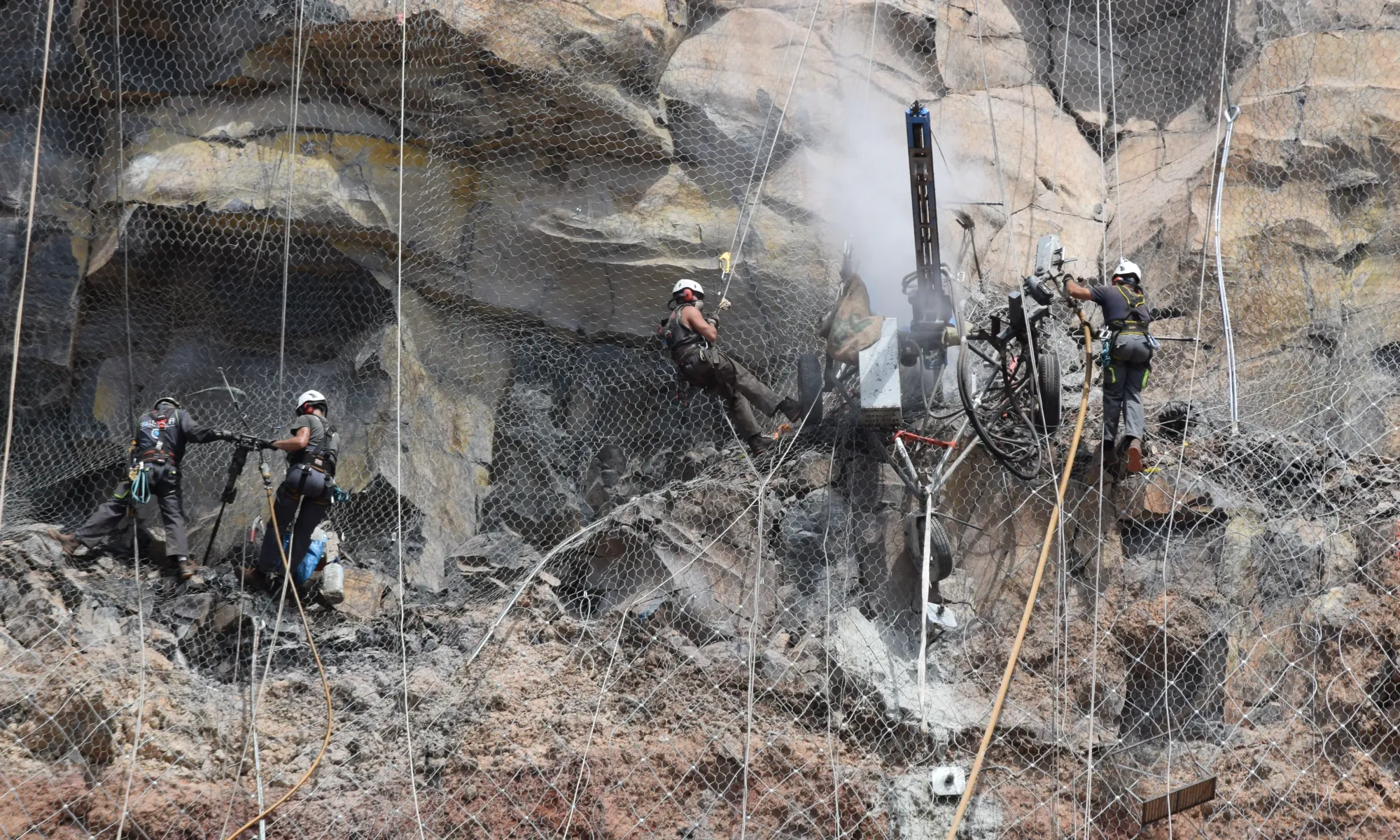
Solutions for slope stabilisation
At Solutioma, we have a long history in the field of slope stabilisation. This allows us to identify potential stability problems in slopes and implement and execute the most suitable solutions according to the specific needs of each project.
Slope stabilisation involves direct action on a slope or embankments that presents stability issues. There are different techniques that, suited to the type of difficulty existing in the slope, ensure safety in multiple areas and infrastructures, buildings, or public interest spaces affected by landslides.
What solutions do we offer for slope stabilisation?
High-resistance membranes
High-resistance membranes are ideal for slopes at risk of mass detachments, whether blocks or disaggregated materials. These membranes are adjusted to the terrain using bolts, preventing the movement and detachment of large masses of unstable soil and rock.
Cable mesh
Cable mesh is an effective solution to control and minimise land displacement, especially in situations where it is necessary to use systems that guarantee high support capacities.
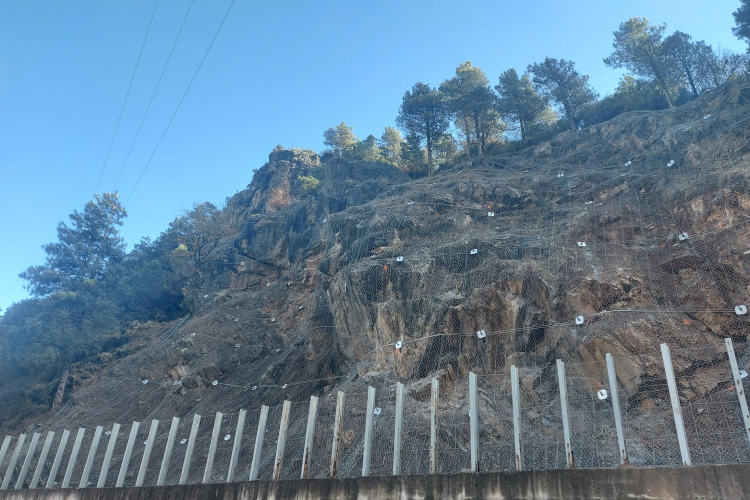
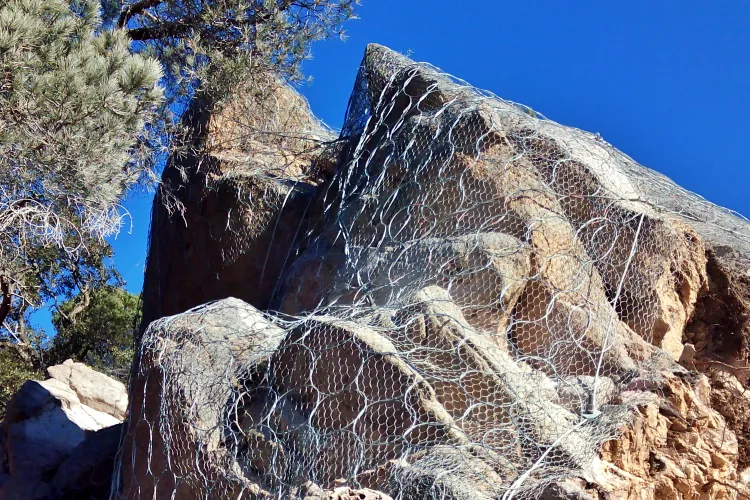
Ring mesh
Ring mesh systems prevent detachments and the movement of unstable rocks from the slope. This solution stands out for its ability to adapt to the surface irregularities of the terrain, providing an effective containment system both on slopes and in areas with complex geology.
Bores and anchors
Anchors are an essential part of the stabilisation and protection systems against landslides. At Solutioma, we size and execute the most suitable anchorage system in each case to guarantee the necessary support capacity of the system.
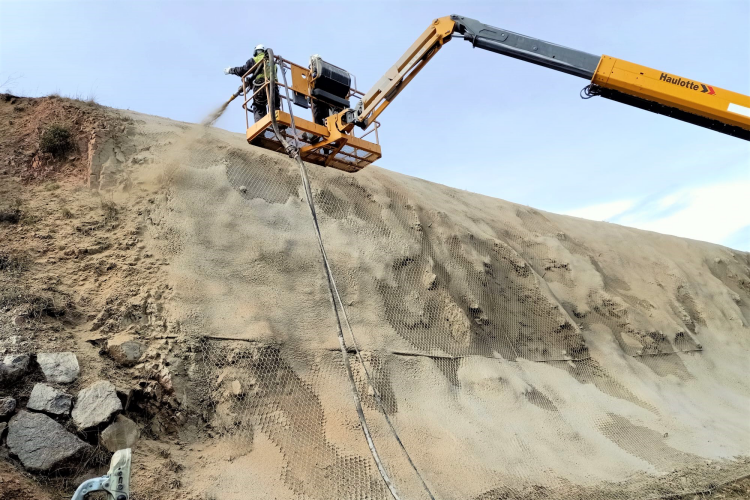
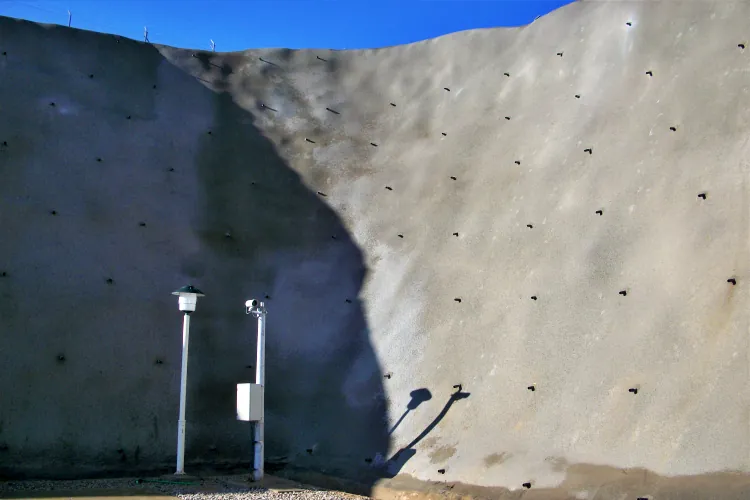
Spraying concrete or shotcrete
Spraying concrete or shotcrete is a reinforcement technique that provides a solid and durable protective layer, suitable for stabilising slopes and preventing erosion. In addition, this methodology allows for quick and efficient application, perfectly adapting to various shapes and contours of the terrain.
Soil nailing
Soil nailing is an embankment reinforcement technique we use to stabilise existing slopes. Through the insertion of steel bars into the ground, this technique offers an effective solution, suitable for cut slopes or excavations where overpressures can mobilise the soil and cause it to slide.
Drainage
As a complementary technique to sprayed concrete and Soil Nailing, the execution of drainage or water evacuations on the slope will be necessary to ensure the proper functioning of these stabilisation systems.
Green walls
Green walls stabilise slopes and integrate an aesthetic and ecological solution. This option is suitable for projects seeking a balance between functionality and respect for the environment.
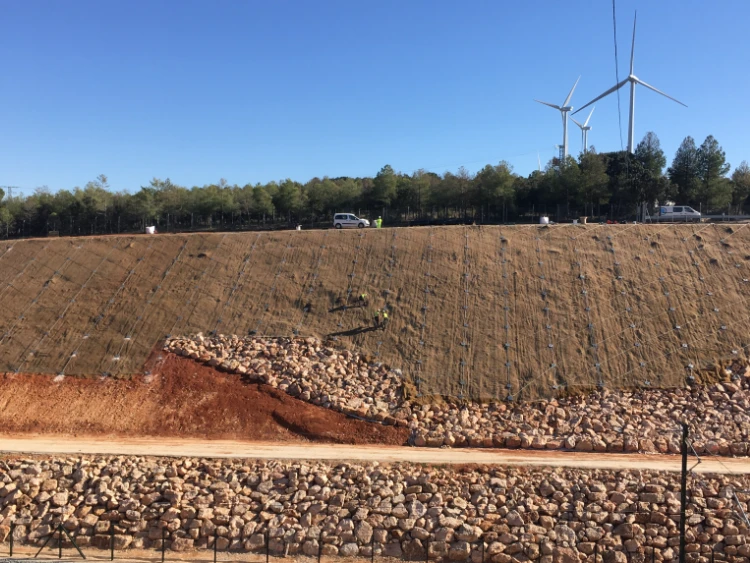
Gabions
Gabions are structures, usually of double-twist mesh, filled with rocks. This solution offers excellent resistance performance, acting as gravity walls and is especially suitable for adapting to the terrain.
YouTube channel
Videos of our projects
See how we work on site: slope scaling, dynamic rockfall barriers and rope access work filmed on our projects.
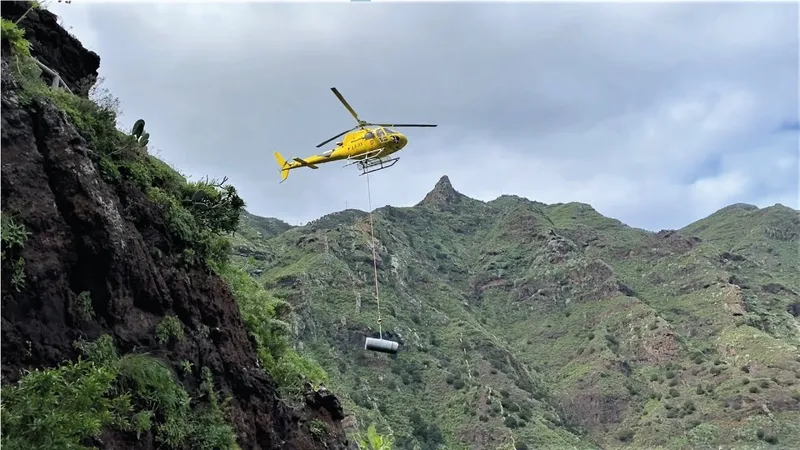
On-site video
Helicopter slope stabilisation and rockfall protection
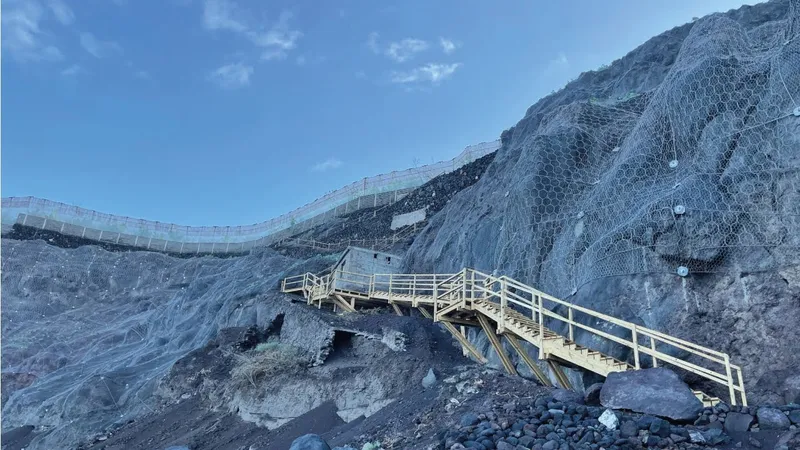
On-site video
Slope stabilisation and pedestrian access. Playa La Zamora – La Palma
FAQs
FAQs
What is the difference between sprayed concrete and shotcrete?
In construction and projects, they are often called interchangeably, but initially, the process of projecting mortar was patented with the name of Shotcrete. Later, coarse aggregate was added, and it began to be called sprayed concrete.
Thus, shotcrete typically refers to the mix with a maximum aggregate of 8 mm and when it contains an aggregate of a larger diameter we refer to it as sprayed concrete.
What is shotcrete?
Shotcrete is a mix composed of water, aggregate, cement, and additives that is projected at high speed onto surfaces to create a resistant coating layer. It is used in slope stabilisation, tunnels, and other structures to achieve a resistant, durable protection with high impermeability.
What are the benefits of stabilising a slope?
The benefits of slope stabilisation include reducing the risk of landslides and slides, protecting infrastructure and ensuring the safety of people near the slopes. It can also contribute to environmental conservation by preventing soil erosion.
How to stabilise a slope?
To stabilise a slope, various techniques or integral solutions can be employed, such as the installation of high-performance membranes, sprayed concrete, or reinforced double-twist mesh, among other systems. The choice of the suitable solution depends on the specific characteristics of the slope and the instability problems.
What is slope stabilisation?
Slope stabilisation involves direct action on a slope or hillside that presents stability problems. It is a set of techniques and measures used to prevent the collapse or detachment of land, rocks, or vegetative material on slopes or hillsides. Its goal is to maintain the structural integrity of these inclined surfaces and reduce the risk of slides.
Contact
Do you have any questions about slope stabilisation?
If you need any clarification, do not hesitate to contact our technical team, who will resolve any doubts you may have. We have years of experience and knowledge that we will put at your disposal from the first moment. What do you need?
- +34 900 101 895
Call us if you prefer - solutioma@solutioma.com
Write to us directly - Over 30 years of experience
Survey, design and execution with our own team and machinery - Offices in Spain and Romania
Lleida, Madrid, Canary Islands, Jaén, Gipuzkoa and Bucharest