
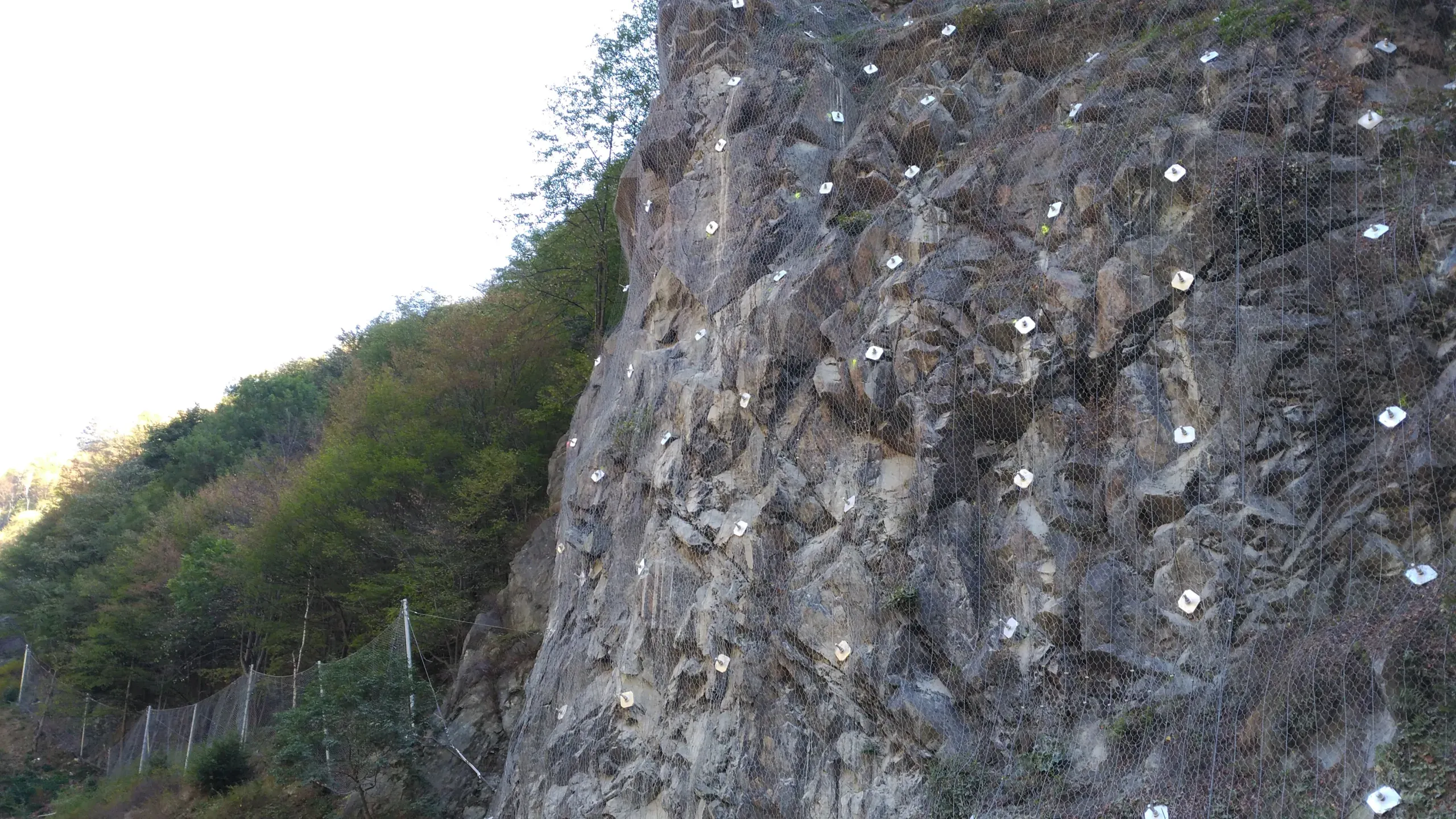
Slope stabilisation
High-resistance membrane
High-resistance membrane for slopes: double-twist mesh with steel cable, anchored with rock bolts into sound rock. Design and installation.
- Over 30 years of experience
- Survey, design and execution with our own team and machinery
- Offices in Spain and Romania
High-resistance membranes for slopes at risk of rockfall
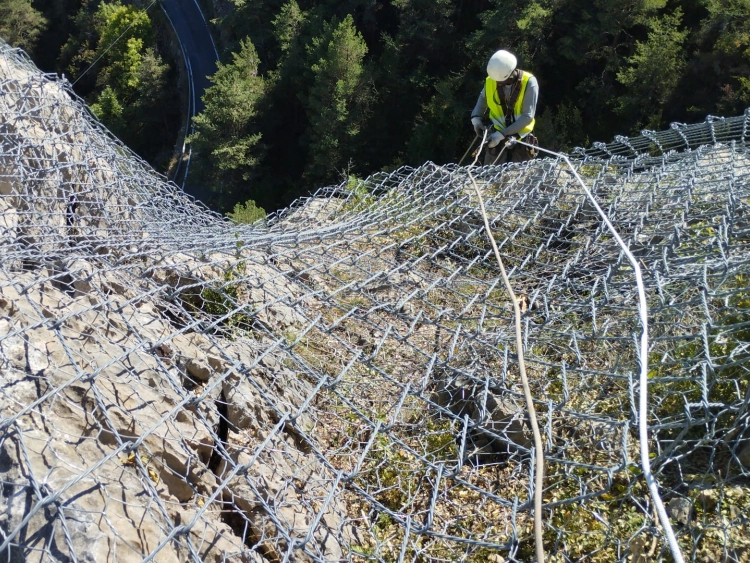
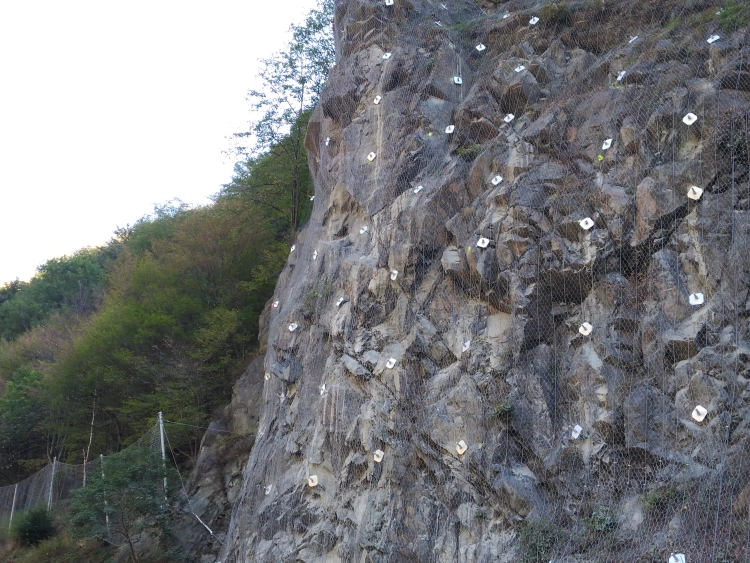
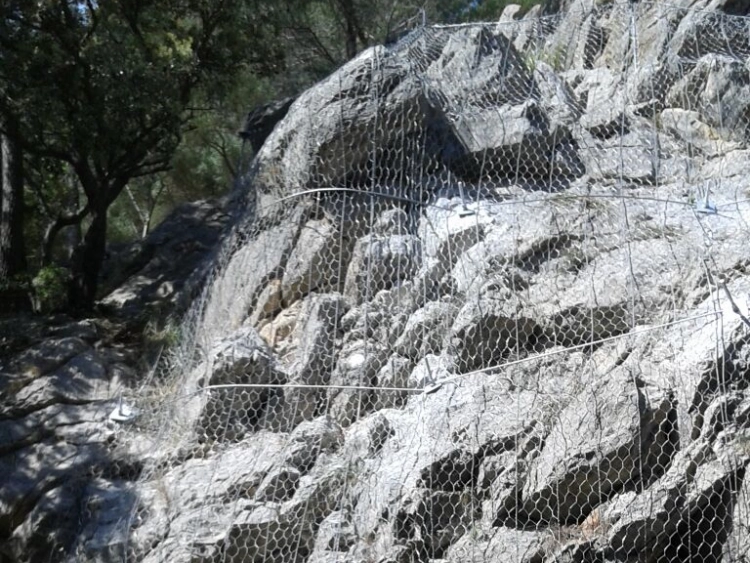
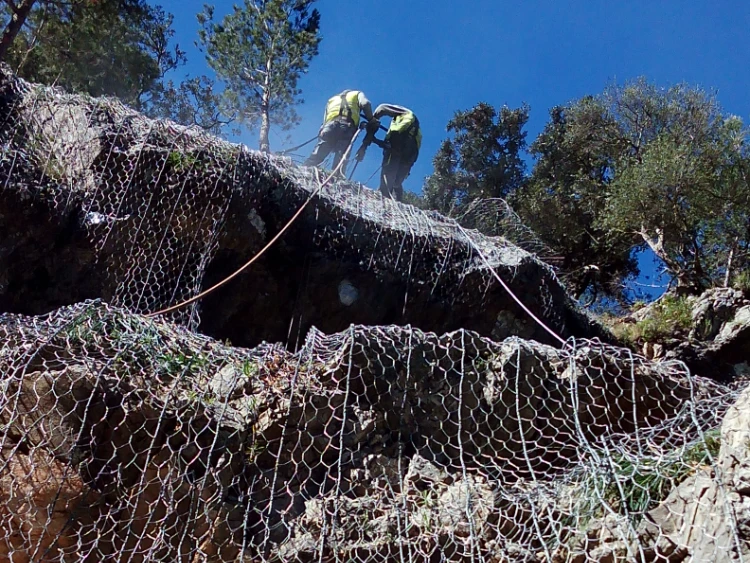
A high-resistance membrane for slopes is a combined system of steel cable and hexagonal double-twist mesh, anchored to the ground with rock bolts, that holds large blocks and loose material at risk of detachment. At Solutioma, we size and install these membranes for slope stabilisation in new works and maintenance.
The high-resistance metal membrane is an effective alternative in a wide range of geological conditions and, in many cases, can replace cable mesh.
The load-bearing capacity of the membrane and its resistance to the forces of nature make it a resource for preserving the integrity of vulnerable slopes.
Do you have unstable blocks or masses on a slope?
We will tell you whether a high-resistance membrane is the right solution and prepare an assessment for you. You can also call us on +34 900 101 895.
Features of high-resistance membranes
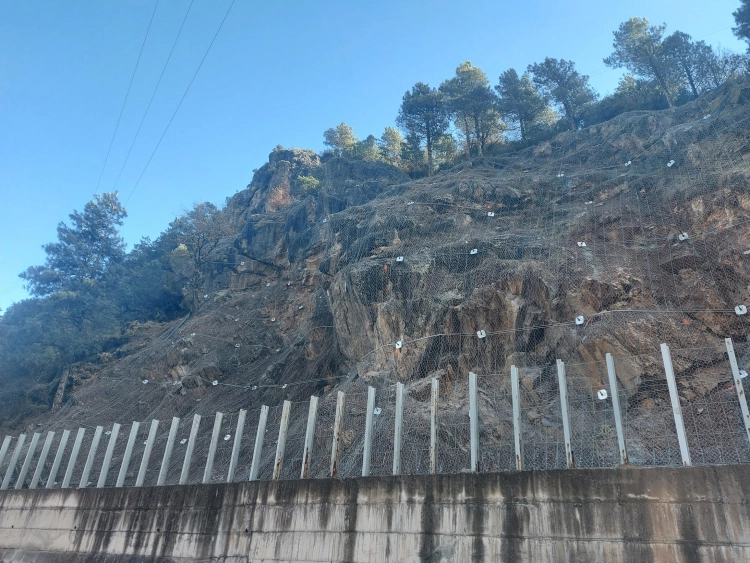
The high-resistance membranes we install at Solutioma are fitted to the ground with passive or active rock bolts, designed to transmit the load to a depth that reaches sound rock. This anchorage to the ground is what provides effective and lasting stabilisation.
Depending on the needs of the ground, the membrane can also incorporate horizontal cables that improve the distribution of stresses and, with it, the capacity of the whole system.
Advantages of high-resistance membranes
The main advantages of high-resistance membranes are:
- High integration capacity in the environment, allowing revegetation in the areas that require it.
- High resistance capacity.
- Quick installation procedure, which increases work output.
- High load capacities.
- The cabling allows a better adjustment to the terrain.
Applications and performance of high-resistance membranes
The main applications of high-resistance membranes are:
- Control of large block detachments.
- Stabilisation of large unstable masses.
- Stabilisation of slopes with frequent rockfalls of varying magnitude.
In the flexible system formed by the high-resistance membrane, the rock bolts and the distribution cables, the membrane retains the material that detaches from the surface of the unstable ground and transmits the stresses to the other elements, while the rock bolts provide the overall stability of the slope.
The membrane is designed as a passive element that comes into operation once the ground starts to move. High-resistance membranes are characterised by their tensile and puncture resistance; depending on the requirements of the ground and of the area to be stabilised, we install the one that best suits the problem in question. We also size the bar anchors or rock bolts to the needs of each site, rather than following a single pattern.
Cable-reinforced high-resistance membrane
Flexible cable-reinforced membranes have the steel cable woven into the mesh during manufacture and, as a result, contain and stabilise movements of large masses of unstable soil and rock, holding them in place to prevent detachment.
Cable-reinforced membranes, thanks to their flexible design, adapt to the variations and irregularities of the slope, which provides a durable and reliable solution in very different geological conditions.
Study, design calculations and installation of high-resistance membranes
At Solutioma, we study, define, calculate and size high-resistance membrane systems in full: the type of membrane, the capacity of the rock bolting, the characteristics of the distribution cables and the perimeter anchors. We then carry out the most suitable solution on site.
High-resistance membrane projects
High-resistance membrane projects
YouTube channel
Videos of our projects
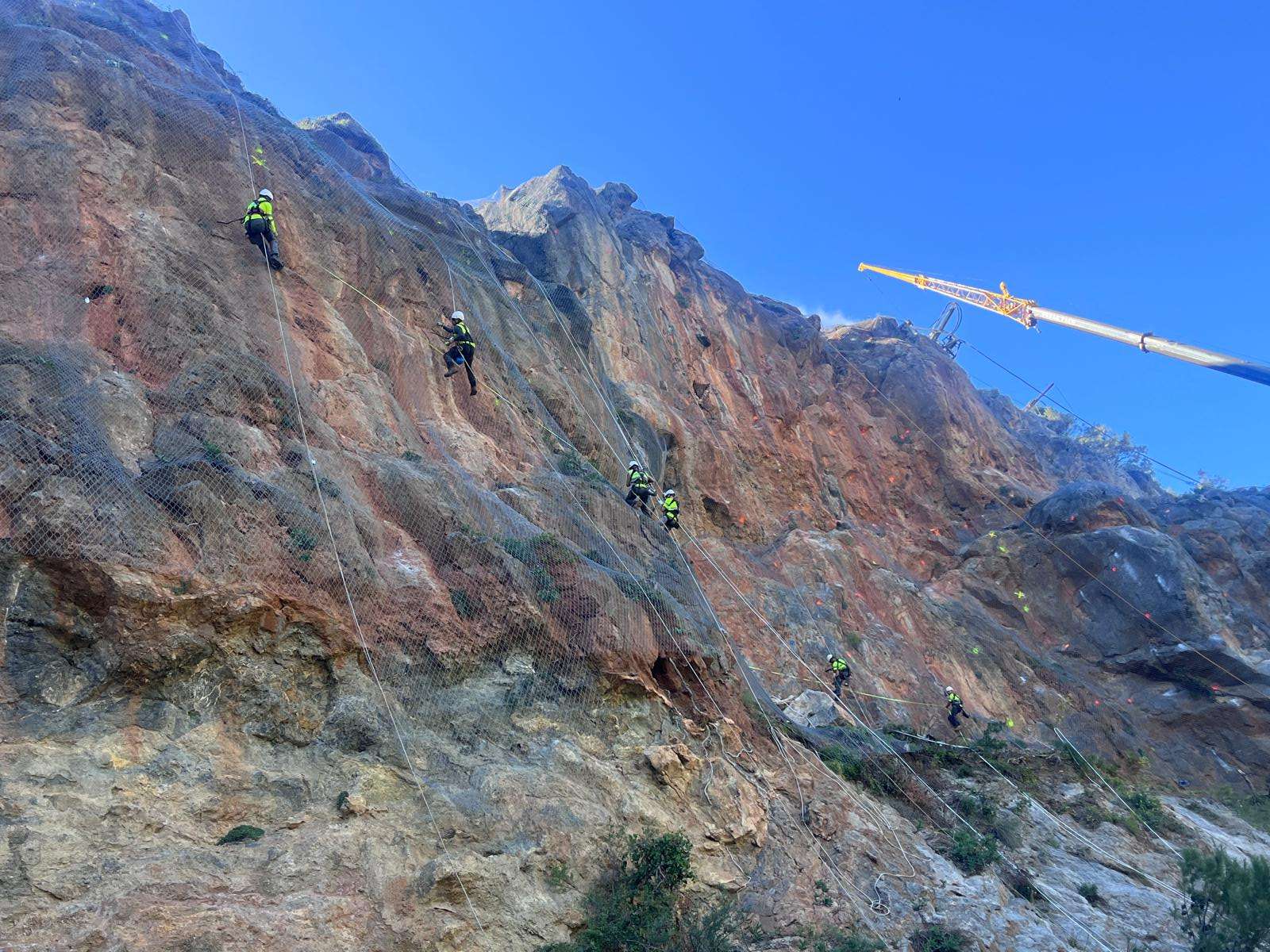
See how we work on site: slope scaling, dynamic rockfall barriers and rope access work filmed on our projects.
On-site video
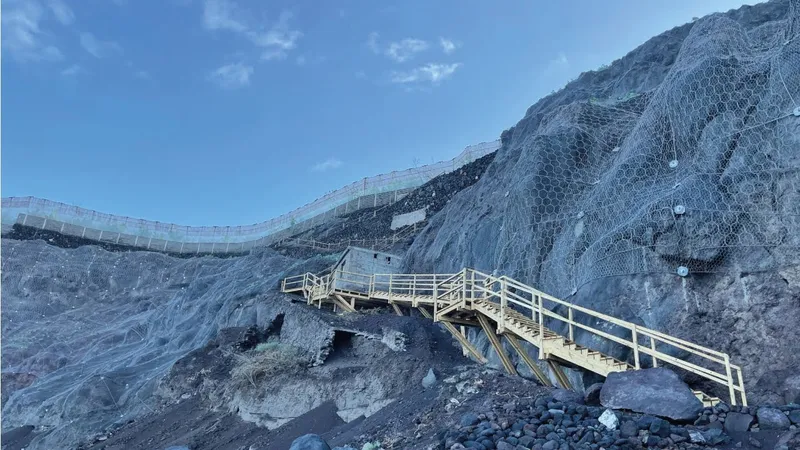
Slope stabilisation and pedestrian access. La Zamora Beach – La Palma
On-site video
Specialists in high resistance membranes
Frequently asked questions about high-resistance membranes
Frequently asked questions about high-resistance membranes
What is a high-resistance membrane for slopes?
A high-resistance membrane for slopes is a flexible stabilisation system made of hexagonal double-twist mesh with steel cable woven in during manufacture. It is anchored to the ground with rock bolts and distribution cables to hold the slope in place and prevent rockfalls.
In the UK market, similar products are often described as high-tensile mesh or high-tensile steel mesh, and some specifiers call it a reinforced metal membrane. Our technical data sheet defines it as a combined system of steel cable and wire mesh, suitable for slopes at risk of mass detachment, whether large blocks or loose material.
The system shares out the work: the membrane retains the material that detaches at the surface and transmits the stresses to the other elements, while the rock bolts, which reach sound rock, provide overall stability. The membrane is a passive element, which only takes load once the ground starts to move.
At Solutioma, we define each complete system, from the type of membrane to the perimeter anchors, and install it with our own rope access teams. If you have a slope with unstable blocks, tell us about it and we will study the case.
When is high-tensile mesh used on slopes?
High-tensile mesh is used on slopes when large blocks or unstable masses need to be held in place and a simple wire mesh cannot support them. It is common on slopes with frequent rockfalls of varying magnitude.
Our technical data sheet lists three applications: the control of large block detachments, the stabilisation of large unstable masses and slopes with frequent rockfall problems. In all of them, the issue is not only loose stones, but a volume of rock or soil that has to be anchored.
The difference from double-twist mesh lies in the woven steel cable: plain mesh retains or guides surface rockfall, whereas the high-tensile mesh for rockfall adds resistance and load capacity and, thanks to the cabling, fits the ground more closely. The data sheet also credits it with advantages over other membranes with high elasticity and deformation.
The choice depends on the instability mechanism and on the size of the blocks. Our technicians inspect the slope and tell you whether the high-resistance membrane is the right option or whether another technique would work better.
How is a high-resistance membrane installed on a slope?
The membrane is spread over the slope and secured with passive or active rock bolts, which transmit the load at depth to sound rock, where the necessary bearing resistance is obtained.
Other elements complete the system. Depending on the needs of the ground, the cable-reinforced mesh can incorporate horizontal cables, which improve the distribution of stresses and the capacity of the system, together with distribution cables and perimeter anchors that close the assembly.
There is no single pattern. The length, diameter and spacing of the rock bolts are sized for each site on the basis of a slope study: rock fracturing, thickness of the unstable material and expected loads. If there are loose blocks, the slope is scaled before the membrane is installed.
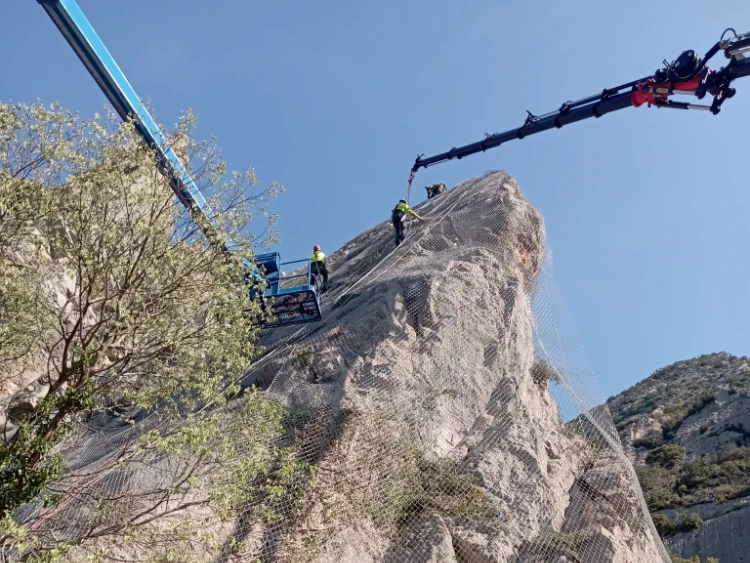
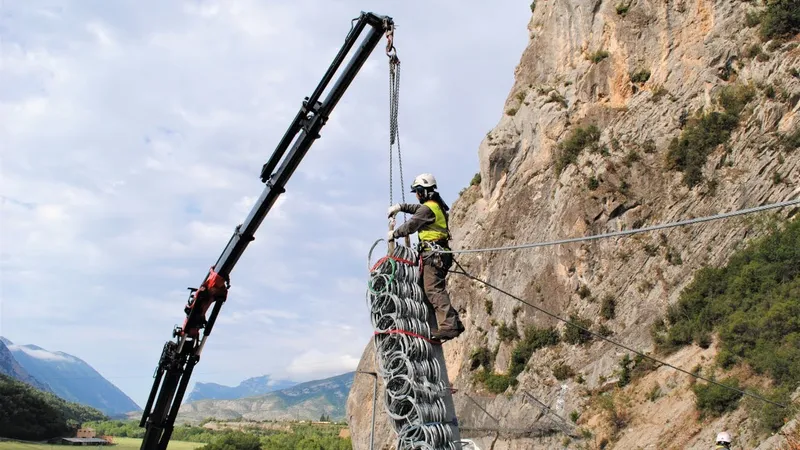
We usually carry out the work with rope access teams, drilling from the slope itself with our own machinery; where there is no track, the material arrives by truck-mounted crane or helicopter. You can read more about this phase on our bores and anchors page, or ask us to review your site.
High-resistance membrane or cable mesh: which is better?
In many cases, the high-resistance metal membrane can replace cable mesh: our technical data sheet states this, because both systems share applications with large blocks, unstable masses and frequent rockfalls.
The advantages that usually tip the balance towards the membrane are its quick installation procedure, which increases work output, its high load capacity and the closer fit to the ground provided by the woven cable. On irregular slopes, this adaptation to the surface is particularly useful.
However, the decision is never generic. It depends on the size and shape of the blocks, the geometry and height of the slope, the condition of the rock and the stresses that the system must transmit to the rock bolts. In some situations, the calculations or the project itself recommend keeping the cable mesh.
At Solutioma, we compare both alternatives using the data from your slope and propose the one that gives the best technical response. If you already have a design drawn up, we can review it with you.
Can a slope with a high-resistance membrane be revegetated?
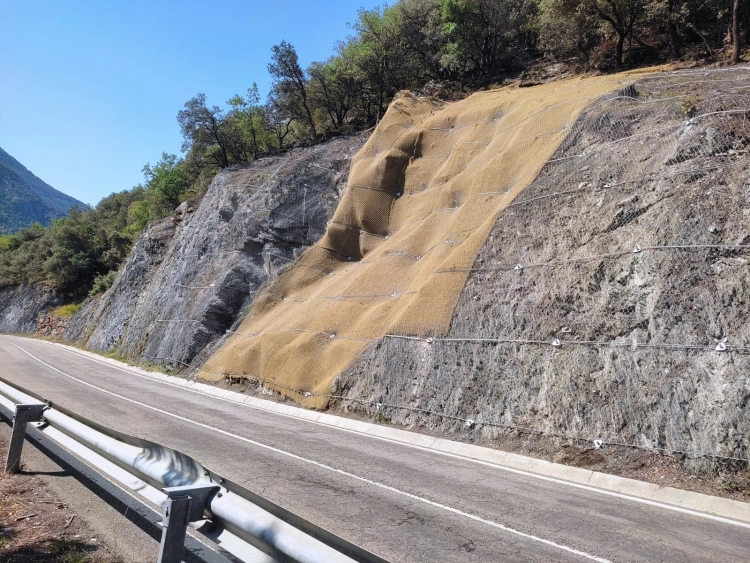
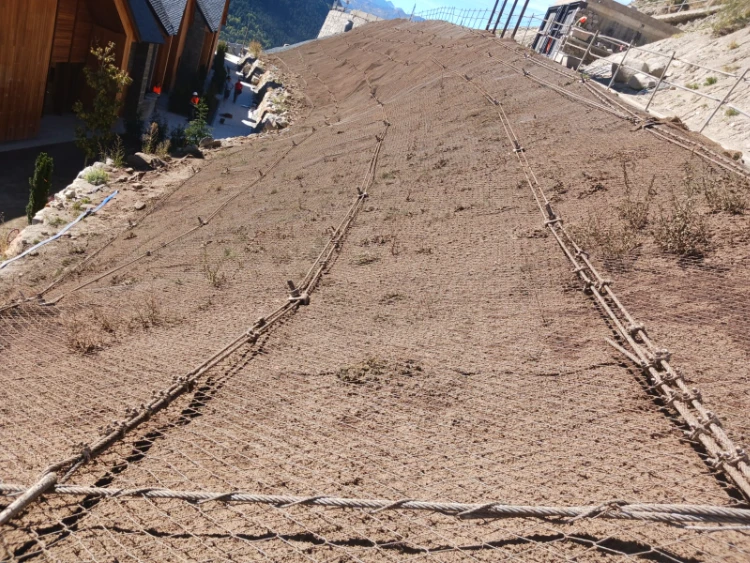
Yes. One of the advantages of a high-resistance membrane for slopes is its high capacity to blend into the environment, which allows the areas of the slope that need it to be revegetated once the system is in place.
The hexagonal mesh leaves room for vegetation to take root through it, and the woven cable keeps the membrane close to the surface. This means that erosion control techniques can be applied over the stabilisation system itself, without removing or modifying it.
The usual approach is to combine the membrane with hydroseeding or other revegetation techniques. Where fine soil also has to be retained, there is the geomat with high-resistance membrane variant, which adds the erosion control provided by the geomat to the strength of the membrane.
Feasibility depends on the available soil, the orientation and the local climate; on bare rock faces, revegetation is usually limited to strips with some soil. Our technicians assess this in the preliminary study and suggest the most suitable combination for your slope.
How much does a high-resistance membrane cost?
The cost of a high-resistance membrane is calculated for each slope, because it depends on the surface area, the anchoring system that results from the calculations and, to a large extent, the access conditions.
The main factors include the area to be treated, the type of high-tensile steel mesh, the number, length and diameter of the rock bolts, the hardness of the rock to be drilled and the need for horizontal cables or perimeter anchors. Prior scaling, if unstable blocks have to be removed, is also part of the quote.
Access often makes the difference: working from a platform or with a truck-mounted crane is not the same as working with rope access teams or using a helicopter to carry the material. The quick installation procedure of the system helps to keep the installation cost under control.
To prepare an assessment, send us the location, a few photographs and, if you have one, the geotechnical report. We work in Spain and internationally, with offices in Lleida, Madrid, the Canary Islands, Jaén and Gipuzkoa; you can also call us on +34 900 101 895.
Contact
Why entrust your high-resistance membrane to Solutioma?
At Solutioma, we study, design and install high-resistance membranes to hold large blocks and loose material on slopes at risk of rockfall, with people who have more than 30 years of experience in the sector, rope access teams and our own machinery.
If you would like to discuss any questions with our technical team or request a quote for the installation of high-resistance membranes, please fill in the form below. If you prefer, you can also call us on +34 900 101 895; we will be happy to assist you.
- +34 900 101 895
Call us if you prefer - solutioma@solutioma.com
Write to us directly - Over 30 years of experience
Survey, design and execution with our own team and machinery - Offices in Spain and Romania
Lleida, Madrid, Canary Islands, Jaén, Gipuzkoa and Bucharest