Slope stabilisation
Cable mesh
Cable mesh for slopes: galvanised steel cable net anchored with rock bolts to hold large blocks and unstable masses. Design and installation.
- Over 30 years of experience
- Survey, design and execution with our own team and machinery
- Offices in Spain and Romania
Cable mesh for slopes at risk of rockfall
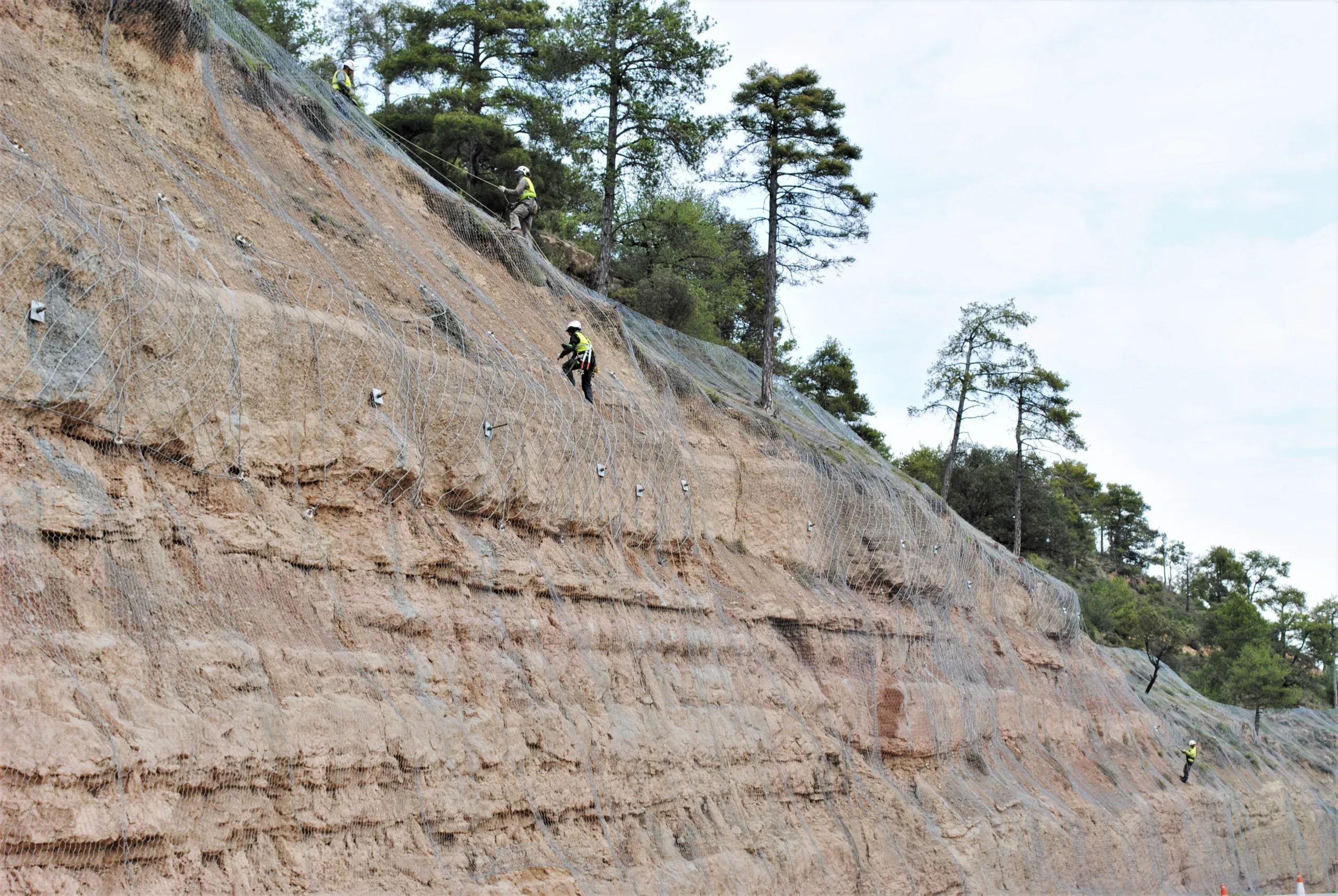
Cable mesh for slopes is a galvanised steel cable net, installed in panels joined together and anchored with rock bolts, that holds large blocks and unstable masses in place. At Solutioma, we size and install it for slope stabilisation where there are significant instabilities.
Cable mesh provides high-capacity support in projects that require robust and efficient slope stabilisation.
Cable mesh adapts to complex and varied geological contexts, and provides a safe and lasting solution at each site.
Are there large unstable blocks on your slope?
We will study whether cable mesh is the right solution and prepare an assessment for you. You can also call us on +34 900 101 895.
Features of cable mesh for slopes
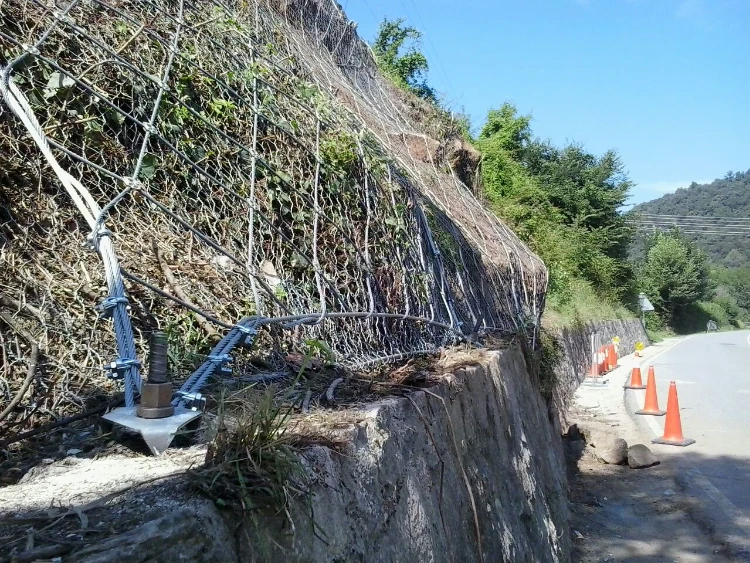
At Solutioma, we carry out a detailed analysis of the instabilities detected so that the installation responds to the conditions of each location.
The close fit of the cable mesh to the ground increases safety and reduces the risk of landslides or collapses.
How cable mesh is installed on a slope
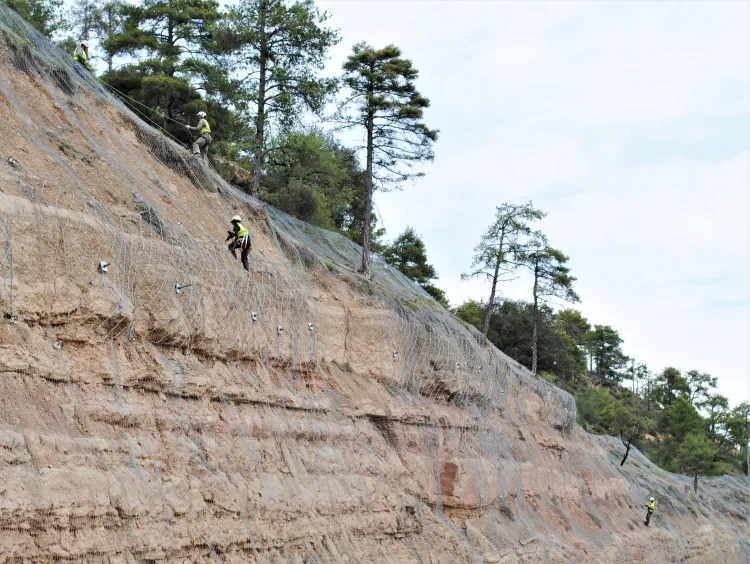
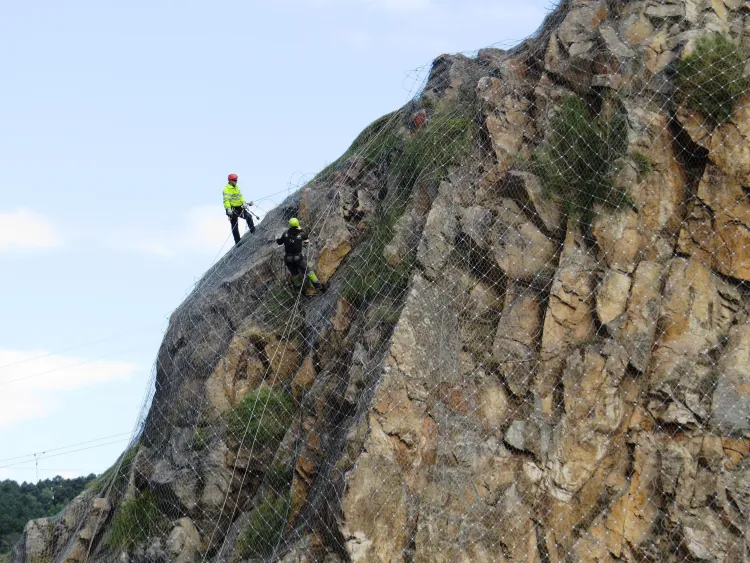
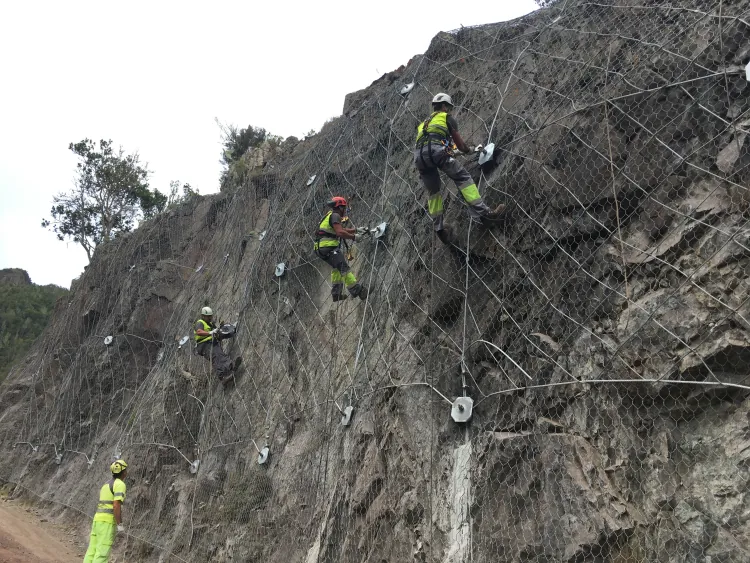
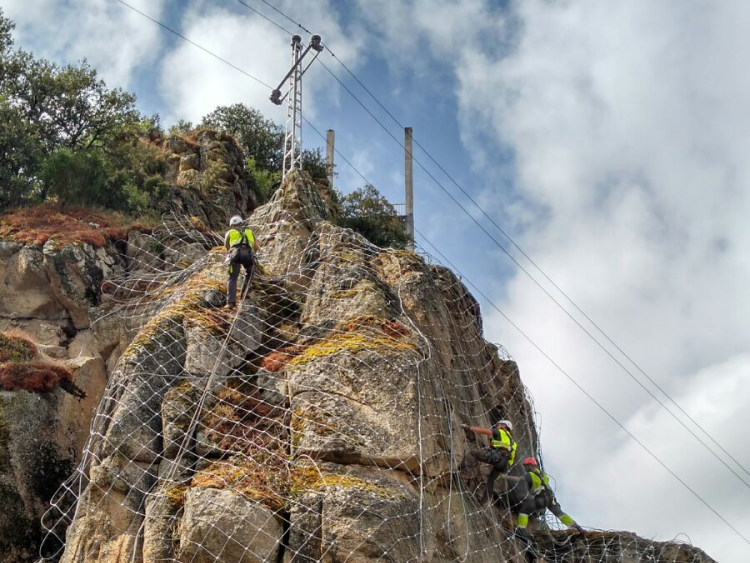
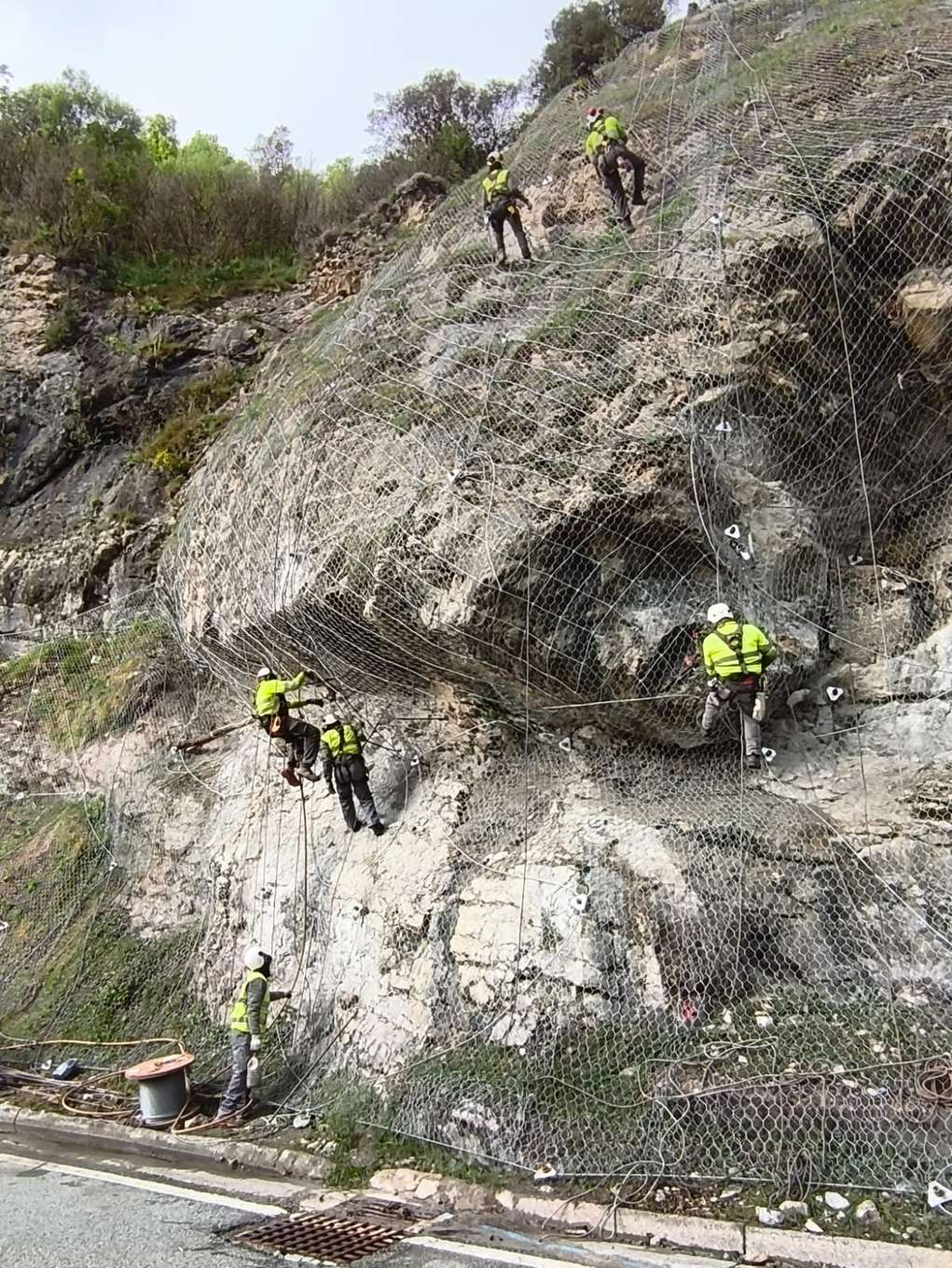
On slopes at risk of detachment of large blocks, stones or rock volumes, we install panels of steel cable mesh joined together with galvanised cable. We anchor them to the ground with passive or active rock bolts, which transmit the load at depth to the bedrock to achieve the necessary bearing resistance.
Galvanised steel cable meshes are characterised by their tensile and puncture resistance; depending on the requirements of the ground, we install the mesh whose characteristics best suit the problem in question.
The mesh panels can be placed directly on the surface of the previously scaled slope or over double-twist mesh already in place. The system is completed with cable perimeter anchors and overall bracing with galvanised cable.
Advantages and applications of cable mesh in slope stabilisation
The main applications of cable mesh are:
- Control of large block detachments.
- Stabilisation of large unstable masses.
- Stabilisation of slopes with frequent rockfalls of varying magnitude.
Study, design calculations and installation of cable mesh
At Solutioma, we study, define, calculate and size cable mesh systems in full: the type of mesh, the rock bolting, the characteristics of the distribution cables and the perimeter anchors. We then carry out the most suitable solution on site.
Bespoke calculations allow us to adapt each cable mesh to the specific slope. We work on the continuous improvement of our techniques to increase the stability and safety of each project.
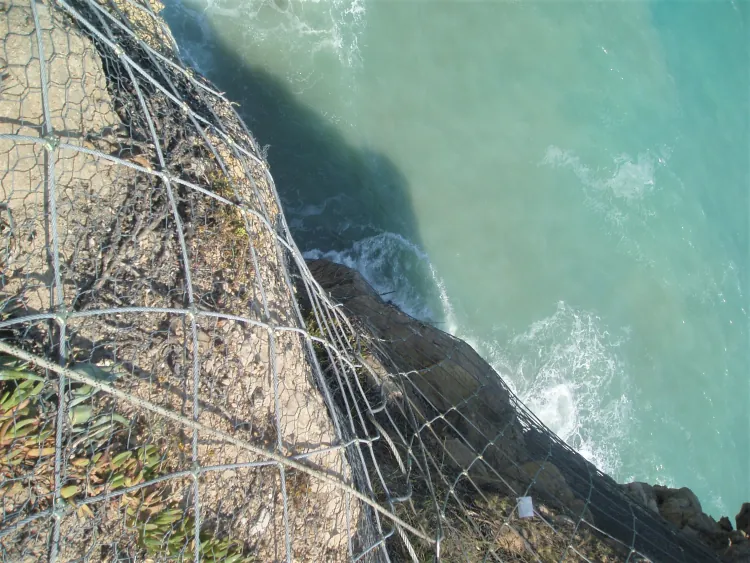
Cable mesh projects
Cable mesh projects
YouTube channel
Videos of our projects
See how we work on site: slope scaling, dynamic rockfall barriers and rope access work filmed on our projects.
On-site video
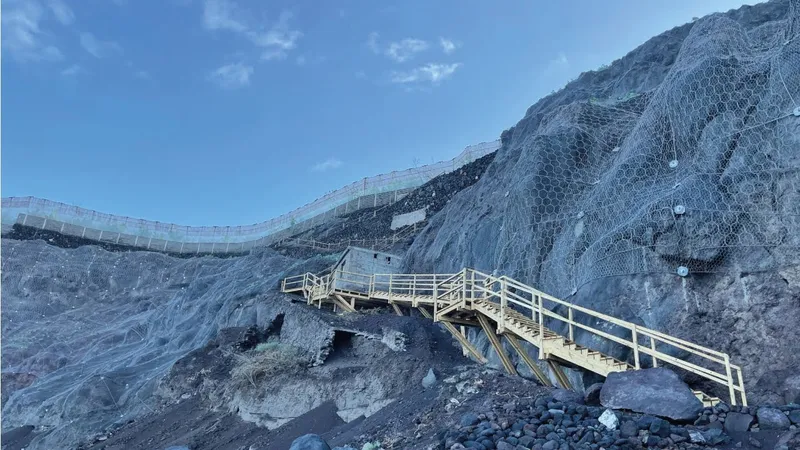
Slope stabilisation and pedestrian access. La Zamora Beach – La Palma
On-site video
Specialists in cable mesh
Frequently asked questions about cable mesh
Frequently asked questions about cable mesh
What is cable mesh for slopes?
Cable mesh for slopes is a stabilisation system made of steel cable mesh panels, joined together with galvanised steel cable and anchored to the ground with passive or active rock bolts. It is installed to hold slopes at risk of large-scale detachment.
The system, also known as a cable net or steel cable mesh, is intended for significant instabilities, whether the material comes away in blocks or as loose debris. The rock bolts transmit the load at depth to the bedrock, where the necessary bearing resistance is achieved.
The system is completed with distribution cables, perimeter anchors, usually made of cable, and overall bracing with galvanised cable that links the slings of the perimeter anchors to the mesh panels and the rock bolts. In this way, the mesh and the bolting work as one continuous system.
At Solutioma, we handle the whole process: we define the mesh, the type of bolting and the anchors, and carry out the installation with our rope access teams. If your slope has unstable blocks, we can assess it for you.
What is steel cable rock netting used for on slopes?
Steel cable rock netting, such as cable mesh, is used to hold large blocks and unstable masses that a wire mesh could not contain. It is a stabilisation system, not just a surface retention system.
Our technical data sheet lists three applications: the control of large block detachments, the stabilisation of large unstable masses and slopes with frequent rockfalls of varying magnitude. For this reason, a cable net is used for significant instabilities, where the load to be held is high.
The difference from double-twist mesh is one of capacity: hexagonal wire mesh retains or guides smaller stones, whereas cable mesh, anchored with rock bolts, holds much larger volumes of rock. The two systems are not mutually exclusive: when a slope combines large blocks and small fragments, the cable mesh is placed over the wire mesh.
The choice depends on the size of the blocks, the rock fracturing and what lies below the slope. Our technicians determine this during a preliminary inspection, which you can request by calling +34 900 101 895 or through our contact form.
How is cable mesh installed on a slope?
The wire rope net panels are placed directly on the surface of the slope, once it has been scaled, or over double-twist mesh already in place, and are anchored with rock bolts that reach the bedrock.
Direct placement is suitable when the unstable material consists mainly of blocks large enough to be retained by the cable mesh. If the slope also sheds small fragments that could pass through the openings, the double-twist mesh is installed first and the cable mesh is then laid over it.
In both cases, the first step is slope scaling: removing loose blocks and unstable material so that the mesh rests on a surface that is as even as possible. The rock bolts, the perimeter anchors, usually cable anchors, and the bracing with galvanised cable that links the slings to the mesh panels are then installed.
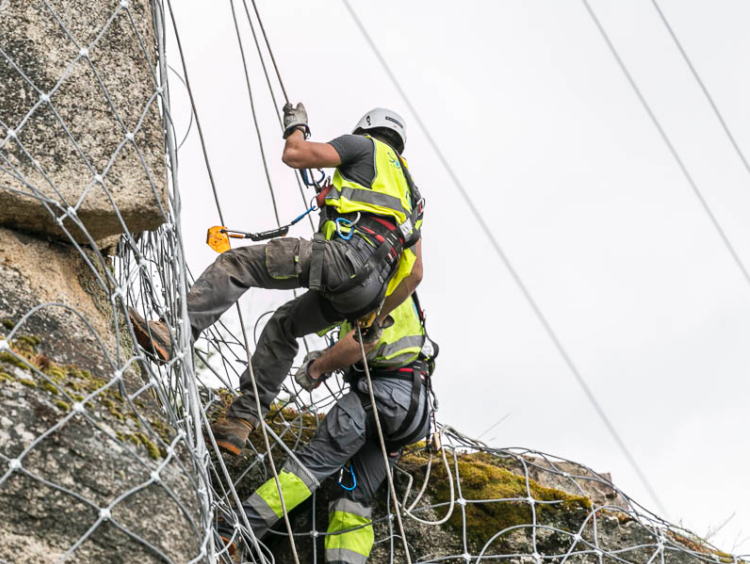
These operations are almost always carried out by means of hard-to-reach jobs with rope access. At Solutioma, our people have more than 30 years of experience in the sector and install the system safely, even on slopes with difficult access.
Cable mesh or high-resistance membrane: which is better?
The choice between cable mesh and a high-resistance membrane is made for each project on the basis of the calculations, because both systems solve similar problems: the size of the blocks, the geometry of the slope and the stresses to be transmitted to the rock bolts decide the matter.
The two systems share applications and the same operating principle, with rock bolts anchored at depth and distribution cables. The difference lies in how they are made: the membrane has the cable woven into the hexagonal mesh, whereas cable mesh is formed from separate panels joined with galvanised cable.
According to our technical data sheet, the high-resistance membrane can replace cable mesh in many cases, thanks to its quick installation and close fit to the ground. Cable mesh remains the preferred option when the calculations, the characteristics of the blocks or the project specifications recommend it.
If you are unsure which solution to choose, our technical department analyses your slope and explains the most suitable alternative before any work begins on site.
How does steel cable mesh work when the ground moves?
Steel cable mesh works as a passive element: it takes load when the ground starts to move and, from that moment, retains the material and transmits the stresses to the distribution cables and the rock bolts.
The division of roles is clear. The mesh retains what detaches at the surface and acts as a transmitter of stresses; the rock bolts, anchored in the bedrock, provide the overall stability of the slope. That is why the mesh and the bolting are designed together, as a single system.
Galvanised steel cable meshes are characterised by their tensile and puncture resistance, two key properties when a block presses against the mesh or tends to pass through it. The mesh is chosen according to the requirements of the ground and of the area to be stabilised, and the rock bolts are sized with the same approach, without a single pattern.
This approach requires a good knowledge of the slope before installation. At Solutioma, we carry out a detailed analysis of the instabilities detected so that the mesh and the anchors respond to the real loads; if you wish, we can review your case with you.
How much does it cost to install cable mesh on a slope?
The cost of cable mesh for slopes is calculated for each project, because it depends on the design of the system and on the access conditions at the work area.
The items with most influence are the number and length of the rock bolts, the hardness of the rock to be drilled, the area of mesh, the need to place double-twist mesh underneath and the volume of prior scaling. The perimeter anchors and the bracing also vary with the geometry of the slope.
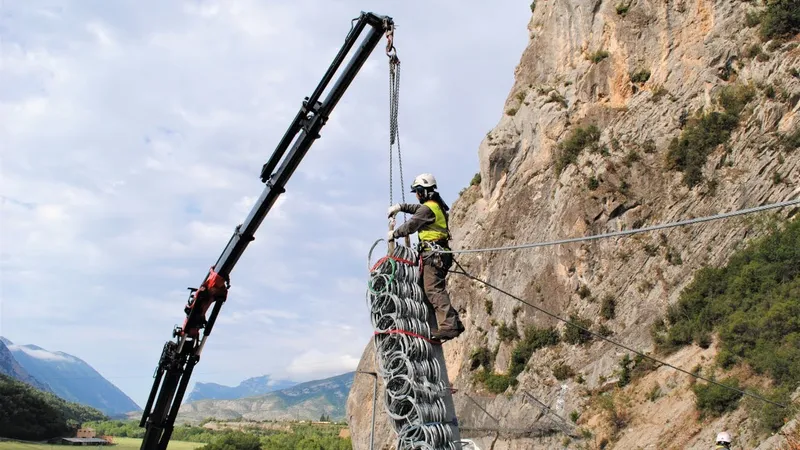
Accessibility is often the deciding factor. Many slopes require rope access work and the transport of material by truck-mounted crane or helicopter, which determines the resources and the organisation of the works. Having our own machinery allows us to adapt the equipment to each site.
Whether you are a site owner or an international contractor looking for a cable mesh solution, we work in Spain and internationally, with offices in Lleida, Madrid, the Canary Islands, Jaén and Gipuzkoa. For a no-obligation assessment, send us the location of the slope and a few photographs, or call us on +34 900 101 895.
Contact
Why entrust your cable mesh to Solutioma?
At Solutioma, we study, design and install cable mesh to stabilise slopes with large blocks and unstable masses, with people who have more than 30 years of experience in the sector, rope access teams and our own machinery.
If you would like to discuss any questions with our technical team or request a quote for the installation of cable mesh, please fill in the form below. If you prefer, you can also call us on +34 900 101 895; we will be happy to assist you.
- +34 900 101 895
Call us if you prefer - solutioma@solutioma.com
Write to us directly - Over 30 years of experience
Survey, design and execution with our own team and machinery - Offices in Spain and Romania
Lleida, Madrid, Canary Islands, Jaén, Gipuzkoa and Bucharest