
Rockfall protection
Wind blizzard protection barriers
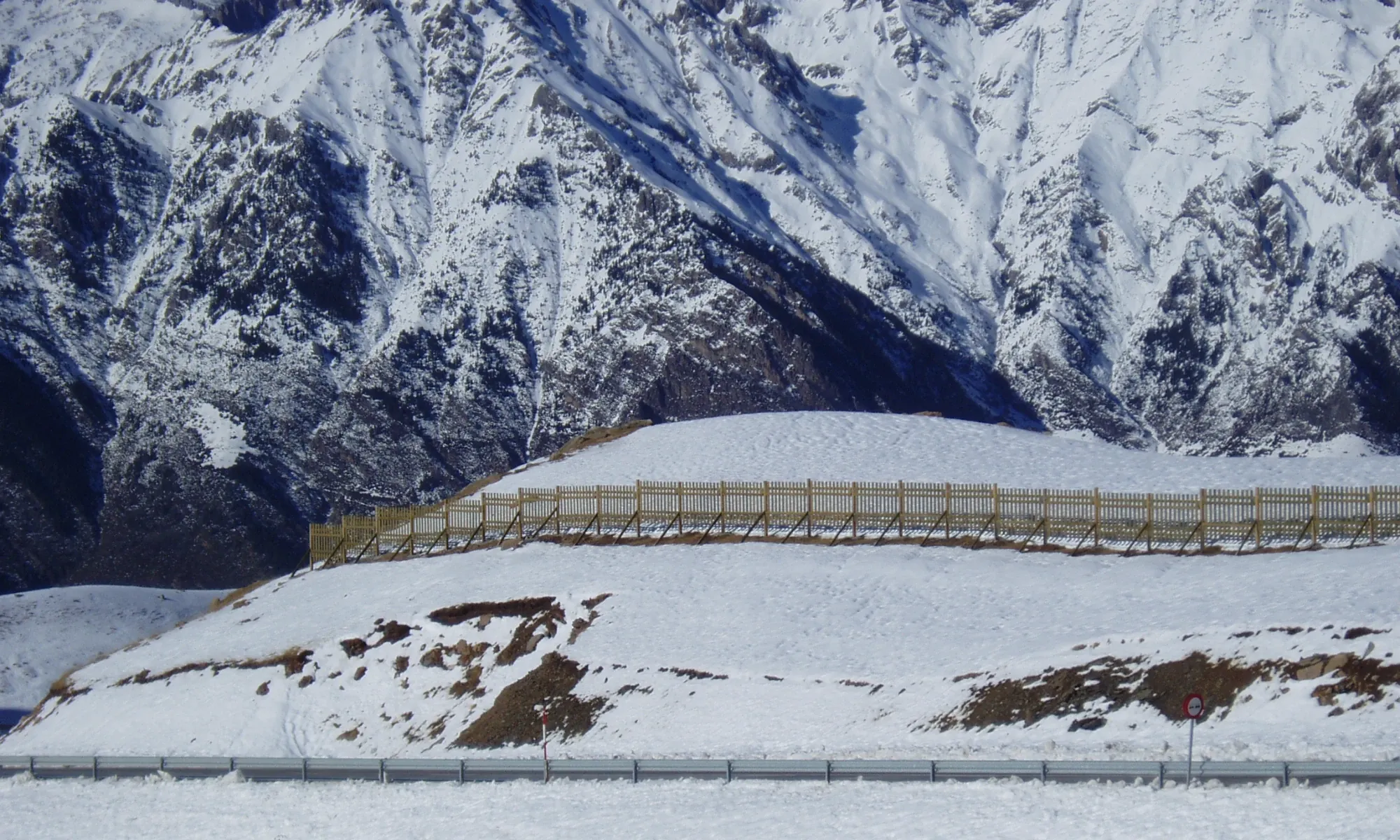
Snow fences and wind blizzard protection barriers of steel and timber that stop blowing snow from covering roads and railways.
- Over 30 years of experience
- Survey, design and execution with our own team and machinery
- Offices in Spain and Romania
Wind blizzard protection barriers: snow fences that protect roads from blizzards
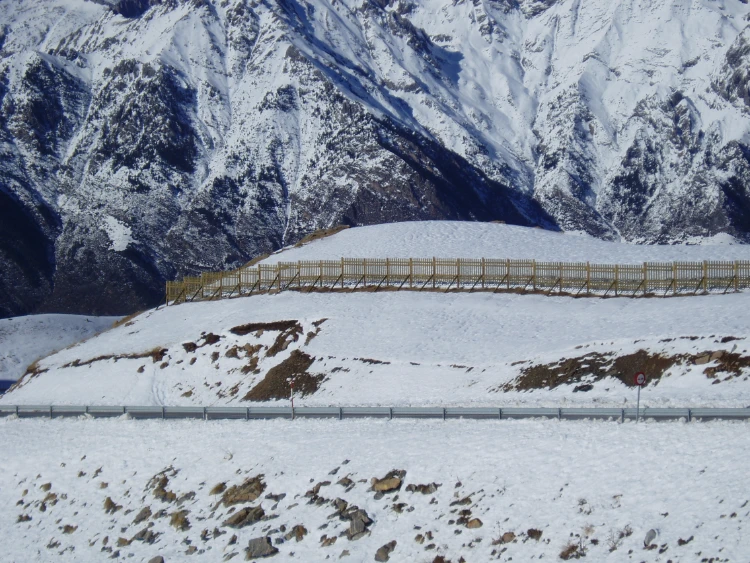
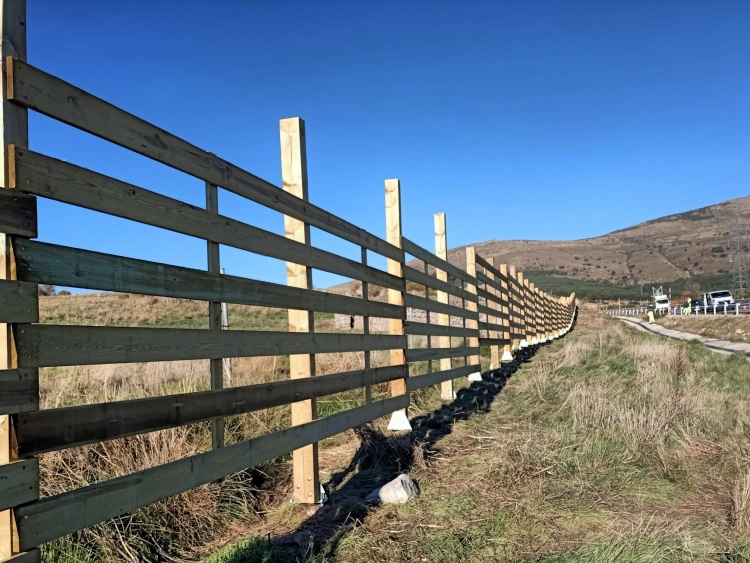
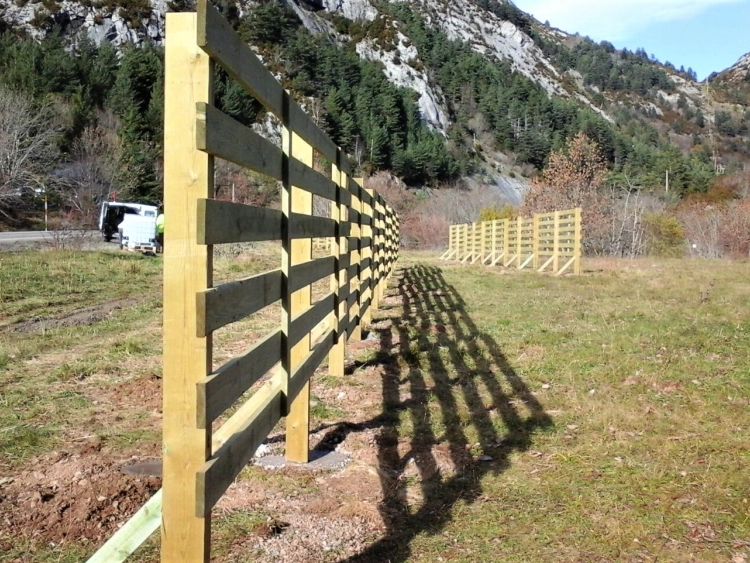
Wind blizzard protection barriers, also known as windbreak barriers or snow fences, are screens about 2.50 m high, with approximately half of their surface open, that slow down the wind so that the snow it carries settles before reaching the protected area. At Solutioma we install them on transport routes, mountain passes and some points of ski resorts.
Wind blizzard protection barriers are part of our rockfall protection systems: we study, size and install them to mitigate the effects of blizzards and prevent snow from invading roads.
Does the blizzard keep covering your road with snow?
We study the section and propose the type of barrier and the layout of the rows. You can also call us on +34 900 101 895.
How do wind blizzard protection barriers work?
Wind blizzard protection barriers are placed close to the road or area to be protected and in sections perpendicular to the direction of the prevailing wind.
Thus, the snow carried by the blizzard is deposited in front of the screen and not behind it, where the infrastructure to be protected is located.
The perpendicular arrangement to the wind allows the snow to be intercepted before it reaches critical areas. Wind blizzard protection barriers act as a filter: at a distance of 1 to 1.5 times their height, the wind loses speed and the snow builds up on the windward side, that is, the side facing the wind.
When wind blizzard protection barriers are needed
In areas with flat or gently sloping topography where snow is common, often the blizzard is more troublesome than the snowfall itself. Generally, when it snows, snow is removed from the road. However, there are areas where the wind continuously deposits snow back on the road.
In a blizzard, the wind drives the snow horizontally, lifts it 2 or 3 metres and carries it along. In these areas the problem is continuous: snow is deposited again after the snowploughs have passed, over periods that can last for weeks.
Installation and types of wind blizzard protection barriers
The installation of wind blizzard protection barriers is a process that requires precision and experience. At Solutioma we handle every step, from the initial site analysis to final execution, with our own teams and machinery.
We install different types of wind blizzard protection barrier depending on the resistance required in the area. From highest to lowest resistance, they can be:
- Steel section posts with timber board panels, used for their resistance.
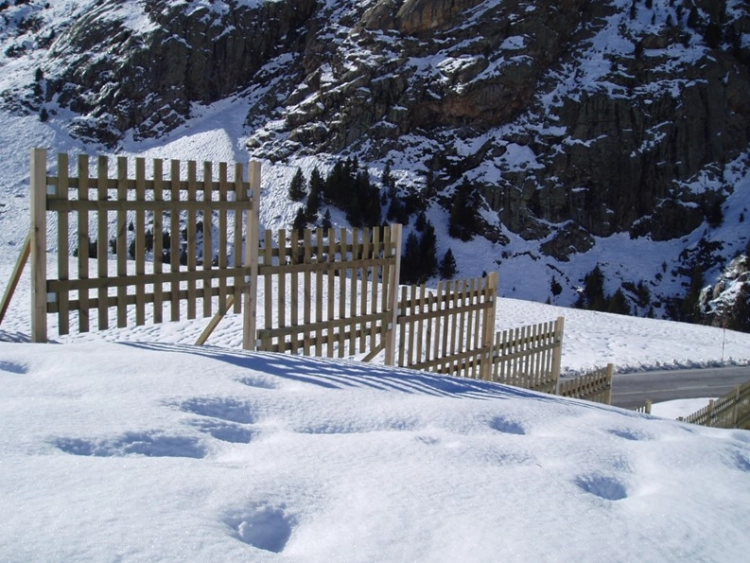
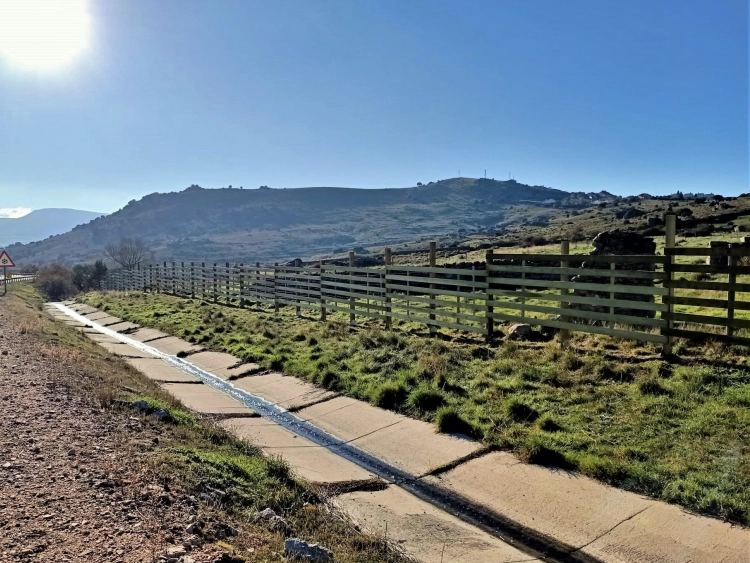
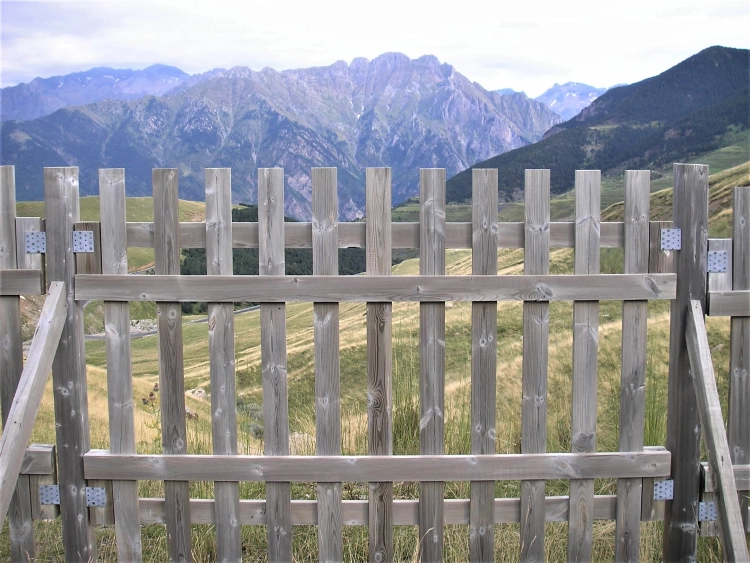
- Autoclave-treated timber, with board panels or chestnut paling panels, used for its better integration into the environment.
Design and sizing of wind blizzard protection barriers
At Solutioma we study in each case which material is most appropriate and calculate the right height and distance between rows, with tailor-made solutions for each section. This flexibility allows each solution to be effective and durable.
When to choose a wind blizzard protection barrier
A wind blizzard protection barrier is a suitable solution if the aim is to prevent the continuous build-up of snow caused by the wind on infrastructure such as roads, railways or tracks.
If your aim is to protect areas from possible snow avalanches in motion, there are more suitable and efficient methods, such as avalanche protection barriers, a solution that we also install at Solutioma.
Wind blizzard protection barriers installed
Wind blizzard protection barriers installed
YouTube channel
Videos of our projects
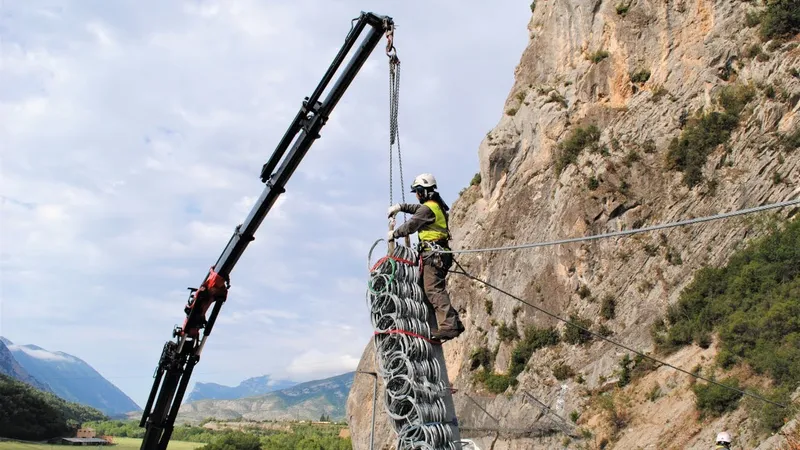
See how we work on site: slope scaling, dynamic rockfall barriers and rope access work filmed on our projects.
On-site video
Specialists in the installation of wind blizzard protection barriers
On-site video
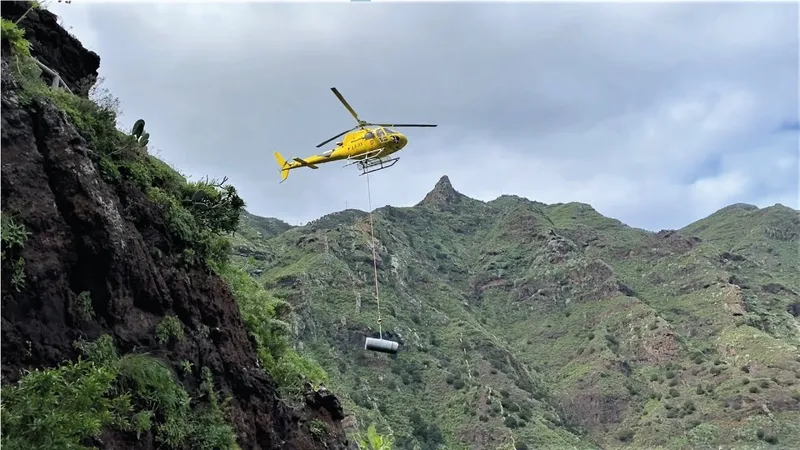
Slope stabilisation and rockfall protection with helicopters
Frequently asked questions about wind blizzard protection barriers
Frequently asked questions about wind blizzard protection barriers
What is a snow fence or wind blizzard protection barrier?
A snow fence, or wind blizzard protection barrier, is a screen about 2.50 m high, with approximately half of its surface hollow or open, that slows down the wind so that the snow it carries falls and builds up before reaching the road. It is also known as a windbreak barrier or snow drift fence.
The barrier does not stop the snow as a wall would. When the wind reaches it, it loses speed at a distance of 1 to 1.5 times the height of the screen, and the snow in suspension falls to the ground, builds up at its base and stops moving.
Because of the way it works, it is often called a windbreak fence or wind barrier. Its aim, however, is not to protect from the wind, but to prevent the snow that the wind carries from invading roads, railways, tracks or mountain passes, and from covering them again and again.
At Solutioma we study, define and size the right wind blizzard protection barriers for each problem. If you have a section that fills with snow after every clearance, we can study it with you.
What is a blizzard and when are wind blizzard protection barriers needed?
A blizzard is a snowstorm in which strong wind drives the snow horizontally, lifts it 2 or 3 metres and carries it until it is deposited elsewhere. Wind blizzard protection barriers are needed when this deposit keeps recurring on a road that has already been cleared.
It is a typical problem in flat or gently sloping areas where it snows frequently. There, the blizzard is often more troublesome than the snowfall itself: the effects of a snowfall are resolved in hours with a snowplough, but the wind keeps depositing snow on the carriageway for periods that can last for weeks.
Wind blizzard protection barriers are the right solution to prevent the continuous build-up of snow on linear infrastructure such as roads, railways or tracks. Our technical data sheet applies the same principle to sand carried by the wind.
If your road suffers from this problem, send us the location of the section and, if you have them, photographs taken in winter. Our technicians will assess whether wind blizzard protection barriers are the right answer for it.
How does a wind blizzard protection barrier work?
A wind blizzard protection barrier works like a filter: it reduces wind speed so that the snow it carries is deposited in front of the screen, on its windward side, and not behind it, where the infrastructure to be protected is located.
To achieve this, the barriers are placed close to the road or the area to be protected and in sections perpendicular to the direction of the prevailing wind. The screen has approximately half of its surface open and, at a distance of 1 to 1.5 times its height, the wind loses speed and drops the snow it carries.
The design of each section depends on the site. Depending on the exposure to wind and the amount of snow that reaches the road, the height of the screens and the distance between rows are calculated, and the most appropriate material is chosen for the resistance required in the area.
At Solutioma we handle the whole process, from the initial site analysis to final execution, with our own teams and machinery. You can call us on +34 900 101 895 to discuss your section with our technicians.
Can a wind blizzard protection barrier stop avalanches?
No. A wind blizzard protection barrier is designed for snow carried by the wind, not for snow avalanches in motion. To protect an area against avalanches there are more suitable and efficient methods, such as avalanche protection barriers.
The difference lies in the type of problem and the place of installation. The wind blizzard protection barrier is placed close to the road and acts on snow in suspension. The avalanche protection barrier, by contrast, is installed high up, on the high-mountain slope where the snow slab forms, and anchors the snow to the ground so that it does not slide.
Confusing the two systems has consequences: a snow fence is not designed to withstand the thrust of a mass of snow sliding at high speed. For this reason, before choosing a solution, it is advisable to identify whether the problem is the build-up of snow caused by the wind or the risk of an avalanche.
At Solutioma we install both systems, so we can assess your case without favouring either of them. Tell us what is happening on your road or slope and we will recommend the appropriate solution.
What types of snow fencing are there?
Depending on the resistance required in the area, there are three types of wind blizzard protection barriers, or snow fencing: steel section posts with timber board panels; posts, braces and timber panels; and steel or timber posts with chestnut paling panels joined by horizontal cables.
This order runs from highest to lowest resistance. Barriers with steel sections are indicated where demands are greatest, while timber barriers offer better integration into the environment, which is valued at mountain passes and ski resorts.
In all cases, autoclave-treated timber (Use Class 4) is used, a treatment designed for a structure that spends all year outdoors. The choice between one type and another also depends on the height required and on the distance between rows resulting from the calculation.
At Solutioma we study in each case which material is most appropriate and calculate the height and spacing of the rows. If you tell us the location, we will propose the type of barrier that best suits your section.
How much does it cost to install wind blizzard protection barriers?
The price of wind blizzard protection barriers depends mainly on the length of the section to be protected, the number of rows and the type of barrier chosen, so it is calculated for each project.
The length and exposure to wind determine how many metres of screen and how many rows are needed, and at what height. The material also counts: a barrier with steel posts and timber boards does not cost the same as one made of treated timber or chestnut paling.
The ground in which the posts are anchored and access to the site also have an influence. At mountain passes or next to roads and railways in service, the organisation of the work and the means of access are part of the assessment, as is the time of year when the work can be carried out.
To prepare a quote, send us the location of the section, its approximate length and, if you have them, photographs of the problem in winter. We work in Spain and internationally, and you can also call us on +34 900 101 895.
Contact
Why entrust your wind blizzard protection barriers to Solutioma?
At Solutioma we study, design and install wind blizzard protection barriers so that blizzards do not keep covering roads, railways and tracks with snow, with people who have more than 30 years of experience in the sector, teams specialised in working at height and our own machinery.
If you would like to discuss any questions with our technical team or request a quote for the installation of wind blizzard protection barriers, please fill in the form below. If you prefer, you can also call us on +34 900 101 895; we will be happy to assist you.
- +34 900 101 895
Call us if you prefer - solutioma@solutioma.com
Write to us directly - Over 30 years of experience
Survey, design and execution with our own team and machinery - Offices in Spain and Romania
Lleida, Madrid, Canary Islands, Jaén, Gipuzkoa and Bucharest