
Slope stabilisation
Bores and anchors
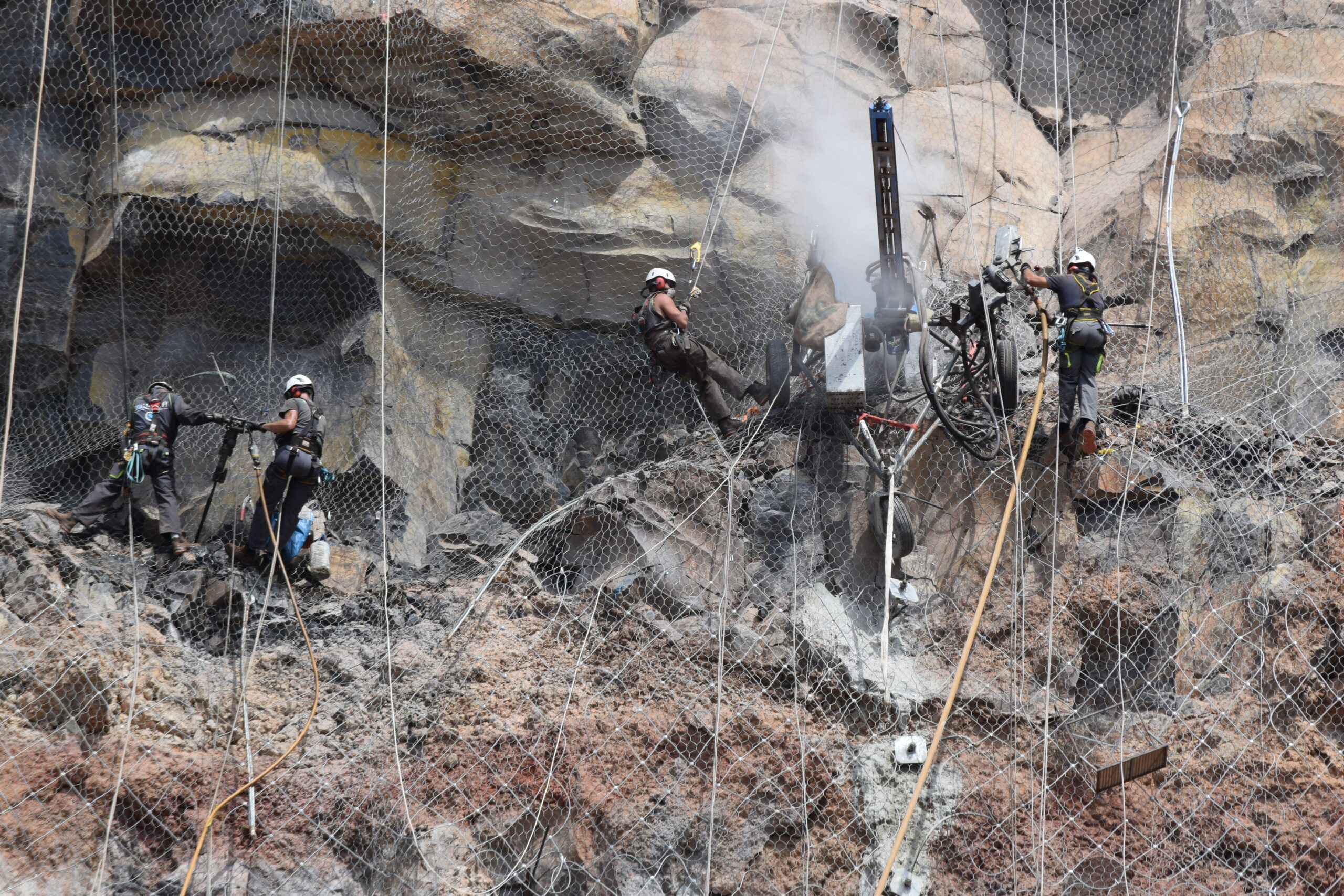
Rock anchors for slopes: drilling, steel bar and cement grout, passive or active, installed with our own machinery. Study and installation.
- Over 30 years of experience
- Survey, design and execution with our own team and machinery
- Offices in Spain and Romania
Bores and rock anchors for slopes
Rock anchors for slopes are steel bars inserted into a hole drilled in the ground and injected with cement grout to provide tensile strength. At Solutioma, we size and install them to reinforce slopes and rock masses, either on their own or as part of integrated slope stabilisation systems.
Rock bolting is a support technique that uses the strength characteristics of the rock itself to keep the rock mass stable.
Anchors and rock bolts are key to the safety and stability of the slope in integrated systems such as high-resistance membranes, cable mesh, ring mesh or Soil Nailing.
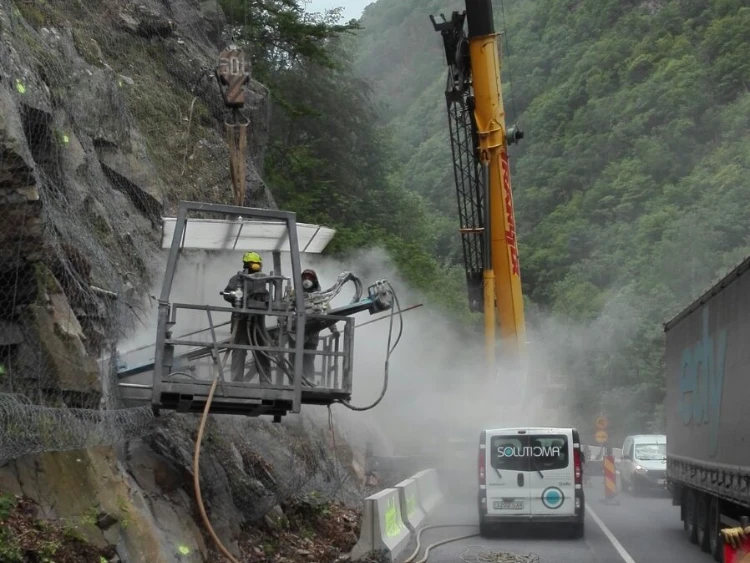
Do you need to anchor a slope or a rock mass?
We study the ground and size the rock bolting you need, using our own machinery. You can also call us on +34 900 101 895.
Features of rock bolts on slopes
Rock bolts are key elements for the reinforcement of slopes and rock masses, because they provide solid and reliable anchorage to the ground.
Rock bolting significantly improves the cohesion and strength of the ground, and it is suitable for ground prone to landslides or rockfalls.
Anchors allow land or rock masses, which would otherwise be unstable, to maintain their position, which is especially useful in areas where geological conditions are unfavourable or in zones of high seismic activity.
Moreover, anchors are fundamental in the construction of civil works such as tunnels, mountain roads, or dams. Their use provides safety to these structures and helps to prolong their lifespan.
What benefits do anchors provide in stabilisation?
Rock anchors provide solid anchorage to the ground and significantly improve its cohesion and strength. In civil engineering projects, their use supports the structural integrity and durability of the works and reduces the risk of collapse or damage.
How rock anchors work: passive and active
Rock anchors are installed in three steps: drilling the ground, inserting a steel bar and injecting cement grout into the space between the two.
Rock bolts provide a force that opposes the movement of the sliding mass and bear the loads generated when a rockfall is retained by the mesh, net or membrane that they hold in place.
At Solutioma, we work with passive and active anchors, and we adapt each solution to the characteristics of each project. Passive anchors take load when the ground starts to move; active anchors are tensioned after installation to provide reinforced support from the outset.
The length, the diameter of the bar and of the borehole, and the type of bar are determined according to the characteristics of the ground. High-strength GEWI-type steel bars or self-drilling anchors are commonly used.
Drilling and rock anchor installation process
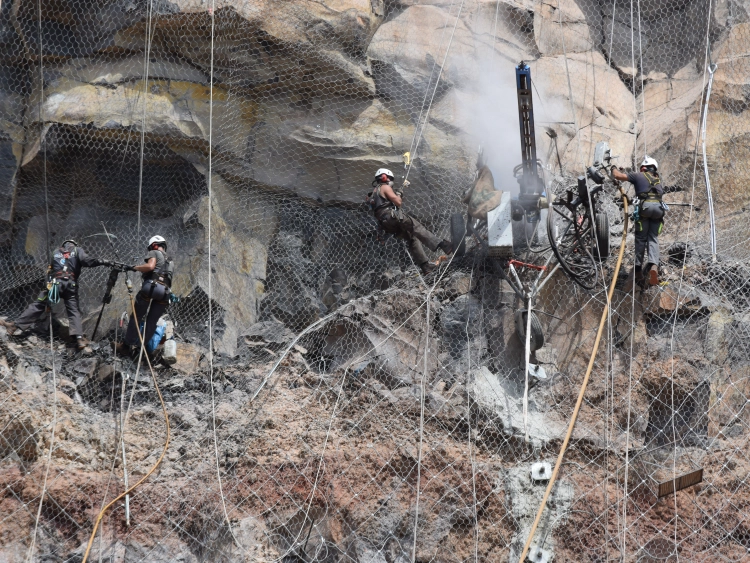
The drilling and anchor installation process follows a rigorous protocol: precise drilling of the ground, insertion of the bar, injection of the grout and, where necessary, tensioning of the anchor. The whole procedure is carried out according to safety and quality criteria, and our team receives regular health and safety training.
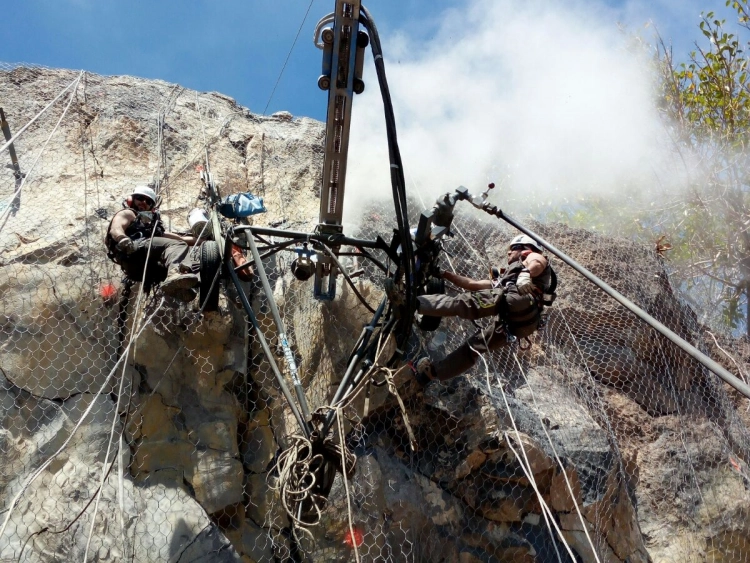
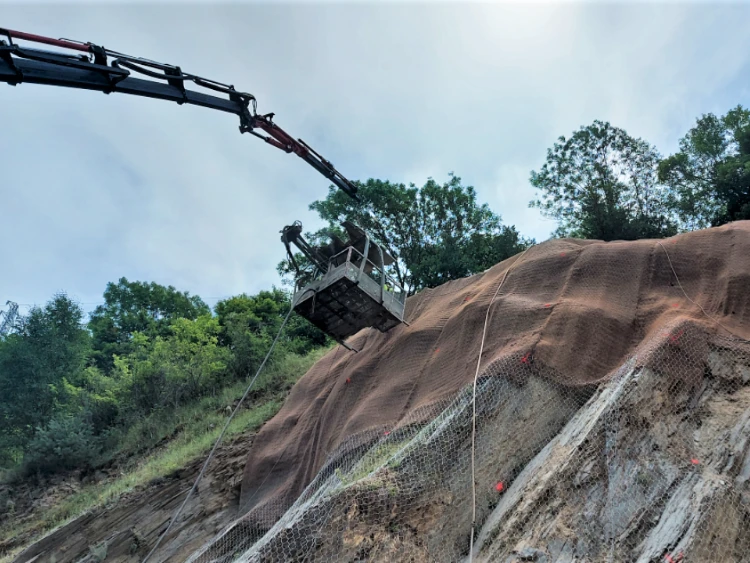
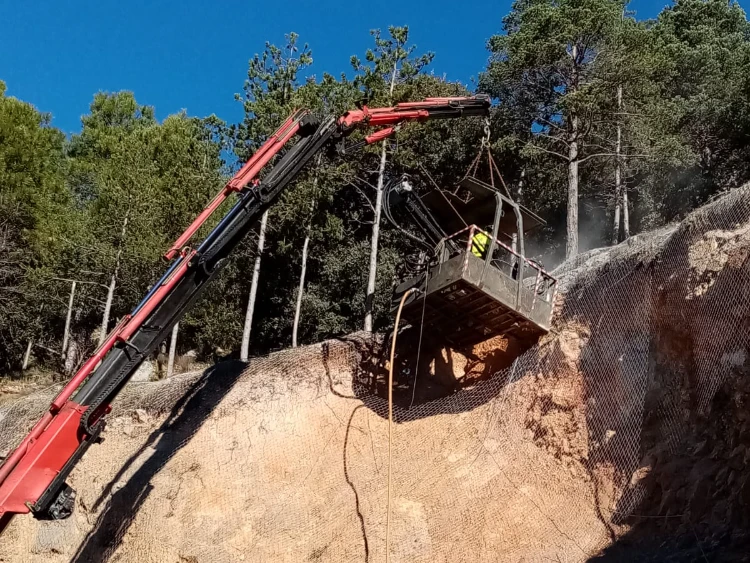
At Solutioma, we have a large fleet of our own specialised machinery for large-diameter, long boreholes, which allows us to adapt each technique to the ground, including on slopes that can only be reached by rope access.
Bores and anchors projects
Bores and anchors projects
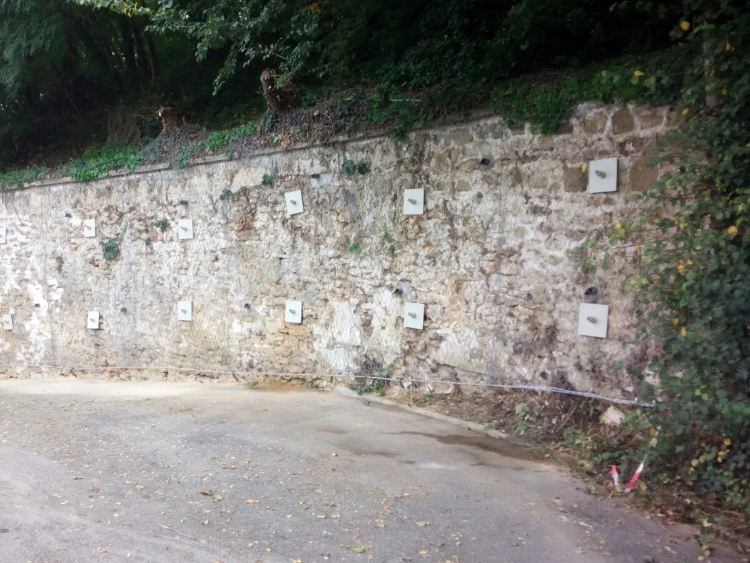
Frequently asked questions about bores and anchors
Frequently asked questions about bores and anchors
What is a rock bolt?
A rock bolt is a steel bar inserted into a hole drilled in the ground and fixed with cement grout injected between the bar and the rock. Its function is to provide tensile strength and to tie the unstable mass to the sound rock substrate.
Rock anchors for slopes make use of the strength of the rock mass itself. Once they are bonded to the rock, they provide a force that opposes the movement of the mass that tends to slide and improve the cohesion of the whole, which is why they are commonly used on ground prone to landslides or rockfalls.
A rock bolt can work on its own, pinning a specific block, or as part of an integrated slope stabilisation system. In the second case, it bears the loads generated when a rockfall is retained by the mesh, net or membrane, and transmits them at depth.
At Solutioma, we size each rock bolt according to the characteristics of the ground and install it with our own machinery. If you have questions about your slope, our technicians can study the case with no obligation.
What are slope anchors used for?
Slope anchors are used to keep masses of soil or rock in position that would otherwise be unstable. They give the ground the tensile strength that it does not have on its own and reduce the risk of landslides and rockfalls.
Rock bolts and ground anchors are particularly useful in areas with unfavourable geological conditions or in zones of high seismic activity. They are also fundamental in civil works such as tunnels, mountain roads or dams, because they provide safety and help to extend the service life of the works with less maintenance.
In many cases, anchors and rock bolts are part of a larger system: they hold high-resistance membranes, cable mesh or ring mesh, or they are combined with welded mesh and shotcrete in Soil Nailing. The anchor provides stability at depth and the membrane retains the surface material.
At Solutioma, we analyse the slope before proposing a solution and, where the case requires it, we combine rock bolting with another of the more than forty techniques that we apply. Tell us what problem your slope has and we will advise you.
How are bores and anchors installed on a slope?
Bores and anchors are installed in three steps: the ground is drilled, the steel bar is inserted and cement grout is injected into the space between the bar and the rock. If the design requires it, the anchor is then tensioned.
The diameter, length and inclination of each borehole are defined in the design, so that the anchor passes through the unstable zone and reaches the sound rock substrate. The grout transmits the stress from the steel to the rock, and the bearing plate and nut secure the anchor head on the surface of the slope.
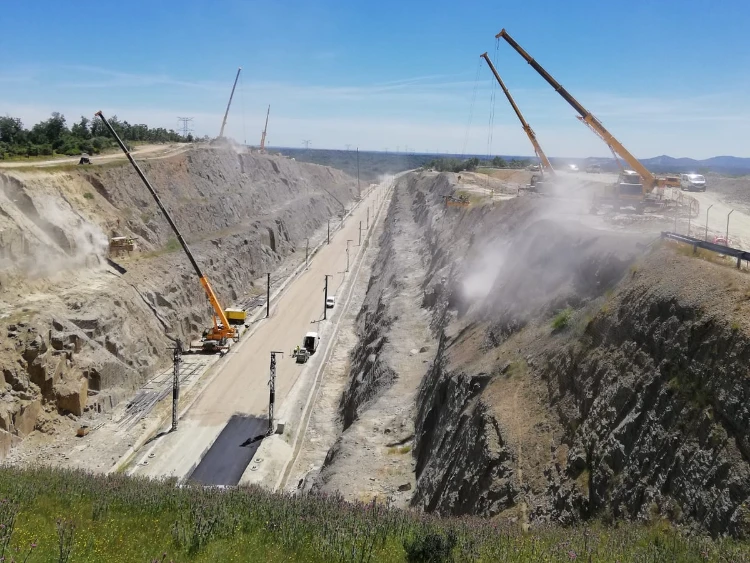
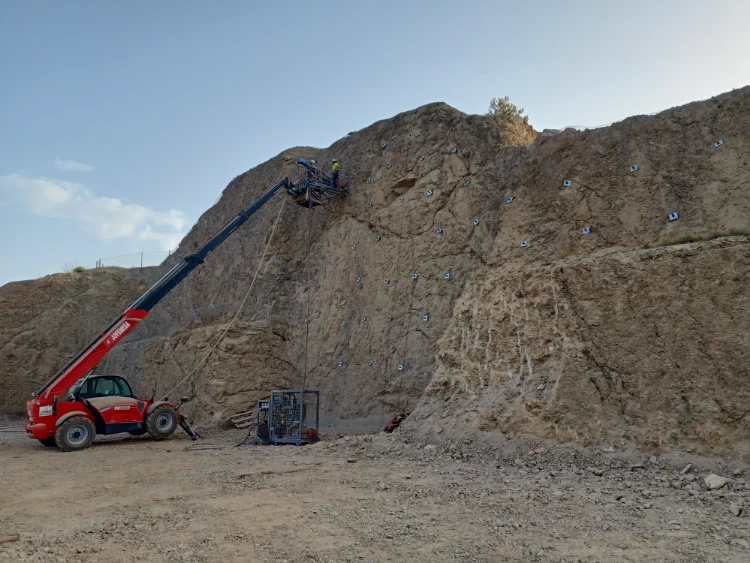
Many geotechnical anchors are installed on mountainsides, road cuttings or rock faces without a working platform. In these cases, rope access operatives carry out the anchor drilling from the slope itself, and the machinery and materials are brought in by truck-mounted crane or, where the terrain does not allow it, by helicopter.
At Solutioma, we have one of the largest fleets of own machinery in the sector, with equipment for large-diameter, long boreholes. If your slope has difficult access, we will propose the safest way to carry out the rock anchor installation.
When are rock bolts used on their own and when with mesh or a membrane?
Rock bolts are used on their own when it is enough to pin specific blocks of the rock mass to sound rock. If the surface of the slope is also deteriorating or coming away, rock bolting is combined with a mesh, net or membrane that retains the surface material.
Spot bolting is suitable when the instabilities are localised and clearly identified: blocks bounded by joints, wedges or slabs that can be fixed one by one. Analysing the rock mass makes it possible to place each rock bolt where it really works, without treating the whole surface.
When the problem affects the whole face, the rock bolts hold a containment system such as high-resistance membranes, cable mesh or ring mesh. The membrane retains the fragments and the anchors transmit the loads to stable ground.
At Solutioma, we study the slope and give the technical reasons for each proposal, whether a few rock bolts are enough or an integrated system is needed. Send us a few photographs and we will tell you which solution fits best.
What types of rock anchors are there?
Rock anchors are classified by the way they work into passive and active anchors and, by the type of bar, into high-strength GEWI-type steel bars or self-drilling anchors. The right combination is decided in the design for each project.
A passive anchor is grouted without tensioning and takes load when the ground starts to move, resisting the displacement. An active anchor is tensioned after installation, once the grout has set, and provides reinforced support from the outset; it is advisable when the slope cannot accept deformation.
Self-drilling anchors are useful in fractured or weak ground, where the walls of the borehole tend to close: the bar itself acts as the drill rod and is then grouted in place. In more competent ground, it is common to drill first and then insert a GEWI-type bar.
The length, the bar diameter and the borehole diameter are not standard: at Solutioma, we calculate them according to the characteristics of the ground. If you have a geotechnical report, share it with us and we will adjust our proposal to your data.
How much does rock bolting a slope cost?
The cost of rock bolting a slope depends on the number of rock bolts, their length and diameter and, above all, on the drilling and access conditions. Without knowing the slope, it is not possible to give an approximate figure.
The technical factors include the hardness and fracturing of the ground, which affect drilling output, the type of bar (GEWI or self-drilling), the volume of grout and whether the anchors are tensioned. It also matters whether the bolting is isolated or holds a mesh, net or membrane, because the complete system includes more elements.
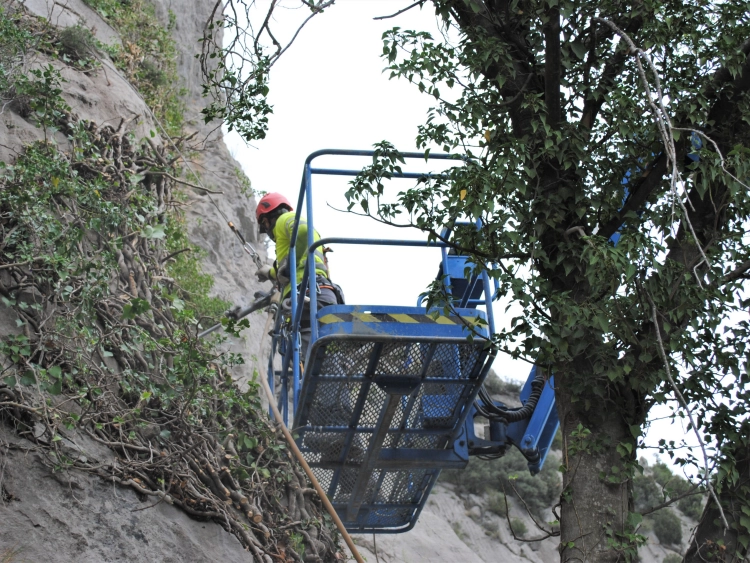
Access makes a significant difference: drilling from a platform is not the same as drilling with rope access teams, and moving equipment along a track is not the same as using a truck-mounted crane or helicopter. The need for prior slope scaling or traffic management is also reflected in the quote.
Whether you are looking for rock bolting contractors for a single slope or for a larger project, send us the location and a few photographs for a no-obligation assessment, or call us on +34 900 101 895. We will reply with a technical and financial proposal.
YouTube channel
Videos of our projects
See how we work on site: slope scaling, dynamic rockfall barriers and rope access work filmed on our projects.
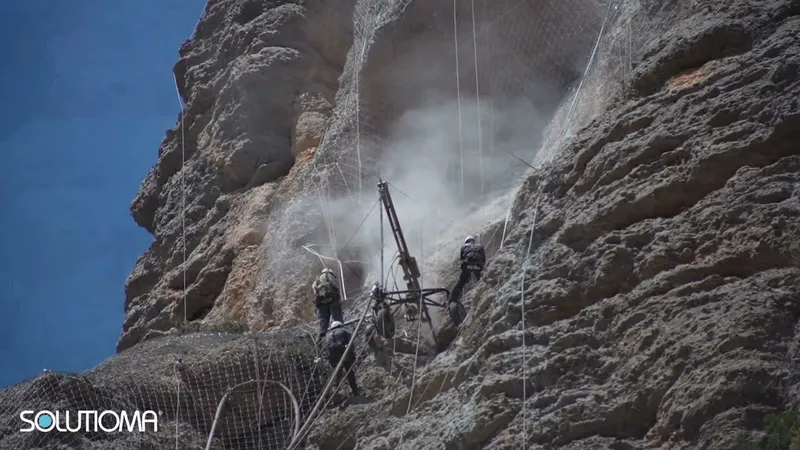
On-site video
Perforaciones a gran altura para estabilización de taludes
Contact
Why entrust your bores and anchors to Solutioma?
At Solutioma, we study, design and install bores and rock anchors to stabilise slopes and rock masses, with people who have more than 30 years of experience in the sector, rope access teams and our own machinery.
If you would like to discuss any questions with our technical team or request a quote for the installation of rock anchors, please fill in the form below. If you prefer, you can also call us on +34 900 101 895; we will be happy to assist you.
- +34 900 101 895
Call us if you prefer - solutioma@solutioma.com
Write to us directly - Over 30 years of experience
Survey, design and execution with our own team and machinery - Offices in Spain and Romania
Lleida, Madrid, Canary Islands, Jaén, Gipuzkoa and Bucharest