
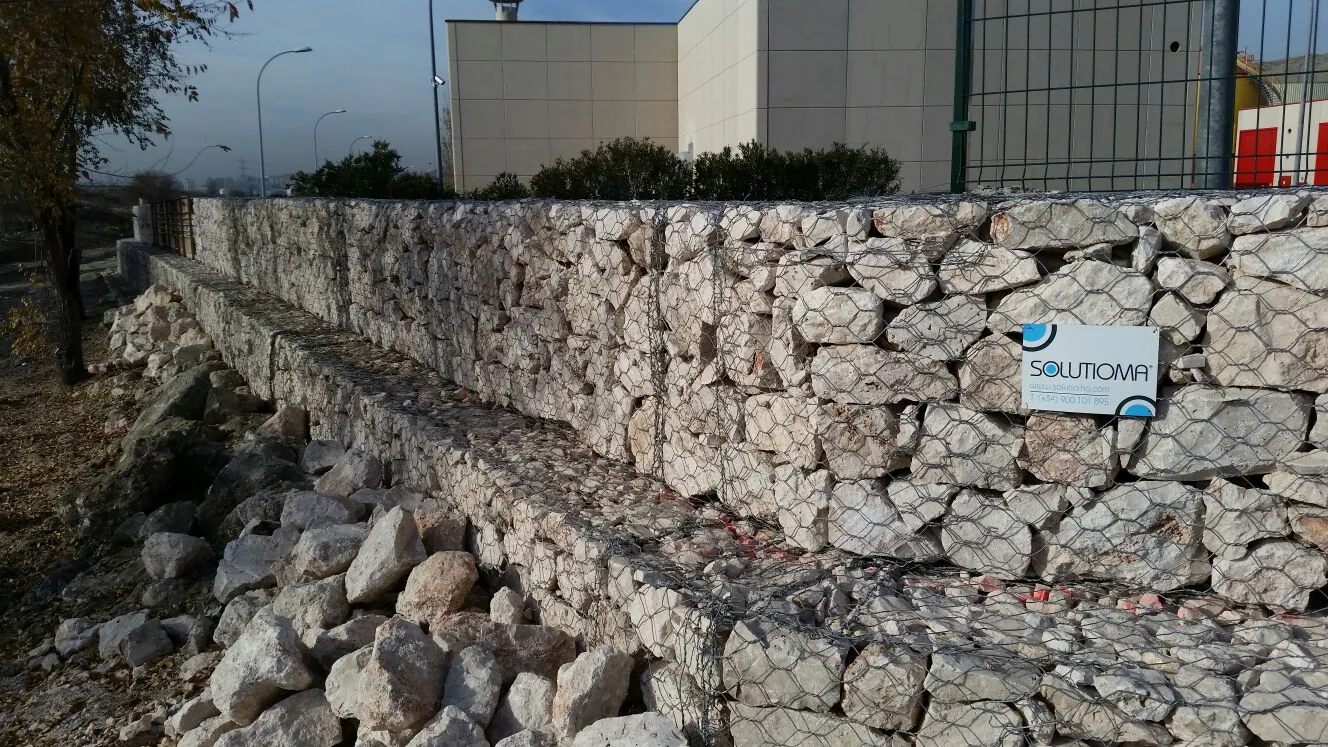
Slope stabilisation
Gabions
Stone gabions and gabion walls in mesh, timber or steel to retain soil, slopes and riverbanks, with no foundations and natural drainage.
- Over 30 years of experience
- Survey, design and execution with our own team and machinery
- Offices in Spain and Romania
The versatility and strength of stone gabion walls in slope stabilisation
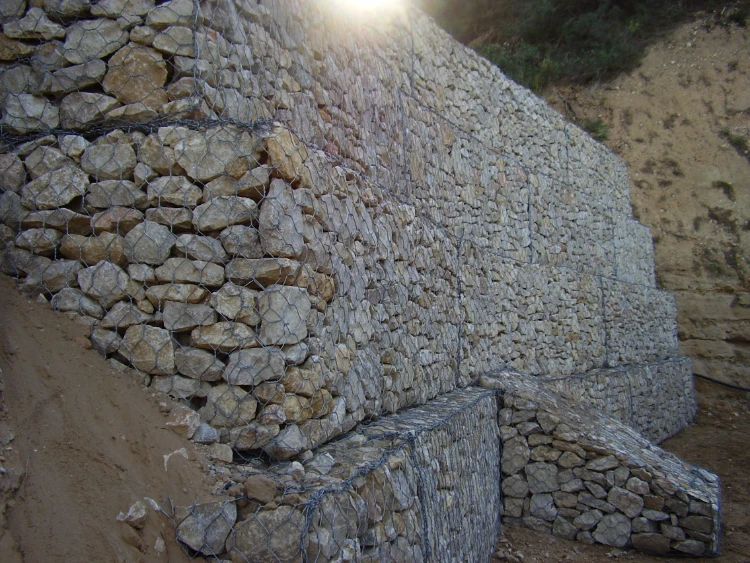
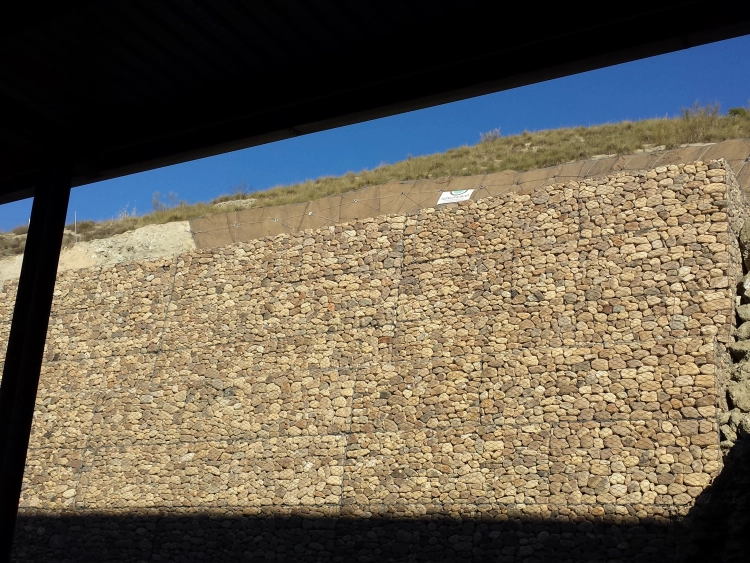
A gabion wall is a retaining structure made of rectangular prism-shaped boxes, usually of double-twist mesh, filled with stone. At Solutioma, we design and install stone gabion walls for slope stabilisation, earth retention and riverbank protection.
Gabions offer high resistance performance and act as gravity walls. The double-twist mesh of their main structure makes them particularly suitable for adapting to the ground and encouraging drainage.
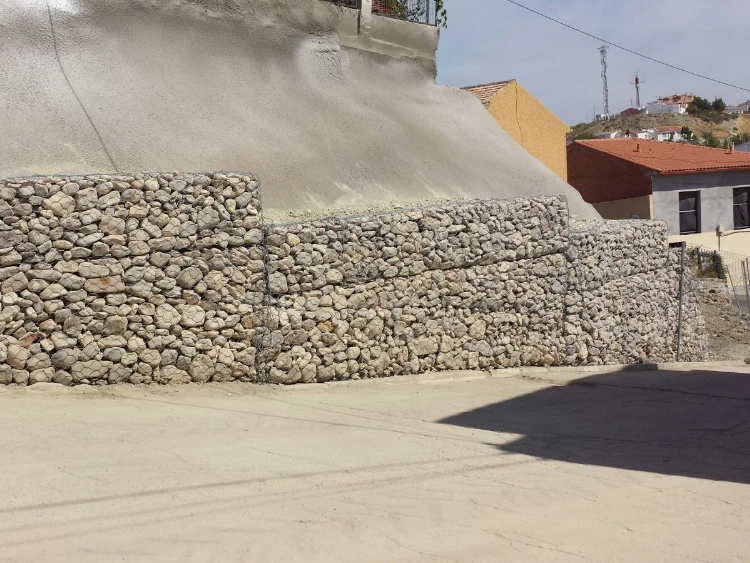
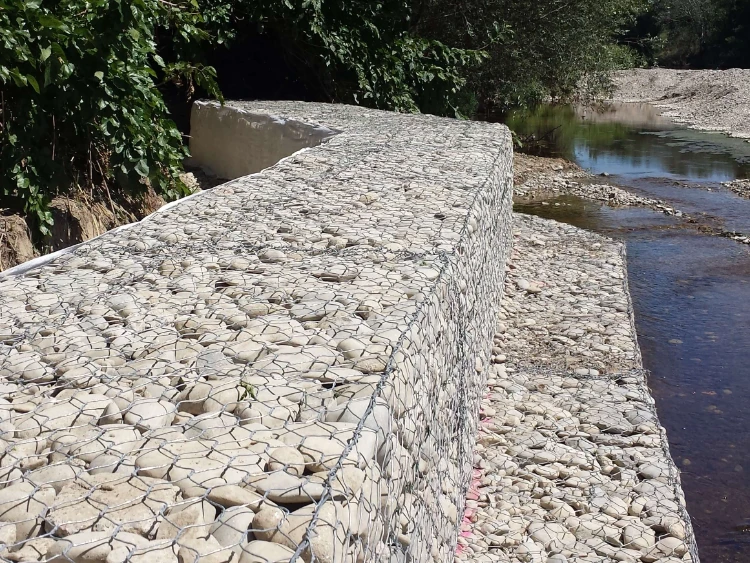
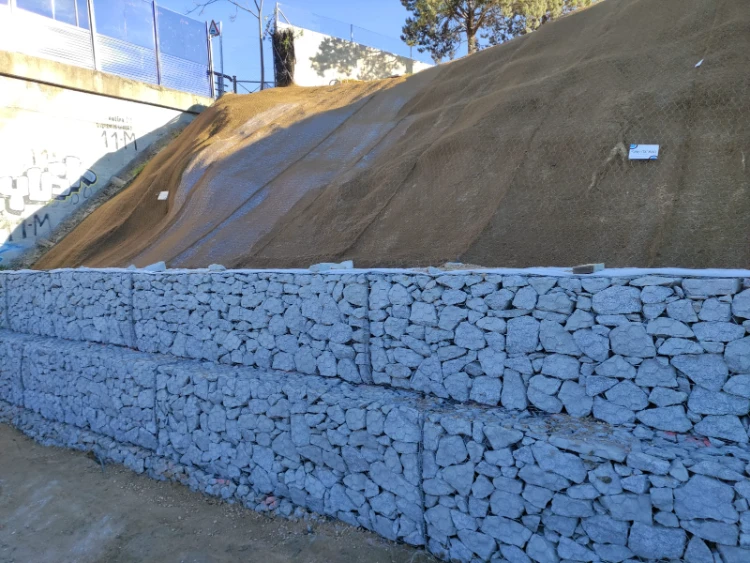
Do you need a gabion wall?
We advise you on the type of gabion, the fill stone and the installation. You can also call us on +34 900 101 895.
Benefits of stone gabion walls for ground protection and stability
Gabion walls behave as gravity walls and require no foundations. Their main features include flexibility, durability, ease of assembly, a high capacity to blend into the environment, adaptation to ground settlement and drainage capacity.
Gabions are structured as a large rectangular prismatic box filled with stone, built from various materials such as timber, double-twist mesh or welded mesh.
In addition to their function, gabion walls offer aesthetic value and blend naturally into their surroundings: they encourage the growth of vegetation, improve biodiversity and contribute to environmental sustainability.
Practical applications of gabion walls
The gabion system is a highly versatile solution that we apply at Solutioma to a wide range of problems.
Our work adapts to different contexts: retaining walls, ecological walls, rockfall containment, slope stabilisation and riverbank protection in rivers and watercourses.
We provide various models of gabions with varied structures, identifying the specific requirements of the area to design the most suitable solution.
Types of gabions: double-twist mesh, timber and decorative
Double-twist mesh gabions
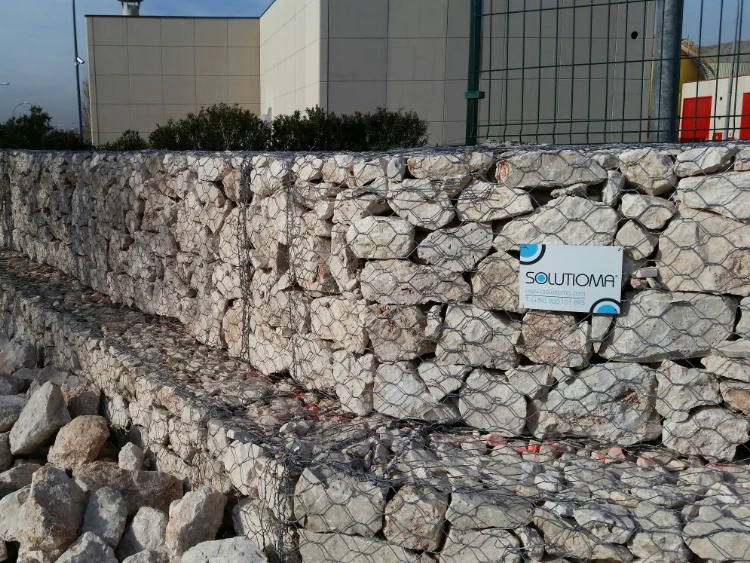
Double-twist mesh gabions are the most commonly installed. They act as gravity walls and, thanks to the flexibility of the mesh, adapt to the ground and encourage drainage, preventing pore water pressure behind the wall.
Timber gabions
Timber gabions are installed occasionally in places of aesthetic value: they are built with turned rounds or square sections of treated timber and filled with stone of the same characteristics as that used in mesh gabions.
Decorative and landscape gabions
Decorative gabions have the same function as the other types, but they are less common and are chosen for their finish. Their boxes are built from a grid of corrugated galvanised steel that gives them a slender, rectilinear appearance.
Technology and materials in gabion wall construction
Selection of high-quality materials and durable construction
The selection of appropriate materials is key to the durability and efficacy of gabion walls. At Solutioma, we use corrosion-resistant metal meshes and quality rocks.
Installation and maintenance of gabion walls
At Solutioma, we install and maintain gabion walls with our own teams and machinery, and we take care over the assembly and filling of each box so that the wall lasts.
Gabion walls we have built
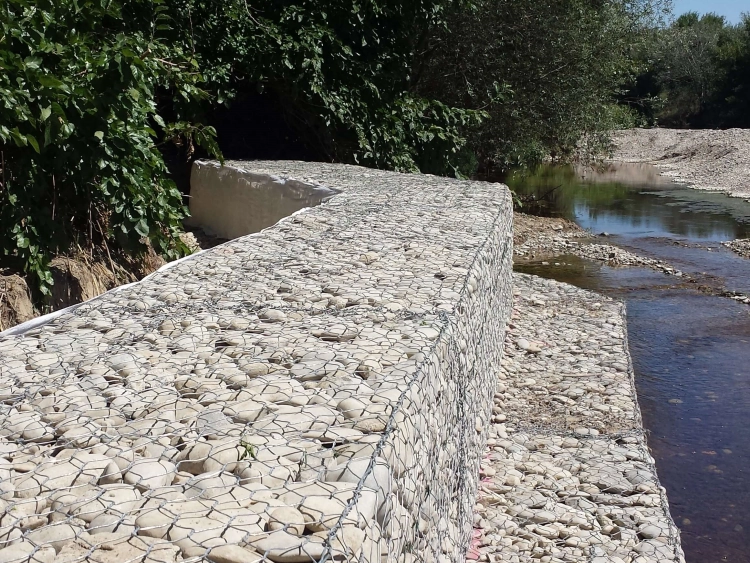
Gabion walls we have built
Frequently asked questions about gabions
Frequently asked questions about gabions
What is a gabion wall?
A gabion wall is a retaining wall made of gabions, that is, rectangular boxes of wire mesh, usually double-twist, filled with stone and placed side by side and on top of one another. The whole structure works as a gravity wall that holds back the ground by its own weight.
As for the meaning of gabions, each stone gabion is a module: the wire mesh box, often called a gabion basket, is assembled on site, filled and tied to the adjacent ones. That is why a wall of stone gabions adapts to different alignments and heights without changing system, and it is simple to assemble.
What sets gabions apart from a conventional wall is their behaviour: they are flexible, adapt to settlement without losing their function and, being permeable, drain the water from behind the wall and prevent pressure from building up. Over time, vegetation colonises the gaps between the stones and the wall blends into the landscape.
At Solutioma, we study the area, design the wall and build it with our own teams. If you are considering this solution for your project, our technicians will advise you on the most suitable type of gabion.
What are gabions used for on slopes and rivers?
Gabions are used to build retaining walls, stabilise slopes, contain rockfalls, build ecological walls and carry out hydrological correction works on rivers and watercourses. These are the applications listed in our technical data sheet.
On slopes, gabions work as gravity walls at the toe or part-way up: they hold the ground, drain the water from behind the wall and tolerate minor settlement. Gabion walls for slope protection are a common alternative to concrete when a stone finish and good integration into the surroundings are required.
For gabion river bank protection, the gabions protect banks and shores: the flexible structure adapts to scour and to small movements of the bed, and the permeable fill lets water through instead of resisting it. The design of stone gabions in rivers must take into account the velocity and flow of floods, sediment transport and protection of the toe against erosion.
Our technical department studies each slope or watercourse before defining the solution. If you need to protect a bank or retain the ground, send us the location and a few photographs so that we can assess the work.
How is a gabion retaining wall built?
A gabion retaining wall is built by placing the boxes in courses on a levelled, regular base, filling them with stone and tying them together. According to our technical data sheet, it requires no foundations: it works by gravity and follows ground settlement.
Not needing foundations does not mean that it can rest on any surface. The first course must sit on ground cleared of loose material or organic matter, so that the wall starts in line and spreads its weight evenly. On ground with low bearing capacity, the preliminary study determines whether the support should be improved.
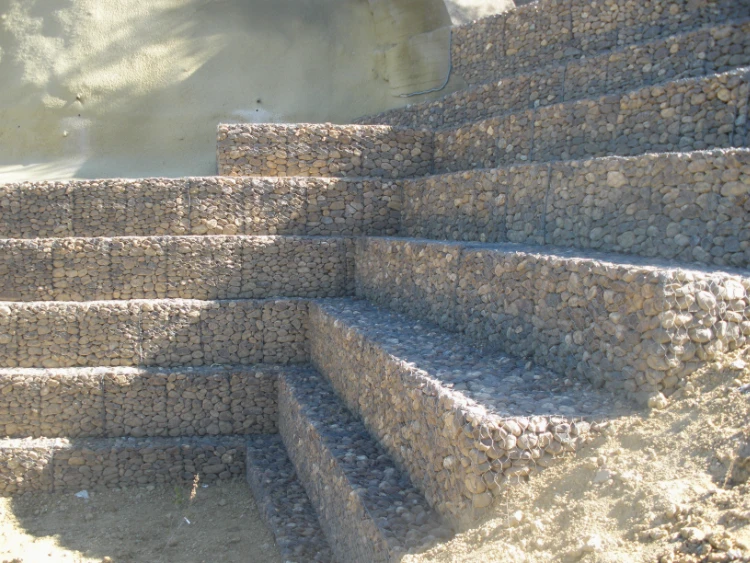
When placing gabions on slopes, it is common to use stepped gabions, setting each course back from the one below, or to incline the face towards the ground; the geometry is defined in the calculations according to the height and the earth pressures. The fill is placed carefully to leave as few voids as possible, because a poorly filled box tends to deform.
At Solutioma, we size the gabions for retaining walls, including height, base width and arrangement of the courses, on the basis of the ground study, and we assemble them with our own teams. You can call us on +34 900 101 895 to discuss your case.
What is the difference between a gabion wall and a green wall?
A gabion wall retains the ground with boxes of exposed stone, whereas a green wall is a retaining wall with a fully vegetated front face. Both blend into their surroundings, but in different ways.
On a gabion wall, vegetation appears spontaneously: the gaps between the stones trap dust, seeds and moisture, and over time plants colonise the face. Vegetated gabions gain landscape integration without losing drainage capacity or flexibility, although the cover is gradual and uneven.
The green wall incorporates a geotextile blanket of coconut and polypropylene fibres that acts as a bed for the vegetation, so the face becomes evenly green; it also replaces gabions when rock is scarce. Gabion walls, on the other hand, make use of the available stone and offer a mineral finish from day one.
At Solutioma, we build both systems and help you choose according to the degree of landscape integration that the project requires, the stone available and the budget. Tell us about your project and we will propose the most suitable option.
What types of gabions are there?
The main types of gabions are double-twist mesh gabions, welded mesh gabions, timber gabions and decorative gabions, built from a grid of corrugated galvanised steel. All of them are filled with stone and work as gravity walls.
Double-twist mesh gabions are the most widely installed: the flexibility of the gabion wire mesh allows them to adapt to the ground and encourages drainage. Welded mesh gabions form stiffer boxes with flat faces, and they are listed in our technical data sheet together with timber and double-twist mesh gabions.
Timber gabions, made with turned rounds or square sections of treated timber, are reserved for places of aesthetic value, as are decorative gabions, which are chosen for their slender, rectilinear appearance. In all of them, the fill stone must be sound, strong and larger than the mesh opening.
At Solutioma, we choose the gabions for each wall according to its function, the setting and the stone available near the site. If you have a project under study, our technicians can advise you on the most suitable type and fill.
How much does a gabion wall cost?
The gabion wall cost is not a fixed figure: it depends on the dimensions of the wall, the type of gabion and the site conditions, so it is calculated for each project.
The factors that weigh most are the length and height of the wall, the base width resulting from the calculations, the type of box (double-twist mesh, timber or decorative) and the fill. The availability of suitable stone near the site has a significant influence, since transporting large volumes of material increases the cost of the works.
Base preparation, the earthworks required and access also count: working next to a track with conventional machinery is not the same as working on a slope or a riverbank with difficult access. Having one of the largest fleets of own machinery in the sector allows us to adapt our resources to each site.
If you are comparing gabion wall contractors, bear in mind that we work in Spain and internationally, with offices in Lleida, Madrid, the Canary Islands, Jaén and Gipuzkoa. For a no-obligation quote, send us the location, the approximate dimensions and a few photographs, or call us on +34 900 101 895.
Contact
Why entrust your gabion wall to Solutioma?
At Solutioma, we study, design and build gabion walls for slope stabilisation, earth retention and riverbank protection, with people who have more than 30 years of experience in the sector, rope access teams and our own machinery.
If you would like to discuss any questions with our technical team or request a quote for your gabion wall, please fill in the form below. If you prefer, you can also call us on +34 900 101 895; we will be happy to assist you.
- +34 900 101 895
Call us if you prefer - solutioma@solutioma.com
Write to us directly - Over 30 years of experience
Survey, design and execution with our own team and machinery - Offices in Spain and Romania
Lleida, Madrid, Canary Islands, Jaén, Gipuzkoa and Bucharest