
Rockfall protection
Static rockfall barriers
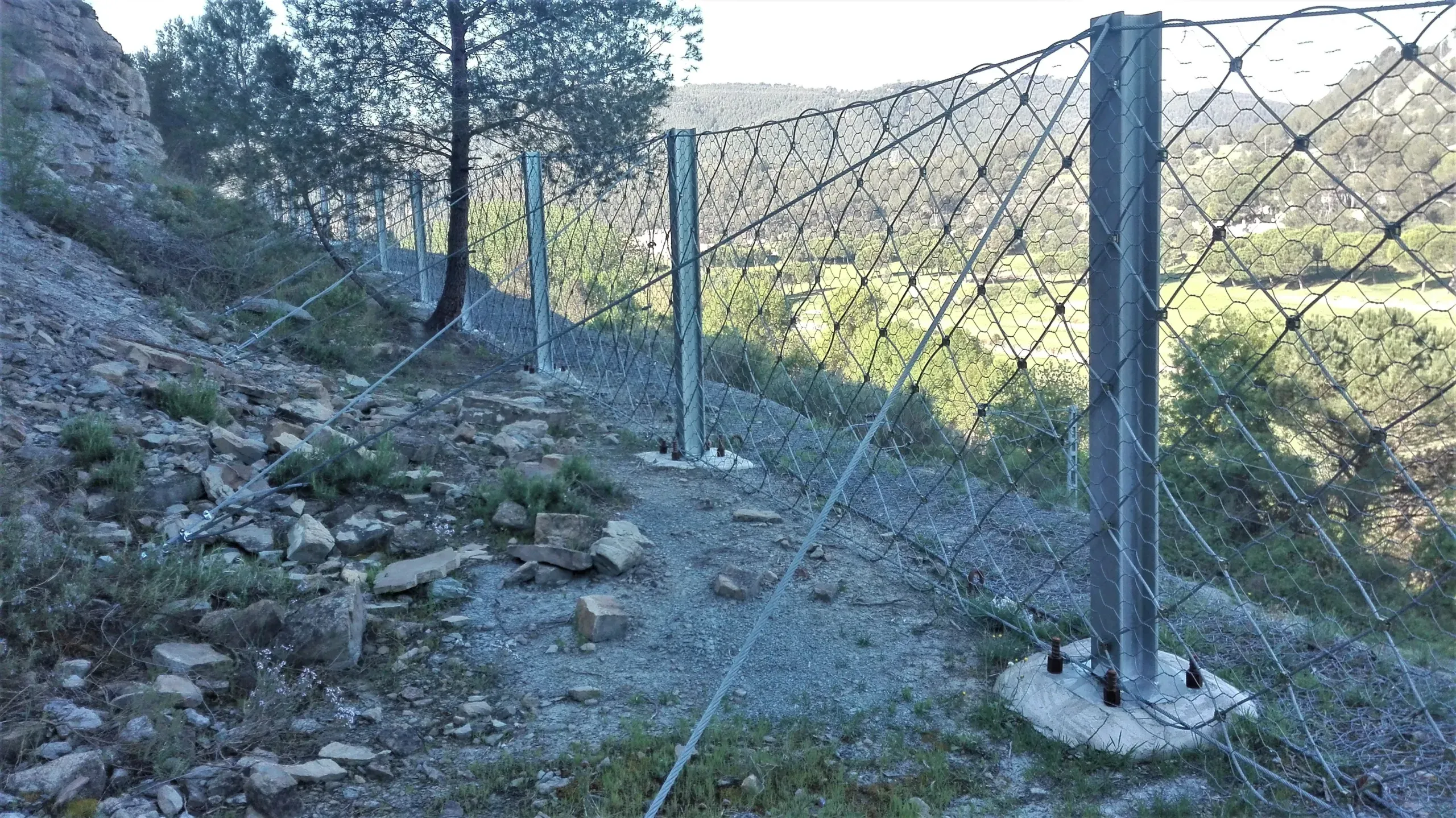
Static rockfall barriers of steel, cable and mesh to contain small, continuous rockfalls on slopes beside roads and railways. Study and installation.
- Over 30 years of experience
- Survey, design and execution with our own team and machinery
- Offices in Spain and Romania
Static rockfall barriers to stop falling rock and small, continuous rockfalls
Static rockfall barriers are steel, cable and mesh screens placed in the path of small but continuous rockfalls to protect roads, railways and infrastructure. At Solutioma we study, design and install them as part of rockfall protection on slopes and hillsides.
Positioning the barrier across the path of the falling material isolates the danger zone in areas at risk of slides and rockfalls, where safety and stability are priorities.
At Solutioma we have a high degree of specialisation in barriers to prevent rockfalls, with teams specialised in working at height and our own machinery to install them even on slopes with difficult access.
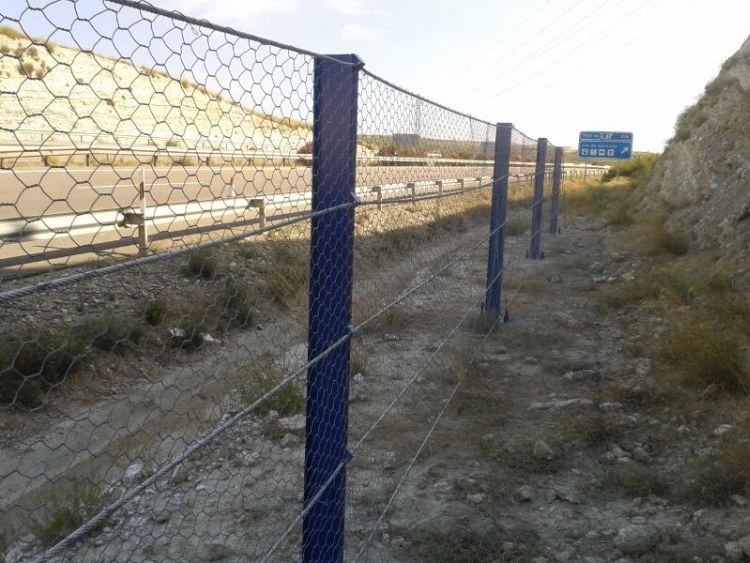
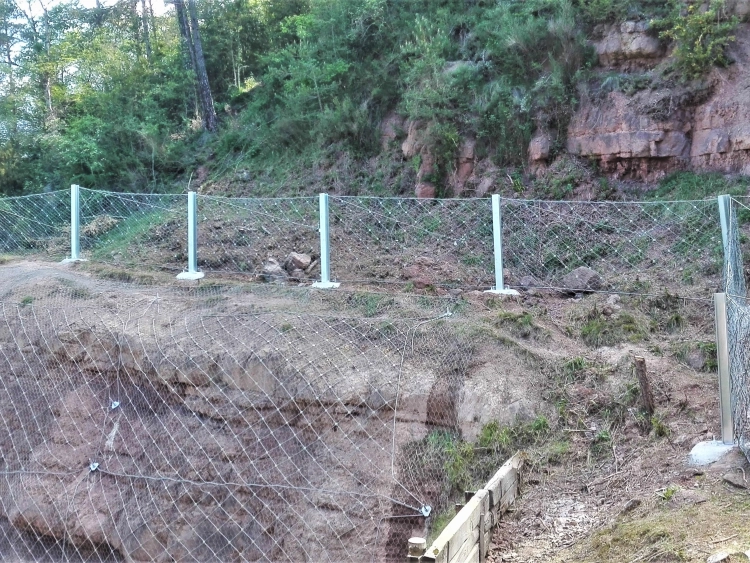
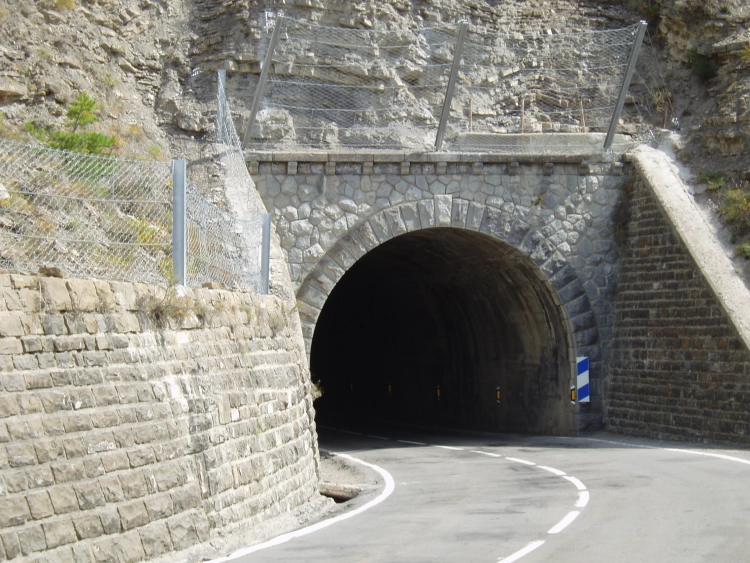
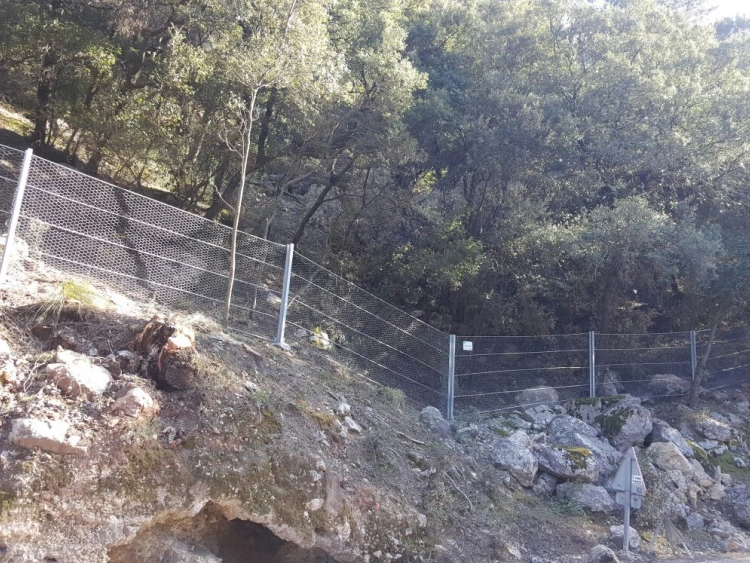
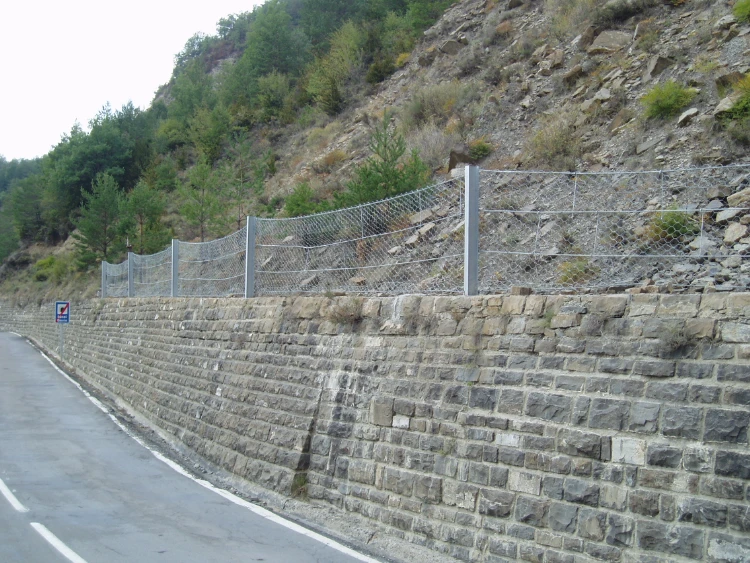
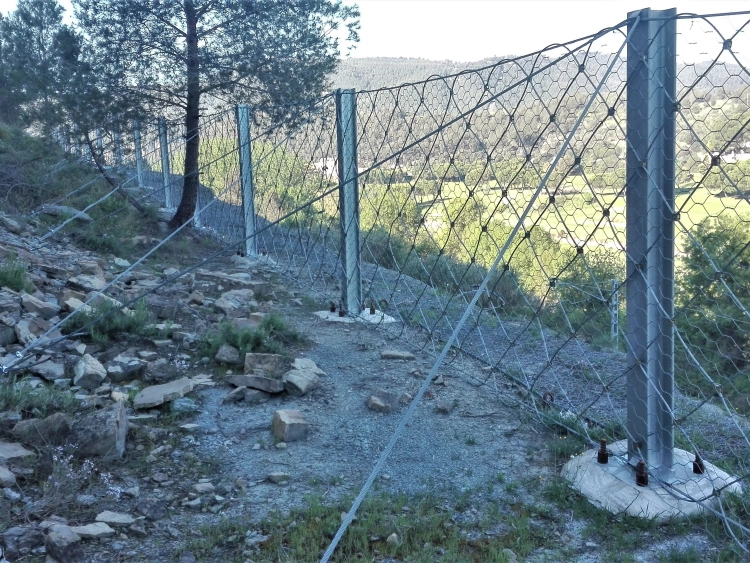
Static rockfall barrier composition: steel, cable and mesh
Static rockfall barriers or static screens are made up of a steel structure, cable and double-twist mesh or cable mesh, or a combination of both, depending on the load capacity required.
The static rockfall barrier is a low-energy absorption solution: it is placed in the path of the falling material to contain small but continuous rockfalls.
Static rockfall barriers are simpler than dynamic rockfall barriers and are designed to stop smaller blocks that do not carry much kinetic energy.
Are stones falling from a slope onto a road?
We study your slope and tell you whether a static rockfall barrier is the right solution. You can also call us on +34 900 101 895.
When is a static rockfall barrier installed? Operation and applications
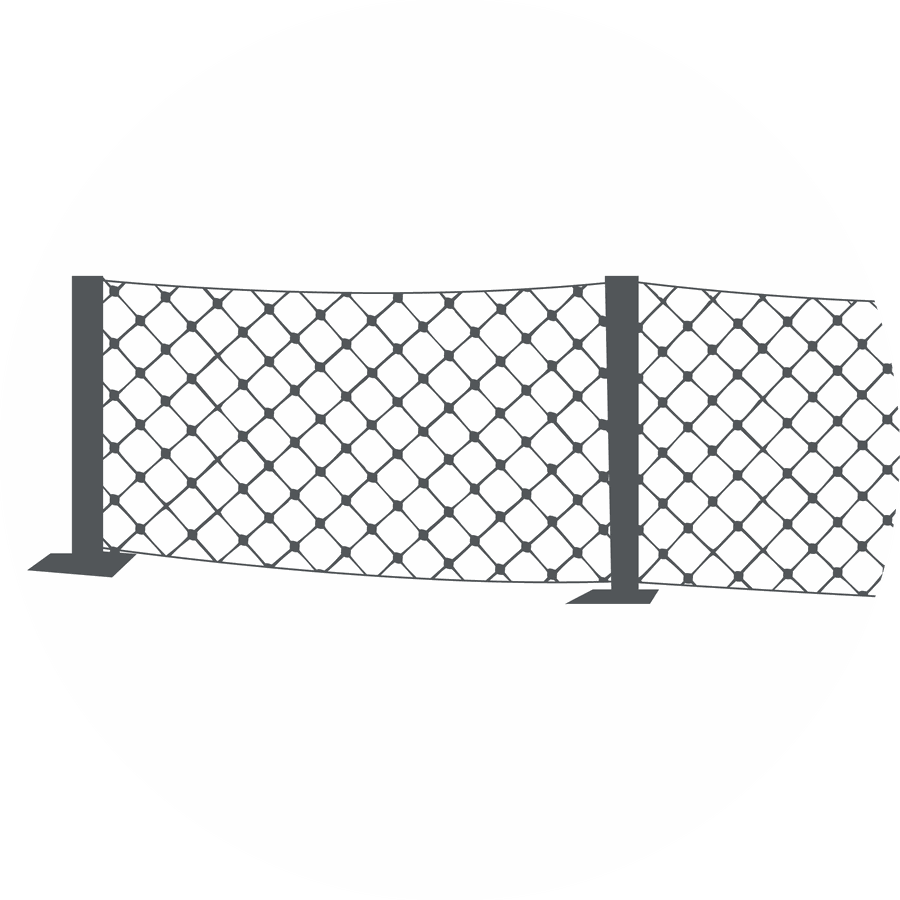
The static barrier plays an important role as a containment system and provides safety in a wide range of situations.
The function of the static barrier is to retain small, continuous rockfalls that may pose a potential risk to traffic, infrastructure, roads and property.
The static barrier is particularly indicated as a complementary element of slope stabilisation systems to protect infrastructure with stability problems caused by stones, blocks and rocks whose movement is imminent, prolonged over time and over a short path, without reaching high speed.
Application and installation of static rockfall barriers
As a company specialising in rockfall protection systems, at Solutioma we check that each component of the barrier, from the support posts to the double-twist mesh, is installed to strict quality and safety criteria so that it performs as designed.
Controlling the installation makes static barriers effective and durable under the environmental conditions of the site.
Preliminary study and installation of the static rockfall barrier
At Solutioma we study each static barrier installation individually: our technicians assess the ground, consider factors such as topography and weather conditions, and design an installation strategy aimed at the maximum effectiveness of each barrier.
An efficient and safe installation
Our static barriers are installed by trained professionals who follow strict safety protocols. We use our own machinery for an efficient and precise installation that reduces the impact on the environment and ensures the long-term stability of the barrier.
Guyed static barrier or dynamic barrier: choosing the solution
At Solutioma we assess the existing needs in each project and study the conditions and the probability of rockfalls in order to apply the most suitable solution.
In situations where the size of the material to be contained is considerable, the posts of the static barrier are guyed with stays placed in the opposite direction to the fall.
When a solution is required to contain large blocks in free fall or blocks that gain high kinetic energy as they descend, we opt for dynamic rockfall barriers.
Static rockfall barriers installed
Static rockfall barriers installed
Frequently asked questions about static rockfall barriers
Frequently asked questions about static rockfall barriers
What is a static rockfall barrier?
A static rockfall barrier is a steel, cable and mesh screen placed in the path of falling material to contain small stones and blocks that fall continuously. It is a low-energy absorption system, which is why it is also described as a low energy rockfall barrier.
Static rockfall barriers are also known as static screens or static rockfall fences, and they belong to the family of rock fall protection barriers, together with dynamic barriers. Their steel structure, with support posts and cables, holds a panel of double-twist mesh, cable mesh or a combination of both, depending on the load capacity required.
A static barrier is not designed for large impacts: its function is to retain small, continuous rockfalls, with a short path and no high speed, before they reach traffic, infrastructure, roads or property at the foot of the slope. When the material to be contained is larger, the posts are guyed with stays placed in the opposite direction to the fall.
At Solutioma we study the slope and the possible trajectories before proposing the barrier. If stones frequently reach a road or a plot of land, tell us about the case and we will assess it.
When is a static barrier used on slopes?
A static barrier is used on slopes that frequently shed small stones, blocks and rocks whose movement is imminent, prolonged over time and over a short path, when whatever lies at the foot of the slope must be protected.
It is one of the most common rockfall containment systems next to roads, railways and infrastructure where the continuous fall of stone poses a risk to traffic and property. It is particularly indicated as a complementary element of stabilisation systems: the slope is treated with the appropriate technique and the barrier catches any material that may still come loose.
A static barrier is a slope protection measure, not a stabilisation measure: it stops material along its path, but it does not act on the cause of the instability. For this reason, it does not replace slope stabilisation when masses of rock or soil move as a whole, nor is it designed for large blocks in free fall.
Our technicians assess the origin of the rockfalls, the topography and the space available at the foot of the slope, and tell you whether a static barrier is enough or whether it should be combined with another technique.
How is a static rockfall barrier installed?
Static barrier installation consists of anchoring the support posts to the ground in the path of the falling material, connecting them with cables and fitting the panel of double-twist mesh or cable mesh that retains the rockfalls.
Before assembly, our technicians assess the ground and consider factors such as topography and weather conditions to define the position of the barrier and the installation strategy. If the material to be contained is considerable in size, stays are designed to guy the posts in the opposite direction to the fall, and the anchors are sized according to the ground at the installation site.
As with any installation of metal barriers on slopes, the work often takes place in areas with difficult access and a risk of falling stones. For this reason, assembly is carried out by trained professionals who follow strict safety protocols and, where necessary, the work area is scaled beforehand.
At Solutioma we install the barriers with teams specialised in working at height and our own machinery, and we deliver the material by truck-mounted crane or helicopter when the slope has no access track. Ask us about the procedure planned for your project.
Static vs dynamic rockfall barriers: which should you choose?
The choice between static vs dynamic rockfall barriers depends on the energy with which the material arrives: static barriers are for smaller blocks with little kinetic energy, and dynamic barriers for large blocks in free fall or blocks that gain a lot of energy as they descend.
The static barrier is simpler and has low energy absorption: it is placed in the path of the material to contain small but continuous rockfalls, with a short path and no high speed. Dynamic rockfall barriers absorb the impact by deforming in a controlled way and, in the ones we install at Solutioma, cover energies from 250 to 10,000 kJ.
To decide, we study the fall height, the size and shape of the blocks, the slope angle and the possible trajectories towards the area to be protected. Both solutions can coexist on the same section: dynamic barriers where blocks fall from height and static barriers where material comes loose continuously and close to the road.
At Solutioma we install both systems, so we can recommend the one your slope needs. Send us photographs of the slope and of the fallen stones for an initial assessment.
Which mesh does a static barrier use: double-twist mesh or cable mesh?
Static rockfall barriers can use double-twist mesh, cable mesh or a combination of both; the choice depends on the load capacity required and the size of the material to be retained.
Double-twist mesh is a hexagonal lattice of galvanised steel that retains small fragments, provided they are larger than its mesh opening. It is the usual option when the rockfalls consist of small stones and the load on the barrier is moderate.
Cable mesh provides greater load capacity against larger blocks and, when the detached material varies widely in size, it is combined with double-twist mesh: the cable mesh provides the strength and the double-twist mesh retains the small pieces. The rest of the barrier is also sized according to the load: the support posts, the cables and, if necessary, the guy stays.
At Solutioma we define the panel and structure of each barrier after studying the slope. If you are unsure which configuration you need, our technicians will explain it to you using the data from your project.
How much does it cost to install static rockfall barriers?
The price of installing static rockfall barriers is calculated for each project, because it depends on the length and height of the barrier, its configuration and, to a large extent, access to the site.
The configuration weighs on the budget: the type of panel (double-twist mesh, cable mesh or both), the number of posts, the type of anchorage that the ground allows and whether the posts need to be guyed with stays. As a simpler system than a dynamic barrier, the static barrier deals with small, continuous rockfalls using fewer components.
Access usually makes the difference: installing next to a road with conventional machinery is not the same as working on a hillside that can only be reached by working at height or by helicopter. The length of the section to be protected and the safety measures required when the work takes place next to a road open to traffic also have an influence.
To prepare a quote, send us the location, the approximate length you wish to protect and some photographs. We work in Spain and internationally, and you can also call us on +34 900 101 895.
Contact
Why entrust your static rockfall barriers to Solutioma?
At Solutioma we study, design and install static rockfall barriers to contain small but continuous rockfalls next to roads, railways and infrastructure, with people who have more than 30 years of experience in the sector, teams specialised in working at height and our own machinery.
If you would like to discuss any questions with our technical team or request a quote for the installation of static rockfall barriers, please fill in the form below. If you prefer, you can also call us on +34 900 101 895; we will be happy to assist you.
- +34 900 101 895
Call us if you prefer - solutioma@solutioma.com
Write to us directly - Over 30 years of experience
Survey, design and execution with our own team and machinery - Offices in Spain and Romania
Lleida, Madrid, Canary Islands, Jaén, Gipuzkoa and Bucharest