
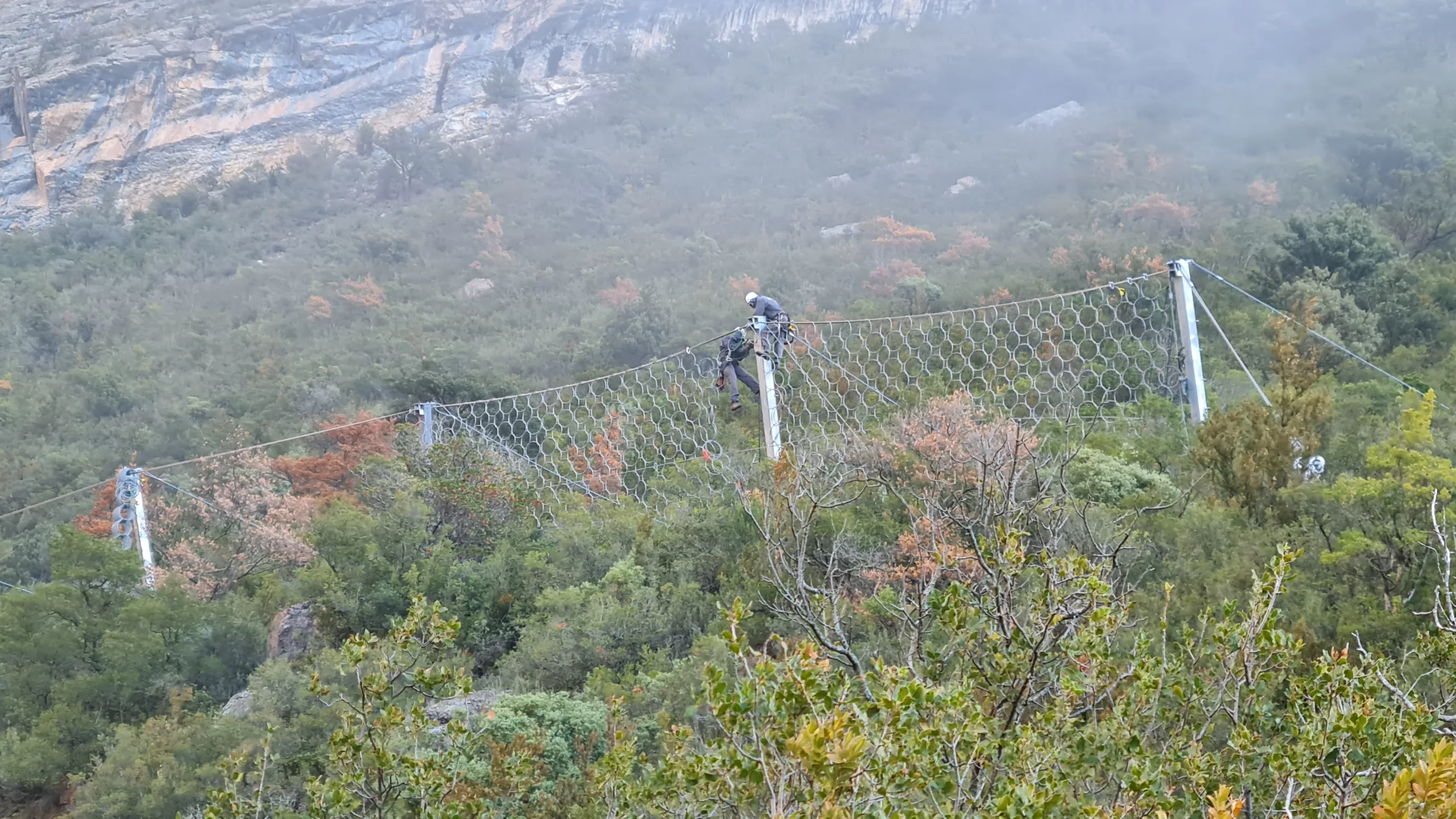
Rockfall protection
Dynamic Rockfall Barriers
Dynamic rockfall barriers from 250 to 10,000 kJ to stop falling rock on roads, railways and buildings. Trajectory study, design and installation.
- Over 30 years of experience
- Survey, design and execution with our own team and machinery
- Offices in Spain and Romania
Dynamic rockfall containment barriers
Dynamic rockfall barriers are flexible screens placed in the path of falling blocks that absorb high-magnitude impacts to protect roads, railways and buildings. At Solutioma we study, design and install them in areas exposed to large rockfalls.
Structure of a dynamic rockfall barrier
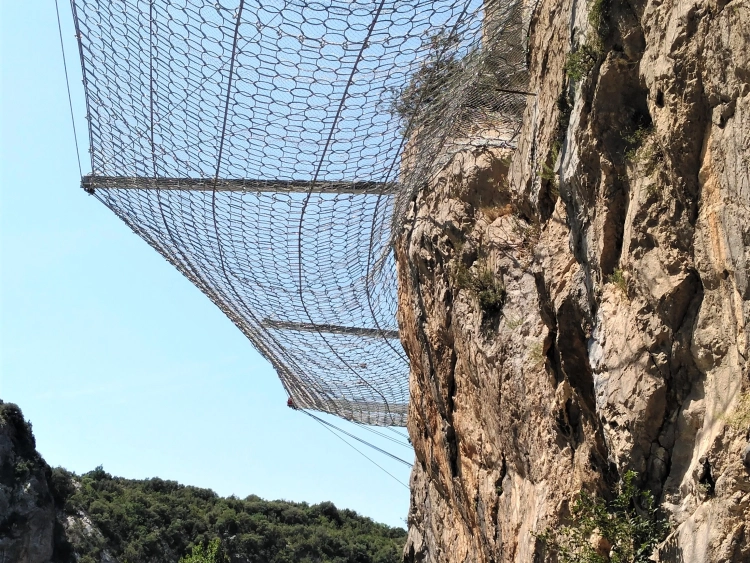
Dynamic screens absorb the kinetic energy of detached blocks through the deformation of the barrier itself and of the energy dissipators, which allow effective containment of the rocks and reduce the risk of damage to infrastructure and people.
The structure of the screens will vary according to the system’s requirements, according to the required energy absorption.
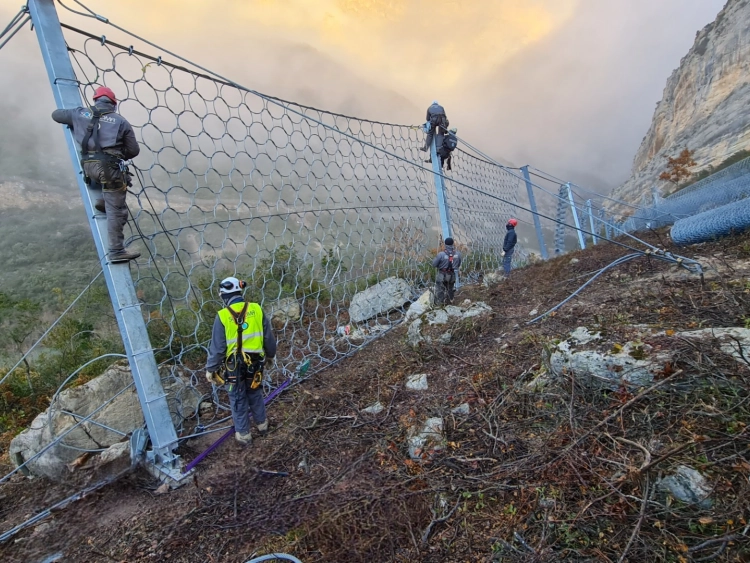
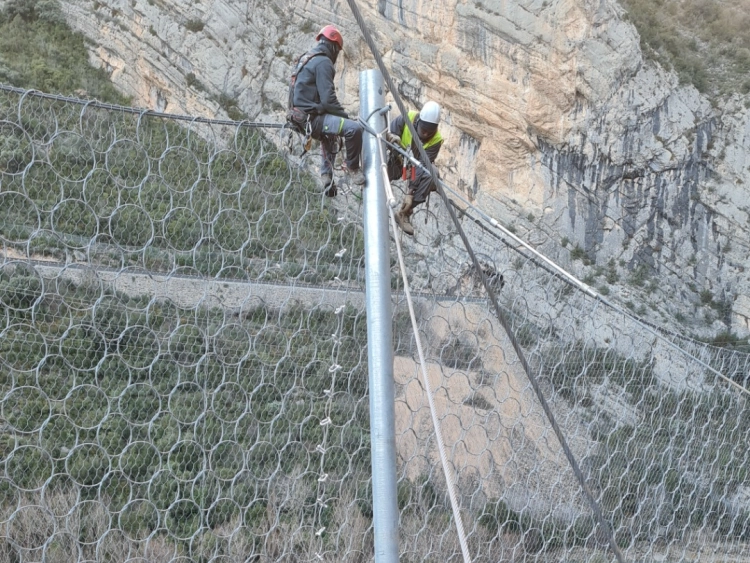
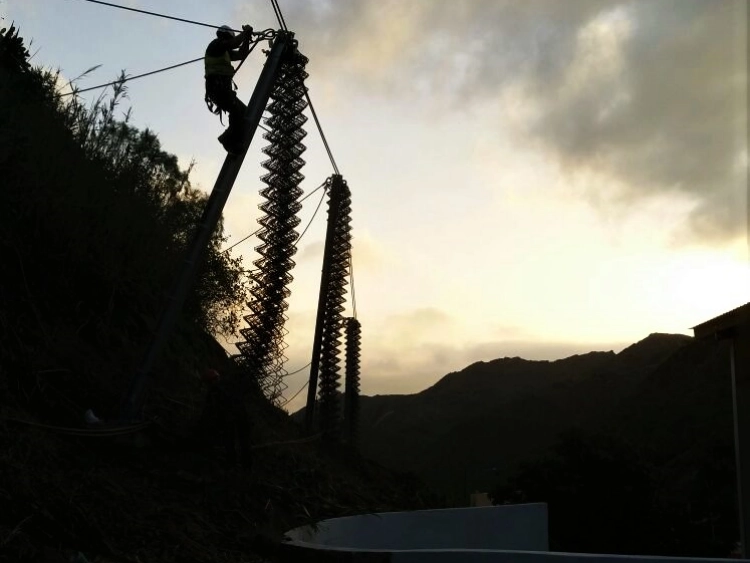
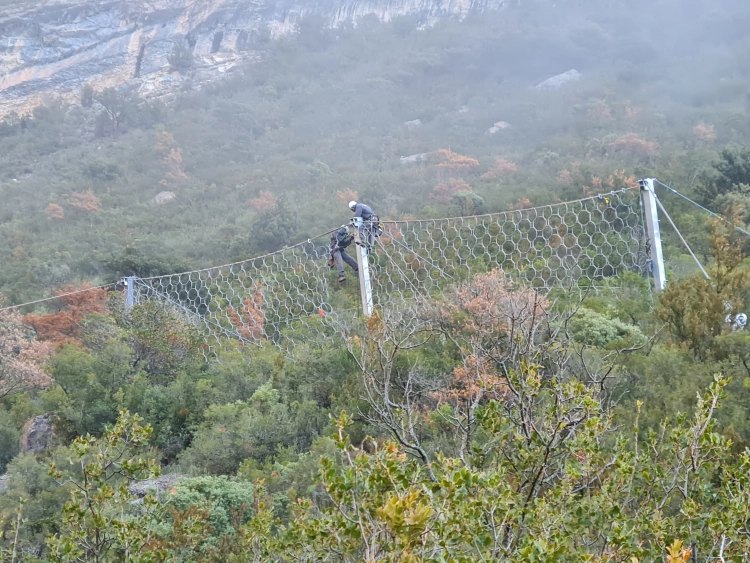
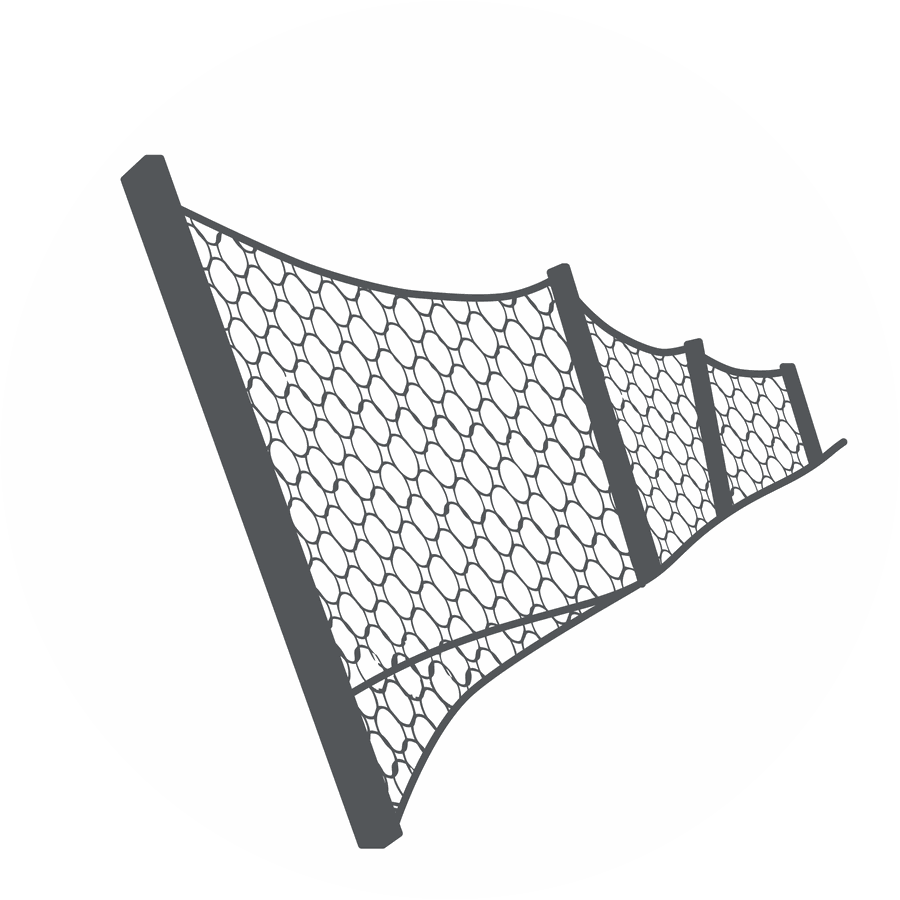
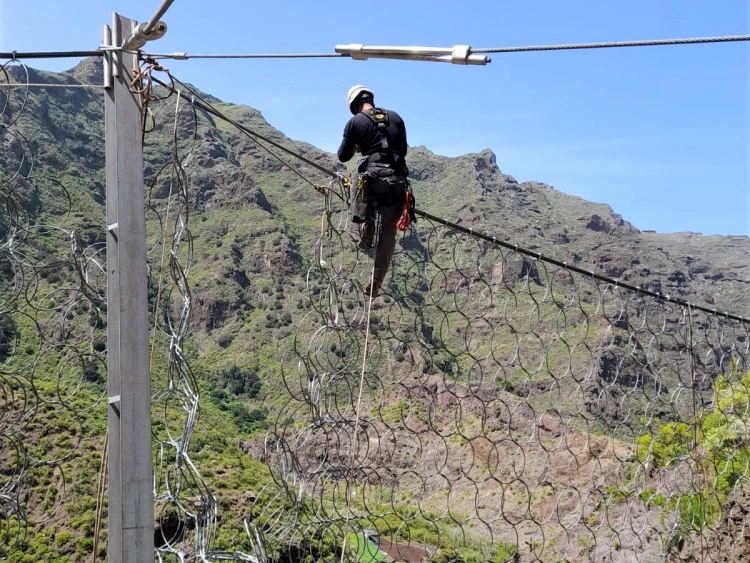
The structure of a dynamic rockfall barrier consists of galvanised steel posts, a base for connection to a baseplate, baseplate anchors and hillside anchors. The closing element depends on the absorption capacity required and can be made of cable mesh or ring mesh panels, optionally overlaid with double-twist mesh that prevents smaller stones from passing through.
Are rock blocks falling onto a road or a building?
We study the fall trajectories and size the dynamic rockfall barrier your slope needs. You can also call us on +34 900 101 895.
How does a dynamic rockfall barrier work?
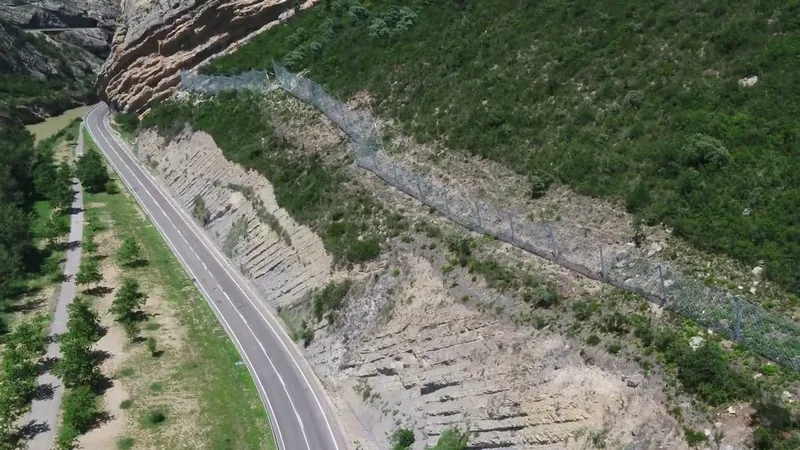
Dynamic rockfall barriers absorb and dissipate the energy of rockfalls: they intercept the blocks and convert their kinetic energy into deformation of the system. As rockfall protection systems, they stop blocks of various sizes and speeds in high-risk areas.
The dynamic barrier stands out for its high recovery capacity after impact and its low repair cost.
Applications of dynamic rockfall barriers
The dynamic rockfall barrier is a very efficient technique for frequent rockfalls from very high or even inaccessible slopes and for scattered interventions. It is used when anchoring and confining the masses at risk of detachment is impossible or costly.
Dynamic rockfall barriers are a passive protection system: they are placed between the source area of the rockfall and the area to be protected (road, railway, building, etc.). Based on the size of the blocks and their expected trajectory, at Solutioma we define the height and the energy absorption capacity required, in ranges from 250 to 10,000 kJ and from 2.5 to 10 m in height.
Integration into the environment
The dynamic barrier also offers a high capacity for integration into the environment and a low environmental impact, making it one of the rockfall protection measures that best combine protection with respect for the environment.
Installation and sizing of dynamic rockfall barriers
At Solutioma we plan each dynamic barrier project individually: based on the study of possible fall trajectories of the rock elements, we determine the most suitable points to install the barriers.
The dimensions of each dynamic barrier are calculated according to the impacts it will have to withstand, in order to reach the optimum point of resistance. In this way, large rockfalls are controlled with relatively little material, which makes dynamic barriers a very suitable solution for difficult-access locations.
A detailed and safe installation process
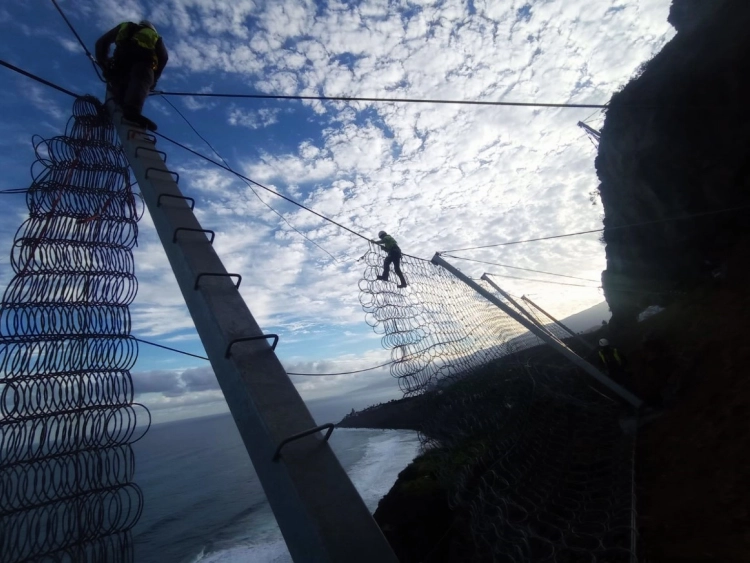
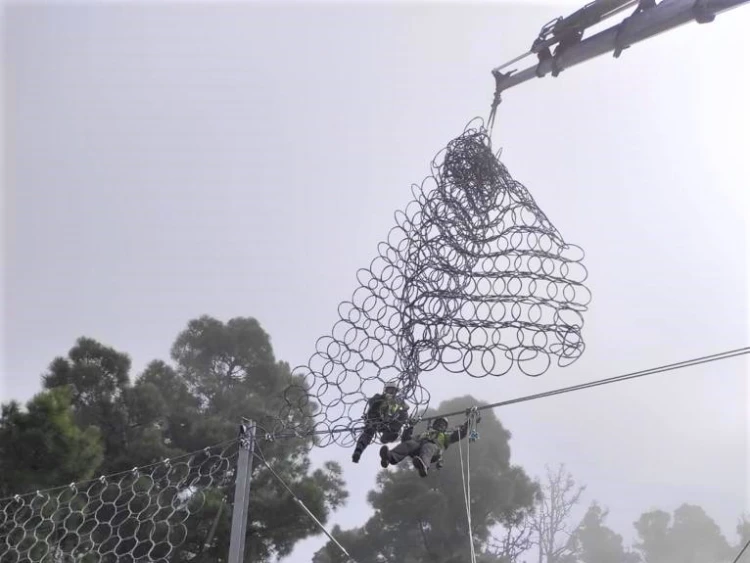
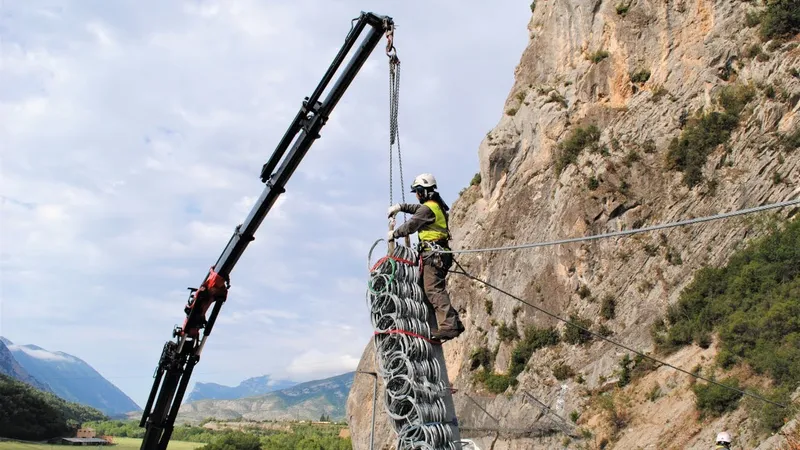
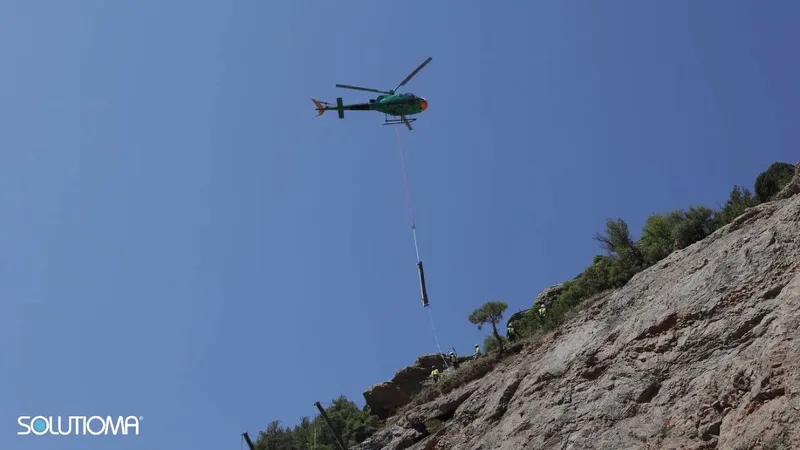
The installation of dynamic barriers follows strict safety and efficiency protocols. Our teams specialised in working at height reach the site by truck-mounted crane or helicopter when the location requires it.
Safety and respect for the environment with dynamic rockfall barriers
At Solutioma our commitment to safety is reflected in every project we carry out. We seek maximum protection against rockfalls while respecting the environment and promoting sustainable practices.
Reduced environmental impact and protection of the surroundings
The dynamic rockfall barriers we install are designed to blend into their surroundings and reduce their visual and environmental impact.
Our technical department thoroughly studies each rockfall risk situation and designs, plans and executes the most suitable rockfall protection solution, in line with the latest techniques for integration into the environment.
Dynamic rockfall barriers installed
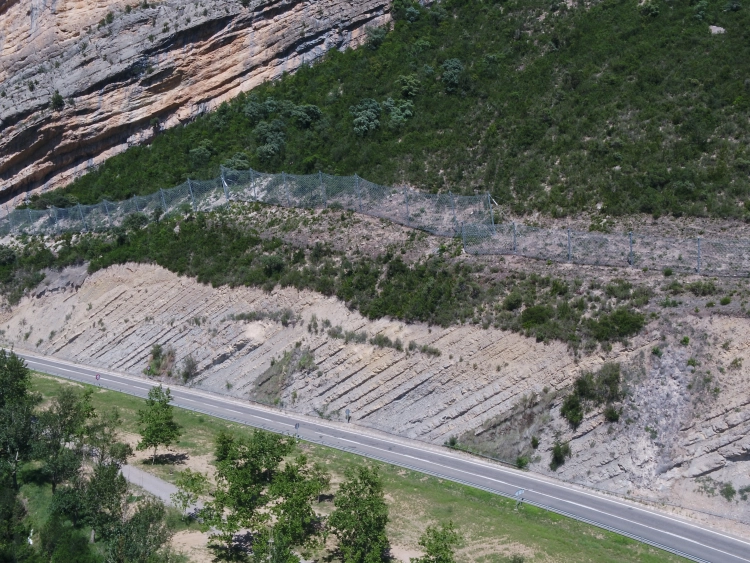
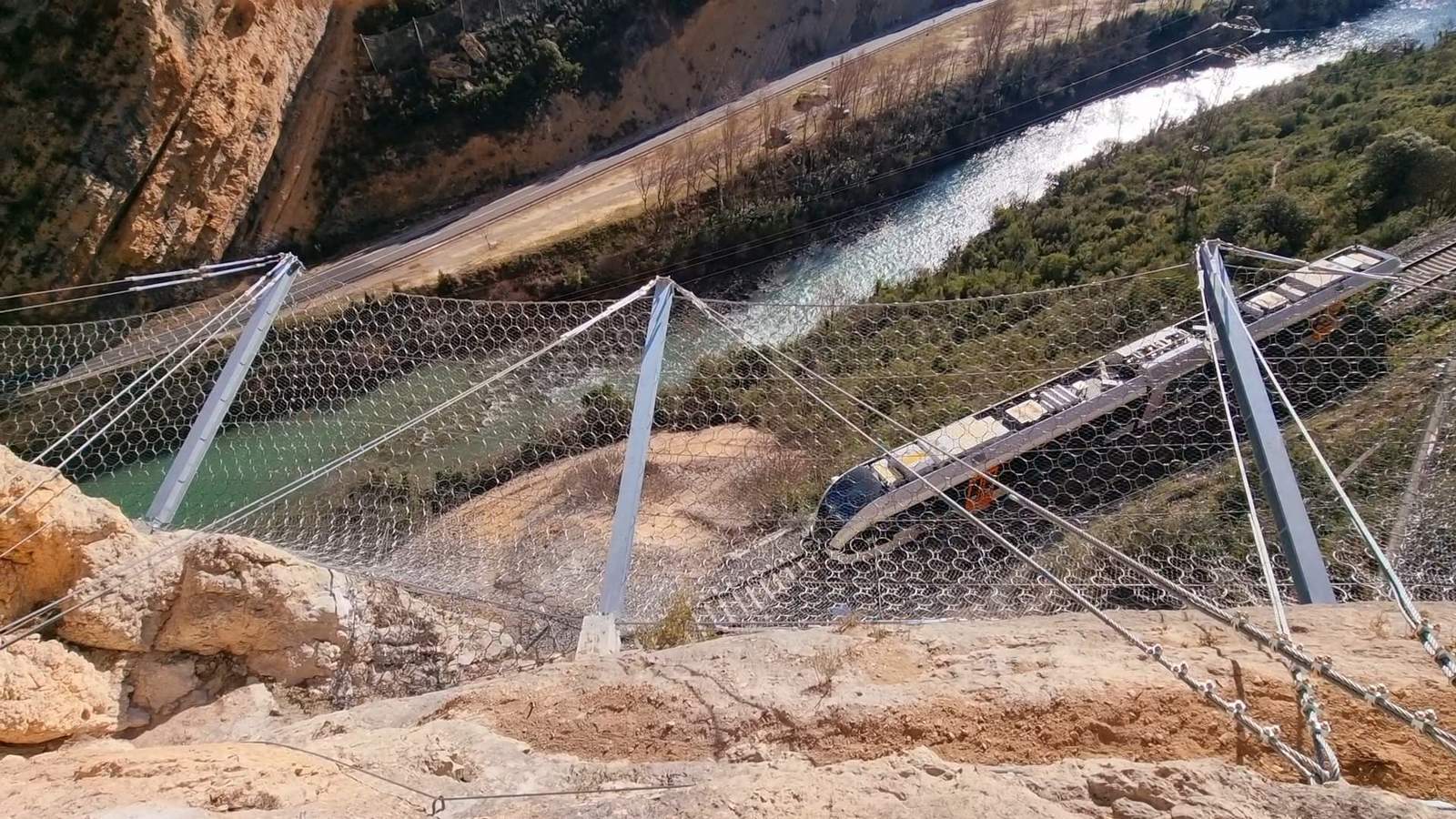
Dynamic rockfall barriers installed
YouTube channel
Videos of our projects
See how we work on site: slope scaling, dynamic rockfall barriers and rope access work filmed on our projects.
On-site video
Specialists in the installation of dynamic barriers
On-site video
Slope stabilisation and protection against rockfalls with helicopters
Frequently asked questions about dynamic rockfall barriers
Frequently asked questions about dynamic rockfall barriers
What is a dynamic rockfall barrier?
A dynamic rockfall barrier is a flexible passive protection screen placed in the path of rockfalls to stop large rock blocks before they reach a road, a railway or a building.
Our technical data sheet calls it a dynamic screen, and it is also known as a rockfall catch fence or a flexible rockfall barrier. Its closing element is a net: panels of cable mesh or ring mesh, sometimes overlaid with double-twist mesh to retain small stones. All these names refer to the same family of rockfall barriers.
What makes it ‘dynamic’ is the way it works. Instead of opposing a rigid structure, the barrier deforms when it receives the impact and converts the kinetic energy of the block into deformation of the system and its energy dissipators. Its structure is completed with galvanised steel posts, baseplates and hillside anchors.
At Solutioma we study the fall trajectories, size each dynamic barrier and install it with our teams specialised in working at height. If you have a slope at risk of falling blocks, tell us about the case and we will study it.
When are dynamic rockfall barriers used?
Dynamic rockfall barriers are rockfall protection systems used where rockfalls are frequent from very high or inaccessible slopes, or in scattered interventions, and where anchoring or confining the unstable masses is impossible or too costly.
They are common rockfall mitigation measures on roads and tracks, on railways and next to buildings. The barrier is placed between the source area of the rockfall and the area to be protected, so that it intercepts the blocks along their trajectory before they reach the infrastructure.
In rockfall control for infrastructure projects, the choice depends on the energy of the blocks. For small but continuous, low-energy rockfalls, a static rockfall barrier is usually sufficient; when there are large blocks in free fall or blocks that gain a lot of kinetic energy as they descend, the solution is a dynamic barrier.
Our technical department studies the slope, the size of the blocks and their trajectories before proposing a solution. Send us the location and some photographs and we will tell you whether your case requires a dynamic barrier or another system.
How is a dynamic rockfall barrier installed?
A dynamic rockfall barrier is installed at the point on the slope where the trajectory study shows that it can intercept the blocks: the anchors are drilled there, the steel posts are erected and the closing element is fitted.
Work begins with the anchors. According to our technical data sheet, the post baseplates are fixed with bolts or bar anchors, and the hillside anchors, located upslope, are cable anchors installed at variable depths. The posts are then placed on the baseplates, with their cable guides and the connections for the stays.
Next, the closing element of cable mesh or ring mesh is fitted, with double-twist mesh overlaid when small stones must also be retained, together with the energy dissipators. The length and depth of the anchors are calculated for each project according to the ground and the energy that the barrier must absorb.
Dynamic barriers are usually installed on hillsides without access tracks, so we work with teams specialised in working at height and deliver the material by truck-mounted crane or helicopter. You can see how we organise these operations on our difficult access works page.
What is the difference between a dynamic rockfall barrier and mesh on the slope?
A dynamic rockfall barrier intercepts and stops the block as it falls, at a distance from the slope, whereas meshes are placed on the slope itself to guide the material to the foot or to hold it in place. They are complementary solutions for rockfall control, not equivalent ones.
Among mesh solutions, suspended double-twist mesh or a mesh trap does not stop the stone but guides it in a controlled way to the ditch: it is a safety mesh for small, recurrent rockfalls. Reinforced mesh with anchors and cables, on the other hand, prevents the material from detaching at all.
For larger blocks, high-resistance membranes are anchored to sound rock and secure the unstable masses on mountain roads and other slopes. They are the option when the slope can be anchored; if it is very high or inaccessible, a dynamic barrier is used instead, a steel net that works at a distance from the slope.
At Solutioma we carry out all these systems. We help you choose according to the size of the blocks, the height of the slope and the space available at its foot and, if you wish, we review with you the design you already have.
What impact energy can a dynamic rockfall barrier absorb?
The dynamic rockfall barriers we install cover energy ranges from 250 to 10,000 kJ and heights from 2.5 to 10 m. The energy and height of each barrier are defined based on the size of the blocks at risk of detaching and their expected trajectory.
The absorption energy determines the whole structure: the type of posts, the closing element of cable mesh or ring mesh, and the capacity of the anchors. This is why rockfall barrier design depends on the trajectory study, which makes it possible to place the barrier where the block arrives with the expected energy and height, and to size it without excess.
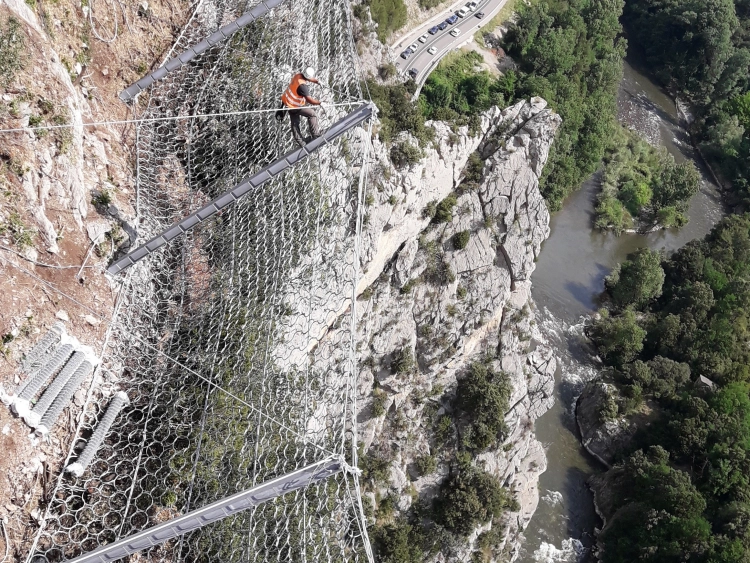
On the Lleida – La Pobla de Segur railway line we installed 9,000 kJ dynamic barriers, which are uncommon because of their complexity and capacity, on mountain sections exposed to rockfalls. The challenge was to work without interrupting rail services, and the modules were flown to their positions by helicopter.
If you have a geotechnical or trajectory study, send it to us: our technicians will review the design energy and propose the right dynamic barrier for your slope.
How much does a dynamic rockfall barrier cost?
The price of a dynamic rockfall barrier is not a fixed figure: it depends mainly on the absorption energy required, the height and length of the barrier and the access conditions, so it is calculated for each project.
The design energy sets the type of post, the closing element and the number and depth of the anchors. The hardness of the ground to be drilled, the inclination of the hillside and the need to overlay double-twist mesh to retain smaller stones also have an influence.
Access usually makes the difference: installing from a track is not the same as working with a truck-mounted crane or with helicopter support. In the long term, the low repair cost also counts, because the components usually damaged in an impact represent a small cost compared with the price of the dynamic screen, and the system has a high recovery capacity.
We work in Spain and internationally. To prepare a quote, send us the location, some photographs of the hillside and, if available, the geotechnical study, or call us on +34 900 101 895.
Contact
Why entrust your dynamic rockfall barriers to Solutioma?
At Solutioma we study, design and install dynamic rockfall barriers against falling rock on roads, railways and buildings, with people who have more than 30 years of experience in the sector, teams specialised in working at height and our own machinery.
If you would like to discuss any questions with our technical team or request a quote for the installation of dynamic rockfall barriers, please fill in the form below. If you prefer, you can also call us on +34 900 101 895; we will be happy to assist you.
- +34 900 101 895
Call us if you prefer - solutioma@solutioma.com
Write to us directly - Over 30 years of experience
Survey, design and execution with our own team and machinery - Offices in Spain and Romania
Lleida, Madrid, Canary Islands, Jaén, Gipuzkoa and Bucharest