
Erosion control
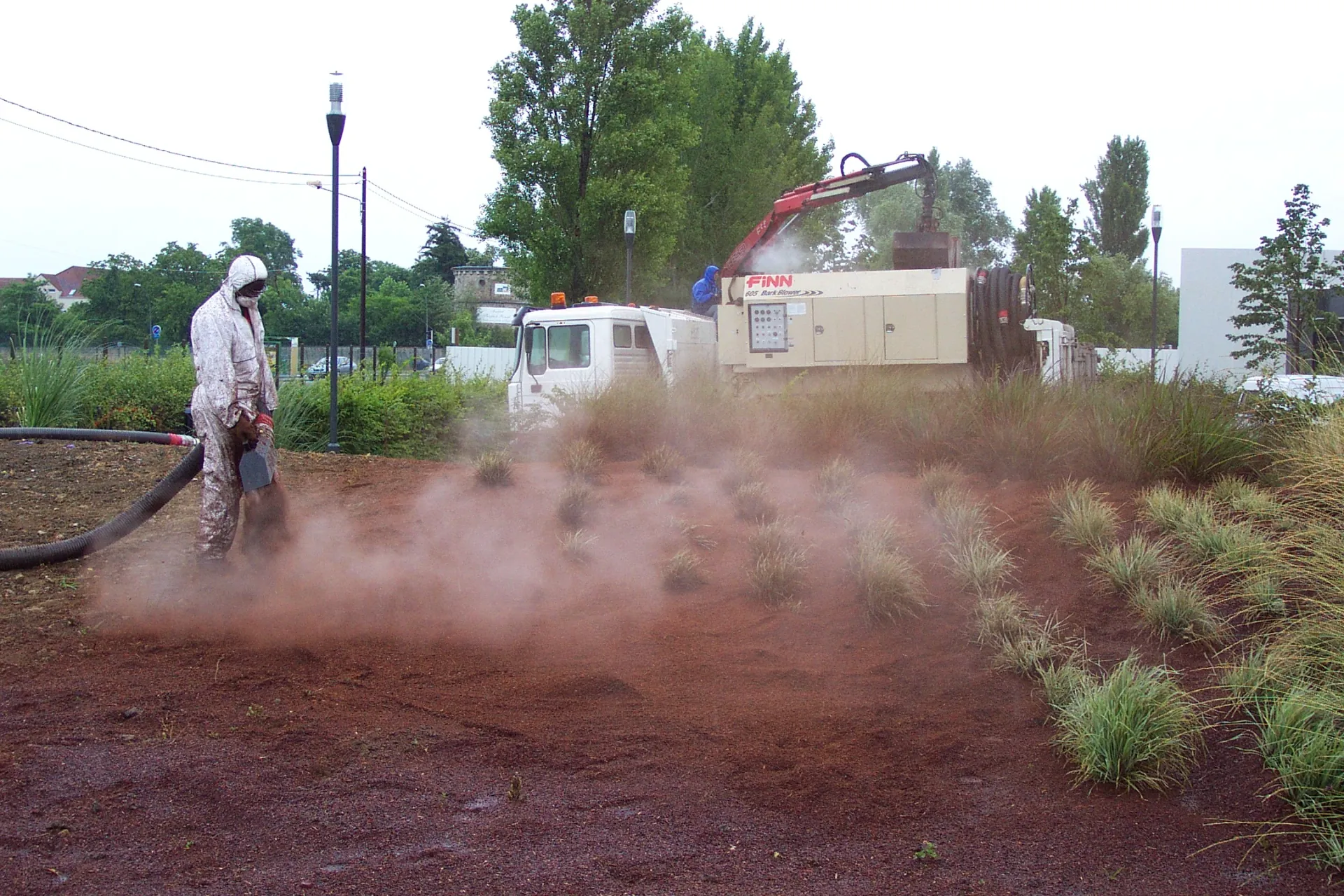
Substrate spraying for slope revegetation
Revegetation of rocky or shotcrete slopes by substrate spraying: we create a growing medium where hydroseeding cannot thrive.
- Over 30 years of experience
- Survey, design and execution with our own team and machinery
- Offices in Spain and Romania
Slope revegetation by substrate spraying
Slope revegetation by substrate spraying is a technique that creates a layer of topsoil on steep or rocky slopes so that vegetation can grow on them. At Solutioma we use it to revegetate the slope, integrate it into the landscape and achieve erosion control where direct seeding does not thrive.
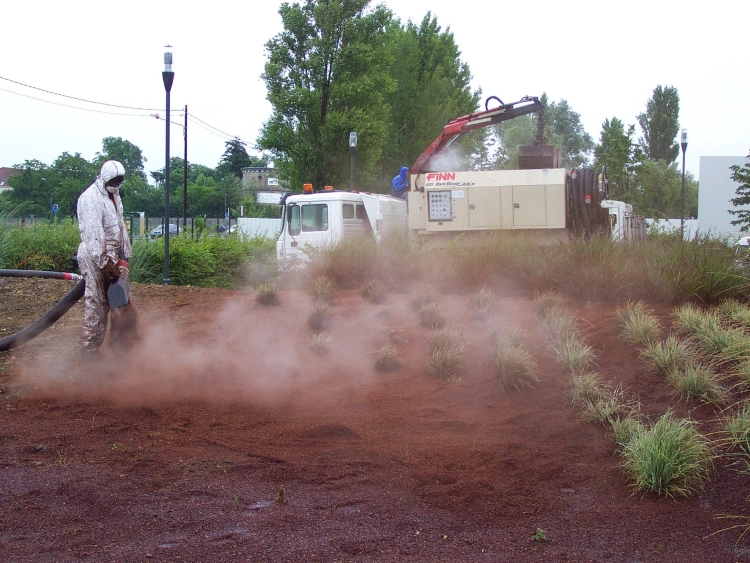
Substrate spraying consists of the mechanical application of a combination of substrates and plant seeds on inclined surfaces to promote vegetation growth.
Substrate spraying is an effective method not only for preventing soil erosion, but also for integrating these areas into the surrounding natural environment.
Is nothing growing on your slope?
We study the surface and tell you whether you need substrate spraying or whether hydroseeding is enough. You can also call us on +34 900 101 895.
Ecological and structural benefits of substrate spraying
Slope revegetation offers multiple benefits: it improves the surface stability of the soil, reduces the visual impact of construction works and contributes to local biodiversity.
Moreover, substrate spraying is a sustainable solution that helps to minimise the environmental footprint of construction and restoration projects.
Techniques and materials in substrate spraying
Selection of suitable substrates and seeds
Choosing substrates and seeds is a critical step in slope revegetation. Substrates must be capable of providing a sustainable growing medium for the plants.
At Solutioma we mechanically spray mulch bark, plant compost, topsoil, shredded plant residues and other similar materials used in environmental improvements.
Mechanical application of the substrate
Mechanical spraying distributes the substrate evenly and efficiently over inclined surfaces and allows nutrient-enriched substrates to be applied, which improve the effectiveness of the revegetation process.
Applications of substrate spraying on slopes
Substrate spraying is a natural solution to the erosion and visual impact problems that typically occur on cuttings in all kinds of construction works.
The main advantages of substrate spraying are:
- Protection against erosion.
- Surface stabilisation of the slope.
- Creation of artificial ground.
- Landscape integration of slopes.
- Eco-friendly solution compared to a concrete wall.
With substrate spraying we revegetate slopes and return them to nature. The technique is mainly applied on steep or rocky slopes, concrete walls or shotcrete surfaces, where vegetation would not thrive with hydroseeding alone.
Revegetation process
The sprayed layer forms a genuine topsoil that retains moisture and favours the development of vegetation which, with hydroseeding, could not thrive in the difficult conditions of a cutting. Plants take root in this favourable substrate and, in the long term, root into the underlying ground.
The substrate itself also favours the development of native vegetation, which progressively colonises the slope as seeds arrive from nearby plants.
Over time, the established plant cover protects the slope against erosion and reduces its visual impact.
Importance in the recovery of degraded areas
Beyond its use in engineering works, slope revegetation plays an important role in slope rehabilitation and the recovery of degraded areas, such as mines, quarries and disused urban areas, and contributes to landscape restoration and the re-establishment of damaged ecosystems.
Sustainability and environmental aspects of revegetation
Contribution to sustainability and the environment
Slope revegetation is a sustainable practice that offers significant environmental benefits. It helps reduce soil erosion, improves air quality, and promotes biodiversity, contributing to the health and sustainability of local ecosystems.
Integration with ecological restoration strategies
Revegetation is a key tool in ecological restoration strategies. It allows the reintegration of altered areas into the natural environment, improving the aesthetics of the landscape and favouring the creation of habitats for local fauna.
YouTube channel
Videos of our projects
See how we work on site: slope scaling, dynamic rockfall barriers and rope access work filmed on our projects.
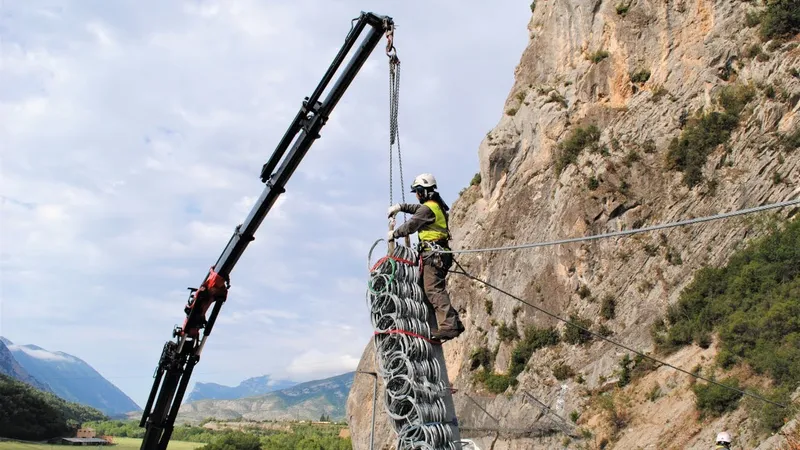
On-site video
Specialists in substrate spraying
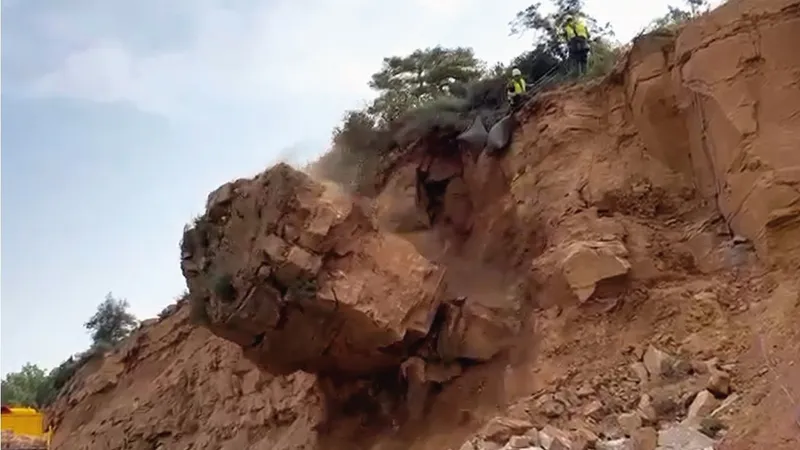
On-site video
Slope scaling with airbags
Frequently asked questions about substrate spraying
Frequently asked questions about substrate spraying
What is slope revegetation?
Slope revegetation is the recovery of the plant cover of a slope that has lost it or never had it, such as a construction cutting, in order to control erosion and integrate the slope into the landscape. That, in short, is what revegetation means when applied to slopes.
Revegetation is not a single technique but a goal that can be achieved in several ways. When the slope retains soil capable of supporting plants, it is enough to provide seeds through hydroseeding; when the problem is that rain washes that soil away, blankets or geomats are added to protect it while the vegetation becomes established.
Substrate spraying is the right technique when there is no soil to sow on: on steep or rocky slopes, concrete walls or shotcrete surfaces. In those cases, a layer of substrate and seeds is sprayed mechanically, forming a genuine topsoil that retains moisture and allows plants to take root.
At Solutioma we study the slope and propose the right revegetation technique, from substrate spraying to other erosion control solutions. Send us a few photographs and we will give you initial guidance.
When is substrate spraying used to revegetate a slope?
Substrate spraying is used when the slope has no soil capable of supporting vegetation: steep or rocky slopes, concrete walls and shotcrete surfaces, where vegetation would not thrive with hydroseeding.
It is common on cuttings in all kinds of construction works, where excavation exposes rock or material without soil, with erosion and visual impact problems. The sprayed layer creates artificial ground that protects the slope against erosion and provides surface stabilisation.
It is also applied in the recovery of degraded areas, such as mines, quarries and disused urban areas, and as a green alternative to a concrete wall. Among the revegetation solutions for slopes of this kind, the technique helps to restore the landscape and re-establish damaged ecosystems.
Our technical department checks on site what kind of surface the slope has before proposing a solution. If a previous seeding has not taken on your slope, we can assess whether it needs substrate spraying.
How is substrate spraying carried out on a slope?
Substrate spraying is carried out by mechanically applying a mix of substrates and seeds to the slope surface, forming a layer of topsoil. Mechanical spraying distributes it evenly over inclined surfaces, which makes it a spray-on erosion control technique rather than a simple erosion control spray.
The materials we spray are mulch bark, plant compost, topsoil, shredded plant residues and other similar materials used in environmental improvements, which can be enriched with nutrients. The combination is chosen for each project, because the substrate must provide a suitable and sustainable growing medium for the plants.
Once sprayed, the layer retains moisture and favours the development of the sown vegetation. The plants take root in the substrate and, in the long term, root into the underlying ground; at the same time, seeds arrive from nearby plants and native vegetation progressively colonises the slope.
At Solutioma we carry out the spraying with our own equipment and machinery, including on slopes that conventional machinery cannot reach, through difficult access works. Call us on +34 900 101 895 if you would like to discuss your project.
What is the difference between substrate spraying and hydroseeding?
Hydroseeding provides seeds on ground that can already support vegetation, whereas substrate spraying first creates the soil in which the plants will grow. The difference lies in the support.
Hydroseeding sprays a water-based mix of seeds, tackifiers, plant fibres and fertilisers. It is a common and quick method of revegetating slopes, but its success depends on the soil offering favourable conditions: otherwise, the seeds do not germinate or fail to develop properly.
Substrate spraying solves precisely that case. On steep or rocky slopes, concrete walls or shotcrete surfaces, the sprayed layer forms a genuine topsoil that retains moisture and allows vegetation to thrive that would not do so in the difficult conditions of a cutting.
If the slope has acceptable soil, hydroseeding is usually sufficient; if not, it is better to build the soil before sowing. At Solutioma we apply both techniques and tell you which one your slope needs after studying it.
Can a concrete wall or a shotcrete slope be revegetated?
Yes. Concrete walls and shotcrete surfaces are among the supports for which substrate spraying is intended, because hydroseeding would not thrive on them.
A layer of substrate is sprayed onto the facing and acts as artificial ground: it retains moisture and allows vegetation to become established and develop. The result is a green alternative to exposed concrete, which reduces the visual impact of the works and improves their integration into the surroundings.
In slope rehabilitation, the technique is useful on slopes that were stabilised in the past with spraying concrete or shotcrete and now have a strong landscape impact. The shotcrete continues to perform its function and the sprayed layer provides the landscape integration. Before starting, the condition of the facing and the way the substrate will be held in place must be checked.
At Solutioma we study each facing and define how to apply the substrate so that the vegetation takes root. If you have a shotcrete slope that you would like to integrate into the landscape, tell us about it and we will assess it without obligation.
How much does slope revegetation by substrate spraying cost?
The price of slope revegetation by substrate spraying is calculated for each project, because it depends on the support, the area and access to the slope.
The factors include the area to be treated, the type of support (soil, rock, concrete or shotcrete), the composition and volume of the substrate to be sprayed and the slope angle. If the slope retains acceptable soil, a simpler technique may be enough, and we will tell you so in our study.
Access also counts, because the substrate is the heavy part of the work: spraying from a track with conventional machinery is not the same as working on a slope where materials arrive by truck-mounted crane or helicopter. We have one of the largest fleets of own machinery in the sector to match the resources to each site.
We work in Spain and internationally, with offices in Lleida, Madrid, the Canary Islands, Jaén, Gipuzkoa and Bucharest. To prepare a quote without obligation, please send us the location, the approximate area and a few photographs, or call us on +34 900 101 895.
Contact
Why entrust the revegetation of your slope to Solutioma?
At Solutioma we study, design and carry out slope revegetation by substrate spraying on cuttings, rocky slopes, concrete walls and shotcrete surfaces, with people who have more than 30 years of experience in the sector, rope access teams and our own machinery.
If you would like to discuss any questions with our technical team or request a quote for revegetating your slope, please fill in the form below. If you prefer, you can also call us on +34 900 101 895; we will be happy to assist you.
- +34 900 101 895
Call us if you prefer - solutioma@solutioma.com
Write to us directly - Over 30 years of experience
Survey, design and execution with our own team and machinery - Offices in Spain and Romania
Lleida, Madrid, Canary Islands, Jaén, Gipuzkoa and Bucharest