
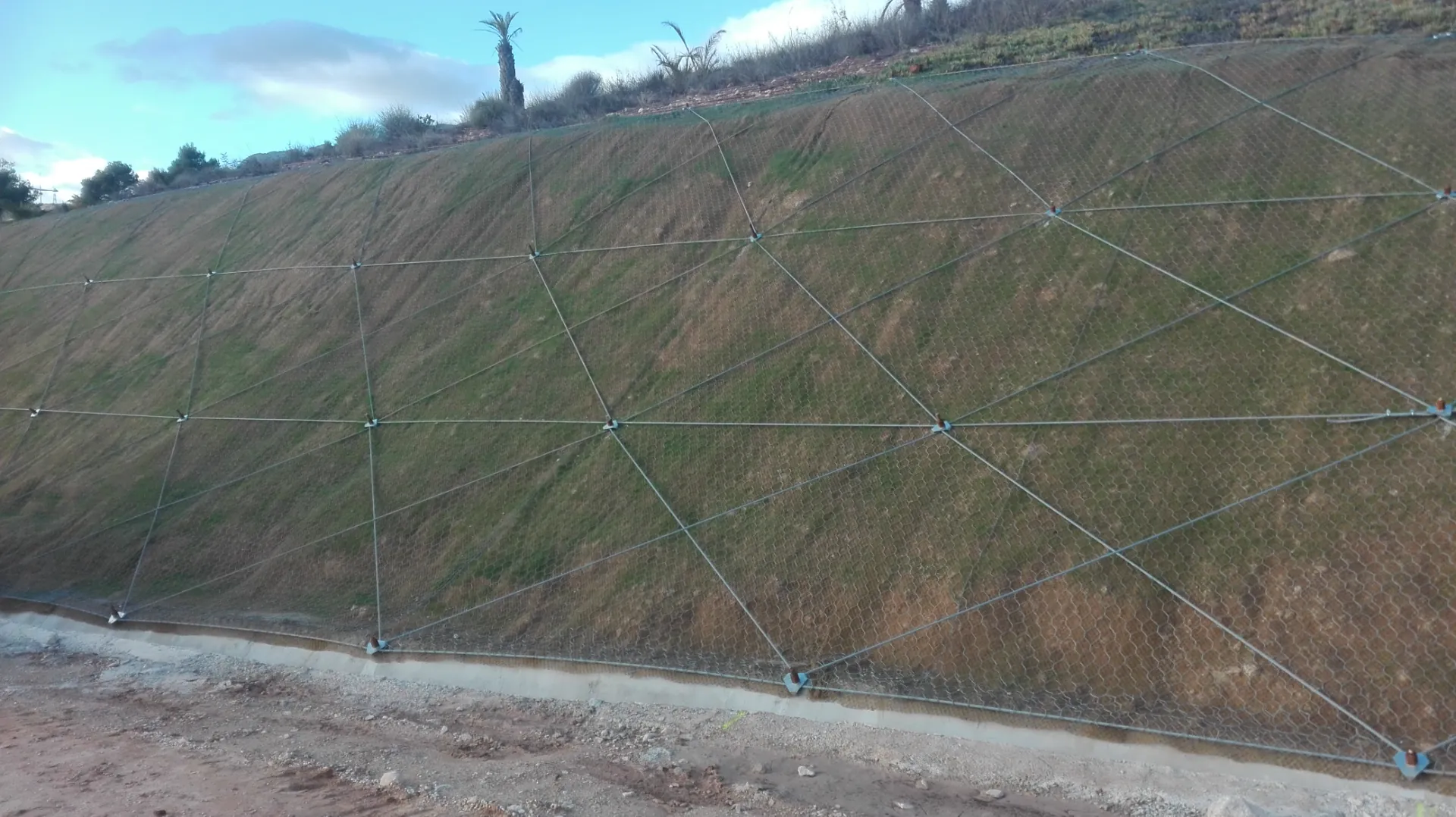
Erosion control
Organic blanket
Organic blanket for slopes made of coir, straw or esparto: it curbs erosion, retains water and supports hydroseeding.
- Over 30 years of experience
- Survey, design and execution with our own team and machinery
- Offices in Spain and Romania
Organic blanket for slopes: a natural solution for erosion control
An organic blanket for slopes is a blanket of biodegradable plant fibres that is laid and anchored over the ground, an effective and environmentally friendly solution. At Solutioma we install organic blankets for erosion control and the restoration of slopes and hillsides.
We adapt each organic blanket to the project and often combine it with hydroseeding.
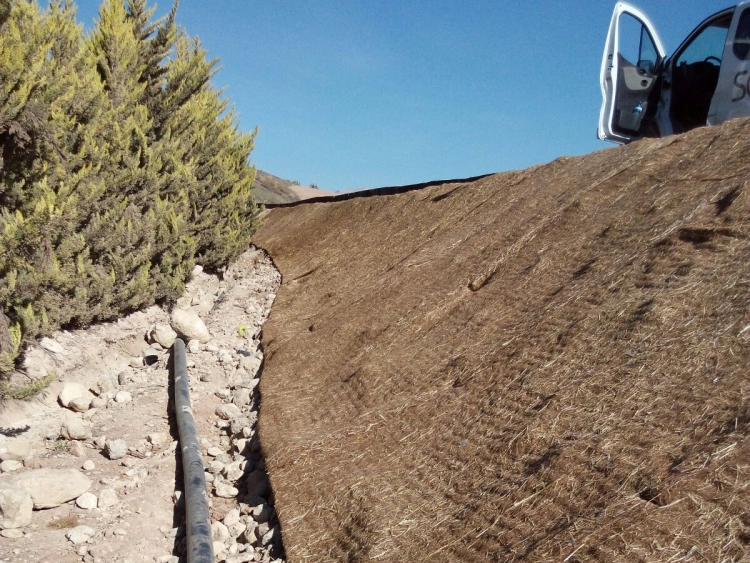
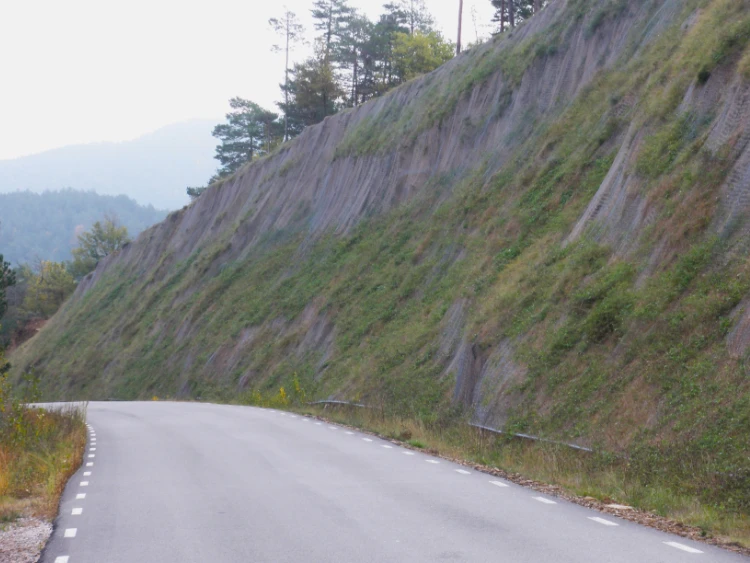
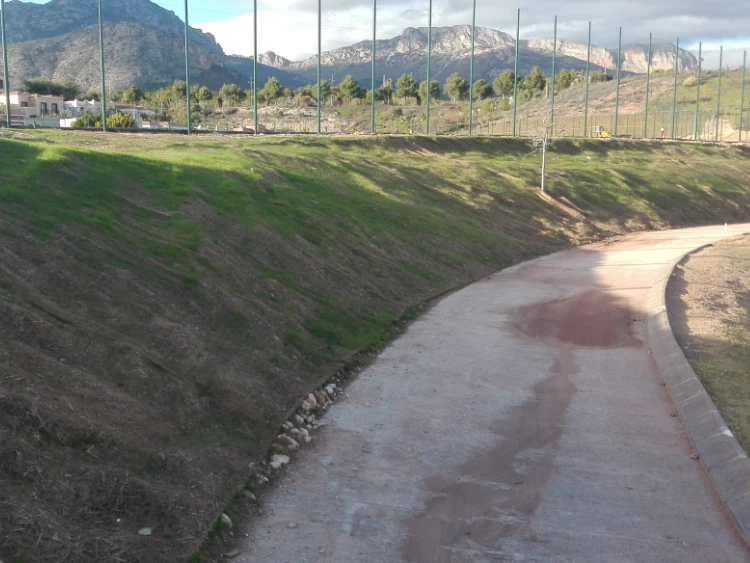
Is your slope losing soil every time it rains?
We will propose the right organic blanket or net, and the right fibre, for your slope. You can also call us on +34 900 101 895.
What are organic blankets, and how do they work?
Organic blankets are made of plant fibres of cereal straw, coir (coconut fibre) or esparto grass, with a few reinforcing rows of polypropylene.
Organic blankets are placed on slopes to prevent soil erosion and, at the same time, promote vegetation growth.
The porous structure of the blanket allows water and nutrients to be retained, helps seeds to germinate and roots to develop and, in this way, strengthens the soil structure.
Benefits of organic blankets for slope stabilisation and erosion control
Organic blankets are an efficient and sustainable solution for slope stabilisation and erosion control, with several key benefits:
- They increase water availability by encouraging infiltration and reducing evaporation.
- They control erosion: they absorb the kinetic energy of erosive particles such as raindrops, wind or snow.
- They can absorb five times their weight in water, creating a moister and more favourable environment for the germination of hydroseeded seeds or the establishment of plant cover.
- They regulate soil temperature by buffering exposure to cold and heat.
- They have a degradation period of three to seven years.
Installing organic blankets on slopes
At Solutioma we offer a complete service, from the study to the installation of organic blankets.
Installation process
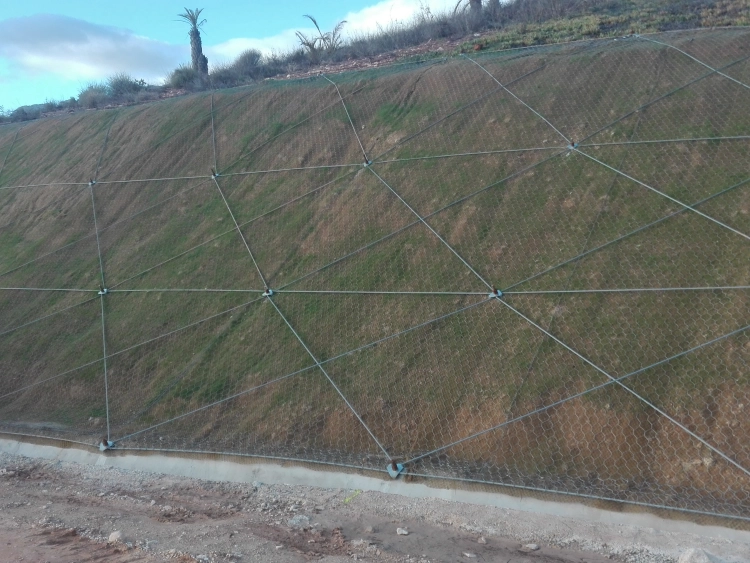
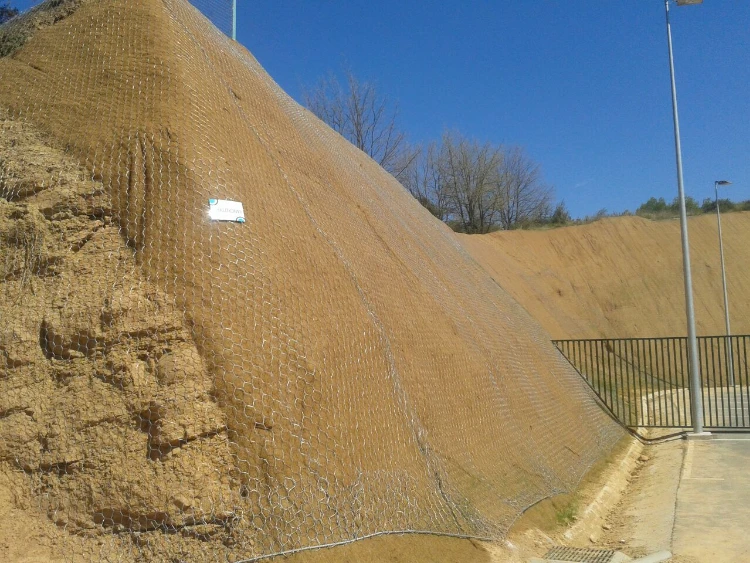
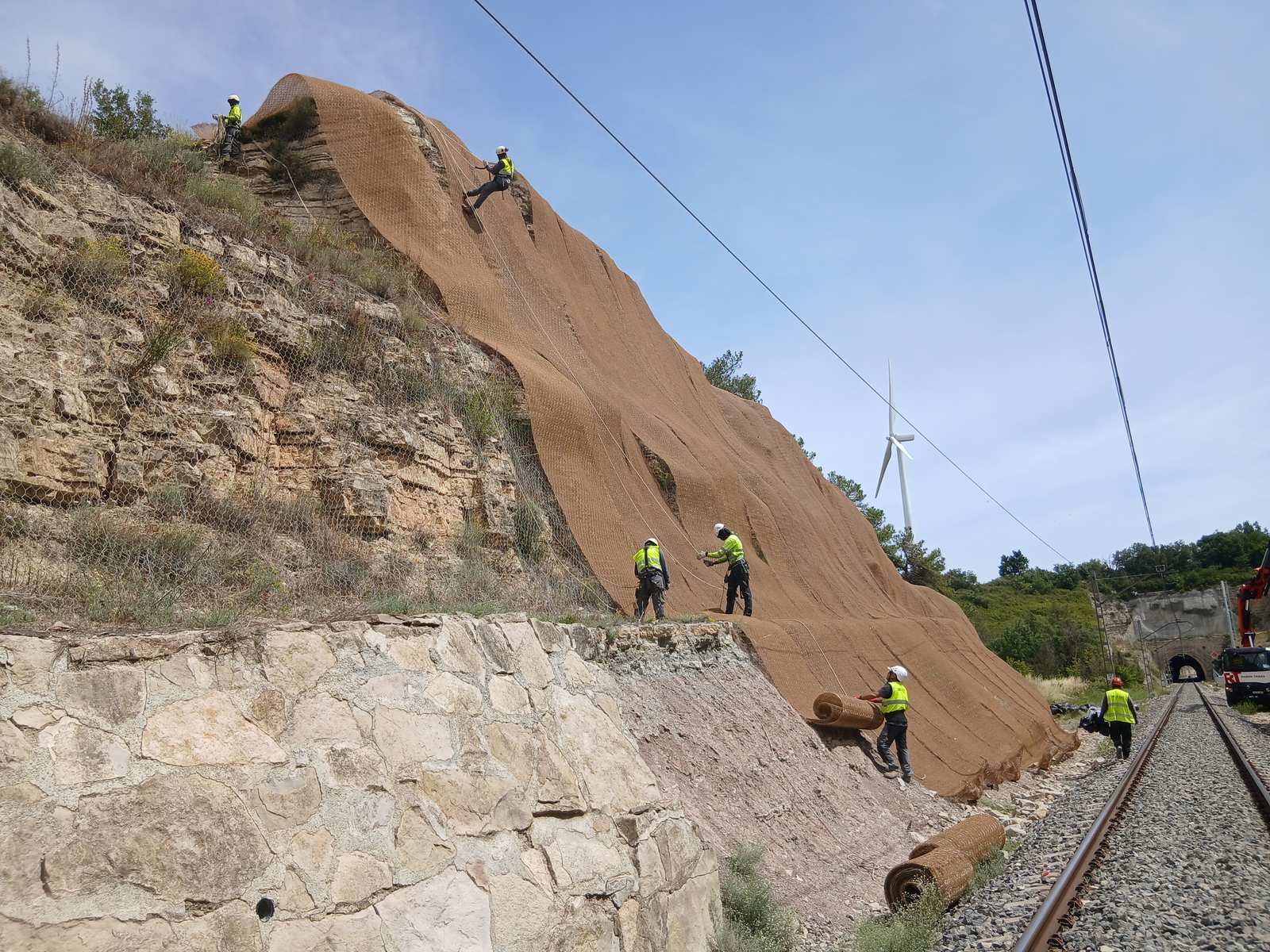
Organic blankets are laid over embankments and cuttings and anchored to the ground. Installation requires a specialist team that achieves continuous coverage and integration with the surroundings.
Organic blanket or organic net, depending on soil and climate
Organic blankets are an integral and sustainable solution for stabilisation and erosion control. At Solutioma we define the most suitable solution, an organic net or blanket, according to the needs of the soil and the climatic characteristics of each area.
Organic blankets installed
Organic blankets installed
Frequently asked questions about the organic blanket
Frequently asked questions about the organic blanket
What is an organic blanket for slopes?
An organic blanket for slopes is a blanket of biodegradable plant fibres (cereal straw, coir, esparto grass or a mixture) that is laid over the slope and anchored to the ground to control erosion and help vegetation become established.
It is also known as an organic erosion control blanket or biodegradable erosion control matting, because its main components are of plant origin; some include reinforcing rows of polypropylene that improve their tensile strength. Organic blankets are used in soil bioengineering techniques for erosion control and slope treatment.
Its function is to protect bare soil while the vegetation cannot yet do so: the soil organic blanket absorbs the energy of rain, wind and snow, retains water and adds organic matter to the ground. Once the plant cover is established, it degrades and becomes part of the soil.
At Solutioma we install organic blankets on slopes, cuttings and embankments, either alone or combined with hydroseeding. If you have a bare slope that loses soil every time it rains, we can study which organic blanket it needs.
When are organic blankets used on a slope?
Organic blankets are used on slopes where soil loss from erosion needs to be reduced or where vegetation simply needs help to establish. They are also suitable as a support for hydroseeding.
This type of erosion control blanket is common on embankments and cuttings with soil exposed to rain and wind, and on slopes and hillsides that are to be restored. According to our technical data sheet, organic blankets improve the conservation of soil and plants and reduce damage from droughts or torrential rain; they also provide additional organic matter that helps the plant cover become established.
Because they retain water, absorbing five times their weight, and regulate soil temperature, they are particularly useful on dry slopes or slopes highly exposed to sun and frost, where an unprotected seed would struggle to germinate. If the slope also has a stability problem, the erosion control matting is combined with a slope stabilisation system.
At Solutioma we assess each slope before proposing an organic blanket, a hydro-blanket or another erosion control technique. Send us a few photographs and we will give you initial guidance.
How is an organic blanket installed on a slope?
An organic blanket is installed by laying it over the slope, in contact with the ground, and anchoring it so that it stays in place and forms continuous cover. Hydroseeding is then usually applied, as the blanket acts as a support for the seed.
Before laying it, the surface should be regularised and any loose stones and debris that would prevent the blanket from touching the soil should be removed: if it is left unattached, water flows underneath and the blanket loses effectiveness. The rolls are laid from the crest of the slope down to the toe, with overlaps between them, and secured with anchors whose density depends on the slope angle and the type of ground.
Once the blanket is secured, hydroseeding places the seed on it and between its fibres. The blanket absorbs five times its weight in water and creates a moist, favourable environment for the germination of the hydroseeded seeds; the vegetation grows through it and, over the years, the blanket degrades.
At Solutioma we install organic blankets with our own equipment and, on hard-to-reach slopes, through difficult access works with rope access teams. Before starting, we explain the anchoring system planned for your project.
What is the difference between an organic blanket and a hydro-blanket?
An organic blanket is a prefabricated blanket of plant fibres that is laid over the slope and anchored to the ground, whereas a hydro-blanket is formed on site by spraying a mix of fibres, binders and seeds that creates a continuous membrane as it dries. Both protect the soil while vegetation becomes established.
The hydro-blanket adapts to the micro-relief of the ground and is applied in a single operation, so it requires less labour. The organic blanket provides physical protection with its own tensile strength from the first day, and it is the usual option when the slope needs a cover that will last for several years.
Both are biodegradable: the organic blanket has a degradation period of three to seven years. If the slope needs permanent protection against erosion, the alternative is a three-dimensional geomat made of synthetic filaments, which does not degrade and also serves as a support for hydroseeding.
At Solutioma we install all three systems and recommend the one that best matches the slope angle, soil and climate of your site. Tell us about your case and we will propose the most suitable option.
Is an organic blanket the same as an organic net?
Not exactly. An organic blanket forms a continuous cover of plant fibres over the soil, whereas an organic net or mesh is an open weave of plant fibres, with gaps between the strands, that leaves more of the soil surface exposed.
Both are made from cereal straw, coir, esparto grass or mixed fibres and perform the same function: controlling erosion and supporting hydroseeding. Coir mesh for slopes is one of the most widely used because of the strength of coconut fibre, while a denser coir erosion control blanket covers the soil completely.
According to our technical data sheet, the choice between an organic net and an organic blanket depends on the needs of the soil and the climatic characteristics of the area. A net lets more light through and allows vegetation to sprout through its openings; a blanket protects the soil better when it is highly exposed to rain or wind.
At Solutioma we define the most suitable solution, organic net or blanket, and the most appropriate fibre when we study each slope. If you already have a design that specifies coconut fibre matting or another material, we will review it with you.
How much does coir matting for slopes cost?
The price of coir matting for slopes, like that of any organic blanket, is not a fixed figure: it depends on the fibre and the type of blanket or net, the area to be covered and the site conditions, so it is calculated for each project.
The material is only part of the cost. Surface preparation, the number of anchors required by the slope angle and whether the blanket is completed with hydroseeding, which is usual, also play a part. Coir mesh, a straw blanket and a mixed blanket do not have the same price or the same performance.
Access has a major influence on the budget: installing from the toe of the slope with conventional equipment is not the same as working with rope access on a high cutting or on a slope without a track. Having one of the largest fleets of own machinery in the sector allows us to match the resources to each site.
To prepare a quote without obligation, please send us the location, the approximate area and a few photographs of the slope. We work in Spain and internationally, with offices in Lleida, Madrid, the Canary Islands, Jaén, Gipuzkoa and Bucharest; you can also call us on +34 900 101 895.
Contact
Why entrust the organic blanket on your slope to Solutioma?
At Solutioma we study, design and carry out the installation of organic blankets on slopes, with people who have more than 30 years of experience in the sector, rope access teams and our own machinery. If you would like to discuss any questions with our technical team or request a quote for your organic blanket, please fill in the form below. If you prefer, you can also call us on +34 900 101 895; we will be happy to assist you.
- +34 900 101 895
Call us if you prefer - solutioma@solutioma.com
Write to us directly - Over 30 years of experience
Survey, design and execution with our own team and machinery - Offices in Spain and Romania
Lleida, Madrid, Canary Islands, Jaén, Gipuzkoa and Bucharest